My cousin Mark had been a turkey hater for as long as anyone could remember. Twenty-seven years, to be exact. He’d show up to Thanksgiving with a store-bought rotisserie chicken for himself, claiming turkey was “dry, bland, and not worth the real estate on the plate.” We all just rolled our eyes and let him be. Then last November, I decided to experiment with a cranberry orange glaze for a small Friendsgiving gathering. I made this Cranberry Orange Glazed Turkey Breast just for myself—a small test batch, really—and put it on the counter to rest while I finished the sides. I turned around ten minutes later and found Mark standing at the kitchen island, fingers greasy, a guilty look on his face, a torn piece of turkey breast in his hand. “This is actually good,” he mumbled, reaching for another piece. I mean, I didn’t say a word. I just smiled and handed him a napkin.
That moment stayed with me. Not because I proved him wrong—though, honestly, that was satisfying—but because this recipe had done something I didn’t expect. It turned a skeptic into someone who asked for the leftovers. The secret is in the glaze, which hits that perfect balance between tart and sweet, and the cooking method, which keeps the meat ridiculously juicy. You know that feeling when you bring a dish to a potluck and watch people go back for seconds, then thirds? That’s this turkey breast. It’s the kind of recipe that makes you look like you spent all day in the kitchen when really, you just let the glaze do the heavy lifting.
I’ve made this for family dinners, holiday gatherings, and even a random Tuesday when I wanted something special without roasting a whole bird. It never fails to get compliments. And honestly, it’s become my go-to when I need to impress without the stress. Let me tell you, there’s something deeply satisfying about watching someone take that first bite, their eyebrows lifting just a little. That’s the moment you know you’ve got a winner. This Cranberry Orange Glazed Turkey Breast is that winner.
Why You’ll Love This Recipe
I’ve tested this recipe more times than I care to admit. Burnt glaze on a Tuesday afternoon, undercooked turkey on a Thursday evening, a glaze that was too tart, then too sweet, then somehow both at once. After all that trial and error, I can confidently say this version is the one. Here’s why it works so well:
- Perfect for Hosting : This turkey breast is designed to impress a crowd. It’s elegant enough for a dinner party but simple enough for a casual potluck. Your guests will think you fussed, but you’ll know the truth.
- Simple Ingredients : No hunting down obscure spices or specialty items. Cranberry sauce, orange juice, a few pantry staples—that’s it. You probably already have most of this in your kitchen.
- Juicy Every Time : The glaze acts as a protective barrier, locking in moisture while the turkey cooks. No dry, sad turkey here. Just tender, flavorful meat that stays juicy even after slicing.
- Crowd-Pleaser : This is the recipe that converts turkey skeptics. The sweet-tart glaze appeals to kids and adults alike. I’ve seen picky eaters go back for seconds and self-proclaimed turkey haters ask for the recipe.
- Stress-Free Hosting : You can prep the glaze ahead, brine the turkey the night before, and pop everything in the oven while your guests arrive. It gives you time to focus on your guests instead of the stove.
What sets this recipe apart from other turkey breast recipes is the double-glaze technique. You brush it on partway through cooking, then again at the end, creating a beautiful, sticky, caramelized crust that looks like you spent hours on it. The orange zest adds brightness, while the cranberry brings that familiar tartness that pairs so perfectly with turkey. It’s comfort food reimagined—familiar enough to feel cozy, but special enough to feel like an occasion. Perfect for impressing guests without the stress, or turning a simple dinner into something memorable.
What Ingredients You Will Need
This recipe uses simple, wholesome ingredients to deliver bold flavor and satisfying texture without the fuss. Most of these are pantry staples or easy to find at any grocery store. Let me walk you through each one and why it matters.
- Bone-in, skin-on turkey breast (5-7 pounds) : This is the star. Bone-in keeps the meat juicier during cooking, and the skin gets beautifully crispy under the glaze. I prefer a 6-pound breast for a crowd of 6-8 people. If you’re feeding more, you can cook two side by side.
- Whole berry cranberry sauce (1 can or about 14 ounces) : I use Ocean Spray whole berry cranberry sauce for the texture. The whole berries add little bursts of tartness in the glaze. You can use jellied cranberry sauce too, but the glaze will be smoother.
- Fresh orange juice (1/2 cup) : Freshly squeezed makes a big difference here. The bottled stuff has a flat taste that doesn’t brighten the glaze the same way. You’ll need about 2 oranges for this amount.
- Orange zest (2 tablespoons) : Don’t skip this. The zest adds concentrated orange flavor that the juice alone can’t provide. Use a microplane for the best texture.
- Honey (1/4 cup) : This adds sweetness and helps the glaze caramelize. I use local honey when I can find it, but any mild honey works. Maple syrup is a good substitute if you’re out of honey.
- Dijon mustard (2 tablespoons) : A little tang and depth. It balances the sweetness of the honey and cranberries. Don’t use yellow mustard—it’s not the same.
- Unsalted butter (4 tablespoons, melted) : Butter enriches the glaze and helps the skin crisp up. I recommend using unsalted so you can control the salt level. If you only have salted, just reduce the added salt by half.
- Fresh rosemary (2 sprigs, plus extra for garnish) : Rosemary and poultry are a classic pairing. The woodsy notes complement the citrus and cranberry beautifully. Thyme works well too if that’s what you have.
- Fresh garlic (4 cloves, minced) : Garlic adds savory depth that keeps the glaze from being too sweet. I’ve used garlic paste in a pinch and it works fine.
- Kosher salt (1 tablespoon) : I prefer Diamond Crystal kosher salt for its even texture. If you’re using table salt, use about half as much.
- Black pepper (1 teaspoon) : Freshly ground is best. Pre-ground pepper loses its punch over time.
- Chicken broth or turkey stock (1 cup) : This goes in the bottom of the roasting pan to create steam and keep the turkey moist. It also forms the base for a quick pan sauce if you want one.
For the optional brine:
- Kosher salt (1/2 cup)
- Brown sugar (1/4 cup)
- Orange peels (from 2 oranges)
- Fresh rosemary (2 sprigs)
- Water (4 cups, plus ice water)
I recommend using a good-quality turkey breast if you can find one. I’ve had great results with Butterball and Honeysuckle White brands. If you’re buying from a butcher, ask for a fresh, never-frozen breast for the best texture. The brine is optional but highly recommended—it guarantees juicy meat even if you accidentally overcook it by a few minutes.
Equipment Needed
You don’t need a fancy kitchen to pull off this recipe. Here’s what you’ll need:
- Roasting pan with a rack : A 9×13-inch roasting pan works perfectly. The rack lifts the turkey so air circulates around it, helping the skin crisp evenly. If you don’t have a rack, you can use a few carrots or celery stalks as a makeshift rack.
- Small saucepan : For making the glaze. A 1-quart saucepan is ideal.
- Microplane or zester : For getting that fine orange zest. A box grater works too, but the texture won’t be as delicate.
- Instant-read thermometer : This is non-negotiable for poultry. You need to know when the internal temperature hits 165°F at the thickest part. I’ve used a Thermapen for years and love it, but any reliable digital thermometer works.
- Basting brush : A silicone brush is best because it doesn’t shed bristles into the glaze. I’ve used a pastry brush in a pinch and it worked fine.
- Chef’s knife : For slicing the finished turkey. A sharp knife makes all the difference in getting clean, even slices.
- Cutting board : Preferably one with a groove to catch juices. Wood or plastic both work.
- Aluminum foil : For tenting the turkey if the skin browns too quickly.
If you’re on a budget, skip the fancy roasting pan and use a disposable aluminum pan from the grocery store. Just be careful when lifting it out of the oven—those pans can buckle. I learned that the hard way, let me tell you.
Preparation Method
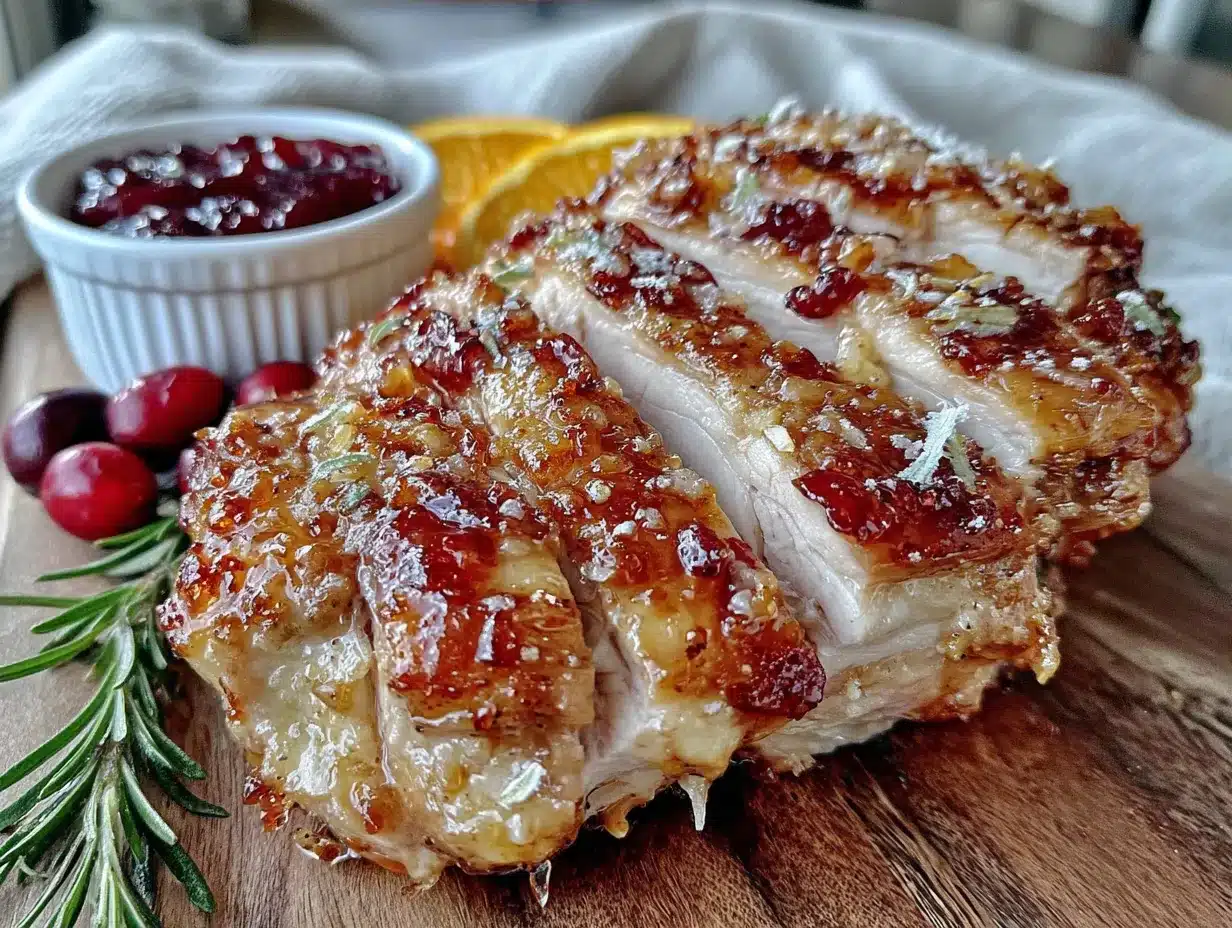
Let’s get cooking. This method has been tested and tweaked until it was just right. Follow these steps and you’ll have a beautiful, juicy turkey breast with a stunning glaze.
Step 1: Brine the turkey (optional but recommended)
If you’re brining, start the night before. Combine 4 cups of water with 1/2 cup kosher salt and 1/4 cup brown sugar in a large pot. Add orange peels and rosemary sprigs. Heat until the salt and sugar dissolve, stirring occasionally. Remove from heat and add 4 cups of ice water to cool the brine. Place the turkey breast in a large container or brining bag, pour the brine over it, and refrigerate for 8-12 hours. Don’t go longer than 12 hours or the meat can get too salty. I once left it for 16 hours and it was borderline—still good, but noticeably saltier.
Step 2: Bring the turkey to room temperature
About 30 minutes before cooking, remove the turkey from the brine (if using) and pat it completely dry with paper towels. If you didn’t brine, just take the turkey out of the fridge and let it sit on the counter for 30 minutes. Patting it dry is crucial—wet skin won’t crisp up. Place the turkey on the rack in your roasting pan.
Step 3: Preheat the oven
Preheat your oven to 400°F (200°C). A hot oven at the start helps the skin begin crisping immediately. While the oven heats, season the turkey breast generously with kosher salt and black pepper. Don’t be shy—season both the skin and the underside. Rub the minced garlic all over the turkey, including under the skin if you can get in there.
Step 4: Make the cranberry orange glaze
In a small saucepan over medium heat, combine the whole berry cranberry sauce, fresh orange juice, orange zest, honey, Dijon mustard, and melted butter. Stir until everything is well combined and the cranberry sauce has broken down slightly, about 3-4 minutes. Bring the mixture to a gentle simmer, then reduce the heat and let it cook for another 2 minutes. Remove from heat and set aside. The glaze will thicken slightly as it cools.
Step 5: Start roasting
Pour the chicken broth or turkey stock into the bottom of the roasting pan. Place the rosemary sprigs around the turkey in the liquid. This creates steam that keeps the meat moist. Put the pan in the oven and roast at 400°F for 20 minutes.
Step 6: Apply the first glaze
After 20 minutes, reduce the oven temperature to 350°F (175°C). Carefully remove the roasting pan from the oven. Using your basting brush, apply a generous layer of the cranberry orange glaze all over the turkey breast. Don’t forget the sides and the underside. Return the pan to the oven.
Step 7: Continue roasting and basting
Roast the turkey for another 45-55 minutes, depending on the size of your breast. Every 15-20 minutes, remove the pan and brush another layer of glaze on the turkey. You want to build up a nice, sticky, caramelized coating. If the glaze in the saucepan gets too thick, add a tablespoon of water or orange juice to thin it out.
Step 8: Check for doneness
About 30 minutes into this second roasting phase, start checking the internal temperature. Insert your instant-read thermometer into the thickest part of the breast, avoiding the bone. You’re looking for 160°F (71°C)—the temperature will continue to rise to 165°F as it rests. If the skin is browning too quickly, tent the turkey loosely with aluminum foil.
Step 9: Rest the turkey
Once the turkey reaches 160°F, remove it from the oven. Apply one final layer of glaze. Transfer the turkey to a cutting board and let it rest for 15-20 minutes. This is crucial—resting allows the juices to redistribute throughout the meat. If you slice it too soon, all those beautiful juices will run out onto the cutting board instead of staying in the meat.
Step 10: Slice and serve
After resting, slice the turkey breast against the grain into even slices. The skin should be crispy and caramelized, the meat tender and juicy. Arrange the slices on a platter, drizzle any remaining glaze over the top, and garnish with fresh rosemary sprigs and orange slices if you’re feeling fancy.
Cooking Tips & Techniques
I’ve made this recipe enough times to know where things can go wrong. Here are some tips I’ve learned the hard way.
Don’t skip the brine. I know it adds an extra step, but it really does make a difference. The salt in the brine helps the turkey retain moisture during cooking. If you’re short on time, even a 4-hour brine is better than none. I once skipped the brine because I was in a rush, and the turkey was noticeably drier. Never again.
Pat the skin dry. This seems small, but it’s huge. Wet skin steams instead of crisping. I use paper towels and really get in there. The drier the skin, the better the crust.
Watch the glaze temperature. If you apply the glaze too early, the sugar can burn before the turkey is fully cooked. That’s why I wait 20 minutes before the first application. And if you notice the glaze getting too dark during roasting, tent the turkey with foil. Burnt sugar has a bitter taste that can ruin the whole dish.
Let it rest. I cannot stress this enough. The internal temperature will rise about 5 degrees during resting, so pulling it at 160°F is perfect. I once got impatient and sliced after just 5 minutes. The cutting board was swimming in juices, and the meat was noticeably less moist. Learn from my mistake.
Multitask wisely. While the turkey is roasting, you can prep your sides. The glaze needs attention every 15-20 minutes, so set a timer. I like to make mashed potatoes and roasted vegetables while the turkey cooks. Everything comes together at the same time.
Use a thermometer. Guessing doneness by time alone is risky. Ovens vary, turkey sizes vary, and the bone affects cooking time. A $15 instant-read thermometer is the best investment you can make for cooking poultry. Trust the thermometer, not the timer.
Variations & Adaptations
This recipe is flexible. Here are some ways to make it your own.
Herb swap. Not a fan of rosemary? Use fresh thyme or sage instead. Both pair beautifully with cranberry and orange. I’ve also used dried herbs in a pinch—just use half the amount since dried herbs are more concentrated.
Spice it up. Add a pinch of cayenne pepper or red pepper flakes to the glaze for a subtle heat. The warmth plays nicely with the sweet-tart flavors. I tried this for a dinner party and it was a hit—just don’t go overboard. A little goes a long way.
Make it dairy-free. Substitute the butter with coconut oil or a plant-based butter. The glaze will still caramelize beautifully. I’ve used Miyoko’s vegan butter and it worked perfectly.
Use a different citrus. No oranges? Try grapefruit or blood oranges for a different flavor profile. Lemon also works but use less—it’s more acidic. I made a grapefruit version last spring and it was surprisingly good.
Go boneless. If you prefer boneless turkey breast, reduce the cooking time by about 15-20 minutes. Start checking the temperature earlier. Boneless cooks faster but can dry out more easily, so keep a close eye on it.
Grill it. You can make this on a gas or charcoal grill. Set up for indirect heat at 350°F and cook with the lid closed. Apply the glaze the same way. The smoky flavor adds another dimension. I did this for a Fourth of July cookout and it was fantastic.
Make extra glaze. Double the glaze recipe and use the extra as a sauce for the sliced turkey. It’s also great on roasted vegetables or drizzled over rice.
Serving & Storage Suggestions
This turkey breast is best served warm, right after resting. Arrange the slices on a platter and drizzle with any remaining glaze. Garnish with fresh rosemary sprigs and orange slices for a beautiful presentation. The caramelized glaze makes the turkey look gorgeous on the table—your guests will be grabbing their phones for photos before they grab their forks.
What to serve alongside: This turkey pairs beautifully with mashed potatoes, roasted Brussels sprouts, green bean casserole, or a simple arugula salad with vinaigrette. For a dinner party, I like to serve it with wild rice pilaf and roasted carrots. The cranberry orange flavor also works well with stuffing or cornbread.
Beverage pairings: A crisp white wine like Sauvignon Blanc or a light Pinot Noir complements the sweet-tart glaze. For non-alcoholic options, sparkling water with a splash of cranberry juice is lovely.
Storage: Leftover turkey can be stored in an airtight container in the refrigerator for up to 4 days. The flavors actually meld together overnight, so leftovers might taste even better the next day. I’ve been known to make this just for the leftovers—turkey sandwiches with cranberry mayo are a thing of beauty.
Reheating: To reheat without drying out the meat, place slices in a baking dish with a splash of chicken broth or orange juice. Cover with foil and warm in a 300°F oven for 10-15 minutes. You can also reheat individual portions in the microwave, but the texture won’t be as good. For crispy skin, reheat in a hot skillet with a little butter.
Freezing: Cooked turkey freezes well for up to 3 months. Slice it first, then wrap tightly in plastic wrap and aluminum foil. Thaw in the refrigerator overnight before reheating. The glaze may lose some of its shine after freezing, but the flavor will still be great.
Nutritional Information & Benefits
Turkey breast is a lean protein source that’s packed with nutrition. A 4-ounce serving of this Cranberry Orange Glazed Turkey Breast contains approximately:
- Calories: 280
- Protein: 35g
- Fat: 8g
- Carbohydrates: 18g
- Fiber: 1g
- Sugar: 14g
- Sodium: 450mg (varies based on brining)
Health benefits: Turkey is rich in B vitamins, particularly B6 and B12, which support energy metabolism and brain function. It’s also a good source of selenium, an antioxidant that helps protect your cells. The cranberries in the glaze provide vitamin C and antioxidants called proanthocyanidins, which are known for supporting urinary tract health. Oranges add even more vitamin C and immune-boosting properties.
Dietary considerations: This recipe is naturally gluten-free and can be made dairy-free by substituting the butter. It’s also low-carb friendly if you skip the honey or use a sugar substitute in the glaze. The main allergens are dairy (butter) and mustard. For a nut-free option, this recipe is naturally nut-free as written.
I like that this recipe feels indulgent but is actually quite balanced. You get the satisfaction of a special meal without the heaviness of a whole roasted bird. It’s comfort food that doesn’t weigh you down.
Conclusion
This Cranberry Orange Glazed Turkey Breast has become my secret weapon for hosting. It’s the dish that makes people pause mid-conversation to take another bite. The sweet-tart glaze, the juicy meat, the crispy skin—it all comes together in a way that feels both familiar and special. And the best part? It’s surprisingly simple to make. You don’t need to be a professional chef to pull this off. Just a little patience, a good thermometer, and a willingness to brush on that glaze a few extra times.
I love this recipe because it proves that you don’t need a whole turkey to have a showstopper centerpiece. A bone-in breast is manageable, affordable, and feeds a crowd without leaving you with a week’s worth of leftovers. It’s perfect for Thanksgiving, Christmas, Easter, or any gathering where you want to impress without the stress. And honestly, it’s also perfect for a random Tuesday when you just want something delicious.
I’d love to hear how this turns out for you. Did you try any variations? Did your guests go back for seconds? Drop a comment below and let me know. And if you’re looking for more crowd-pleasing recipes, check out our honey garlic butter roasted carrots or our make-ahead mashed potatoes—they pair perfectly with this turkey. Happy cooking, and remember: the glaze is the star, so don’t be shy with it.
Frequently Asked Questions
Can I use a frozen turkey breast for this recipe?
Yes, but you’ll need to thaw it completely in the refrigerator first. It takes about 24 hours for every 4-5 pounds. Never thaw turkey on the counter—it’s a food safety risk. Once thawed, proceed with the recipe as written.
How do I know when the turkey is done without a thermometer?
I really recommend using a thermometer for accuracy. But if you don’t have one, pierce the thickest part of the breast with a knife. The juices should run clear, not pink. The meat should also feel firm to the touch but not hard. When in doubt, cook it a little longer—undercooked poultry isn’t safe.
Can I make the glaze ahead of time?
Absolutely. You can make the glaze up to 3 days in advance. Store it in an airtight container in the refrigerator. Let it come to room temperature before using, or warm it gently on the stove. If it’s too thick, add a splash of orange juice to thin it out.
What if my glaze is too tart?
Add a little more honey or maple syrup to balance the acidity. Start with a tablespoon, stir, and taste. You can also add a pinch of salt—it sounds counterintuitive, but salt can help balance tartness. If it’s too sweet, add a squeeze of fresh lemon juice.
Can I cook this in a slow cooker?
You can, but the skin won’t crisp up. If you want to use a slow cooker, sear the turkey breast in a hot skillet first to brown the skin. Then place it in the slow cooker with the glaze and cook on low for 4-6 hours. For crispy skin, finish under the broiler for 2-3 minutes after cooking.
Pin This Recipe!
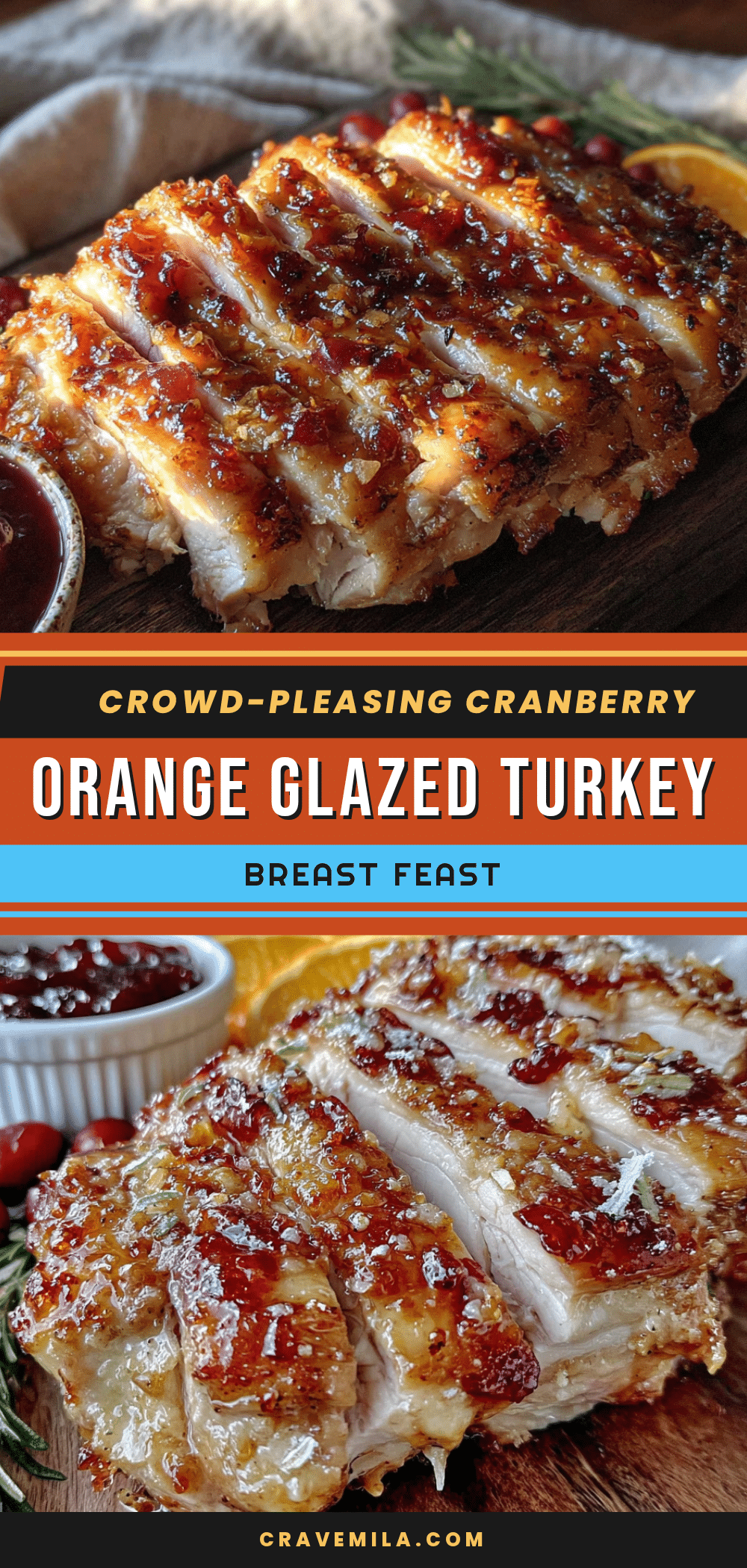
Perfectly Glazed Cranberry Orange Turkey Breast

This Cranberry Orange Glazed Turkey Breast features a sweet-tart glaze that locks in moisture, creating a juicy, caramelized crust. It’s a crowd-pleasing centerpiece perfect for holidays or any special occasion, and it’s surprisingly simple to make.
- Prep Time: 30 minutes
- Cook Time: 1 hour 15 minutes
- Total Time: 1 hour 45 minutes (plus optional brining time)
- Yield: 6-8 servings
- Category: Main Course
- Cuisine: American
Ingredients
- Bone-in, skin-on turkey breast (5-7 pounds)
- Whole berry cranberry sauce (1 can or about 14 ounces)
- Fresh orange juice (1/2 cup)
- Orange zest (2 tablespoons)
- Honey (1/4 cup)
- Dijon mustard (2 tablespoons)
- Unsalted butter (4 tablespoons, melted)
- Fresh rosemary (2 sprigs, plus extra for garnish)
- Fresh garlic (4 cloves, minced)
- Kosher salt (1 tablespoon)
- Black pepper (1 teaspoon)
- Chicken broth or turkey stock (1 cup)
- For the optional brine: Kosher salt (1/2 cup), Brown sugar (1/4 cup), Orange peels (from 2 oranges), Fresh rosemary (2 sprigs), Water (4 cups, plus ice water)
Instructions
- Brine the turkey (optional but recommended): Combine 4 cups water with 1/2 cup kosher salt and 1/4 cup brown sugar in a large pot. Add orange peels and rosemary sprigs. Heat until salt and sugar dissolve. Remove from heat and add 4 cups ice water. Place turkey breast in a container, pour brine over, and refrigerate for 8-12 hours.
- About 30 minutes before cooking, remove turkey from brine (if using) and pat completely dry with paper towels. If not brining, let turkey sit at room temperature for 30 minutes. Place turkey on rack in roasting pan.
- Preheat oven to 400°F (200°C). Season turkey breast generously with kosher salt and black pepper. Rub minced garlic all over turkey, including under the skin if possible.
- Make the glaze: In a small saucepan over medium heat, combine cranberry sauce, orange juice, orange zest, honey, Dijon mustard, and melted butter. Stir until combined and cranberry sauce breaks down slightly, about 3-4 minutes. Bring to a gentle simmer, then cook 2 more minutes. Remove from heat.
- Pour chicken broth or turkey stock into bottom of roasting pan. Place rosemary sprigs around turkey in liquid. Roast at 400°F for 20 minutes.
- After 20 minutes, reduce oven temperature to 350°F (175°C). Remove pan from oven and brush a generous layer of glaze all over turkey breast. Return to oven.
- Roast for another 45-55 minutes, brushing with glaze every 15-20 minutes. If glaze thickens, add a tablespoon of water or orange juice to thin.
- About 30 minutes into second roasting phase, start checking internal temperature with an instant-read thermometer in the thickest part of the breast (avoiding bone). Target 160°F (71°C). If skin browns too quickly, tent loosely with foil.
- Once turkey reaches 160°F, remove from oven. Apply final layer of glaze. Transfer to cutting board and let rest for 15-20 minutes.
- After resting, slice turkey breast against the grain into even slices. Arrange on platter, drizzle with remaining glaze, and garnish with fresh rosemary sprigs and orange slices if desired.
Notes
The brine is optional but highly recommended for juicier meat. Patting the skin dry is crucial for crispiness. Let the turkey rest for 15-20 minutes before slicing to allow juices to redistribute. If the glaze gets too dark during roasting, tent with foil to prevent burning.
Nutrition
- Serving Size: 4 ounces
- Calories: 280
- Sugar: 14
- Sodium: 450
- Fat: 8
- Saturated Fat: 3
- Carbohydrates: 18
- Fiber: 1
- Protein: 35
Keywords: cranberry orange turkey breast, glazed turkey breast, holiday turkey, turkey recipe, Thanksgiving turkey, bone-in turkey breast, cranberry glaze