It was 10:45 PM on a rainy Wednesday, and I was staring into the fridge like it owed me money. A single lemon rolled around the crisper drawer, a sad bunch of dill was wilting next to it, and there was a beautiful fillet of salmon I’d bought with big plans for a fancy dinner that never happened. I didn’t have the energy for a complicated marinade or a pan-seared situation that would leave my kitchen looking like a crime scene. But I had this idea that maybe, just maybe, if I kept it simple—just lemon, dill, butter, and heat—the salmon would do the hard work for me. Honestly, I was tired and a little grumpy, and I needed a win.
So I sliced the lemon thin, tore the dill with my fingers (because who has the energy to chop at that hour?), and laid everything on a sheet of foil. I wrapped it up like a little present, threw it in the oven, and sat on the kitchen floor scrolling my phone while the timer ticked down. The smell that started creeping out of the oven about fifteen minutes in was the kind that makes you close your eyes and forget you were ever in a bad mood. It was bright and herby and buttery, and it filled up my whole tiny apartment.
When I pulled that foil packet open, the steam hit my face, and the salmon was just… perfect. Flaky, tender, practically melting under my fork. Maybe you’ve been there—the moment when a simple, last-minute dinner turns into something you can’t stop thinking about. That’s this recipe. It’s the one I keep coming back to when I need a guaranteed good meal without the fuss. And let me tell you, it works just as well on a busy weeknight as it did on that rainy Wednesday at 11 PM.
Why You’ll Love This Recipe
I’ve tested this lemon dill baked salmon more times than I can count, tweaking the temperature and timing until it was absolutely foolproof. As someone who has definitely overcooked salmon into dry, sad flakes, I can promise you this method is the real deal. It’s built on a simple principle: gentle, even heat and a flavor-packed foil packet that steams the fish to tender perfection. This isn’t just another baked salmon recipe—it’s the one that finally worked for me, and I think it will work for you too.
- Quick & Easy: From fridge to table in under 25 minutes. Perfect for those nights when you’re hangry and out of ideas.
- Simple Ingredients: You probably have lemon, dill, butter, salt, and pepper right now. No fancy grocery store run required.
- Perfect for Weeknights or Company: It looks elegant enough for a dinner party but is easy enough for a Tuesday. The foil packet presentation is actually kind of charming.
- Crowd-Pleaser: Even people who claim they “don’t like fish” have gone back for seconds. The butter and lemon do a lot of heavy lifting.
- Unbelievably Flaky: The texture is what gets me every single time. It’s moist, tender, and breaks apart with the lightest touch of a fork.
What makes this recipe different from the rest? It’s the technique. Baking the salmon in a sealed foil packet with butter, lemon, and fresh dill creates a gentle steam environment that keeps the fish incredibly moist while infusing it with flavor. You don’t need to babysit it, flip it, or worry about it sticking to the pan. It’s the kind of meal that makes you feel like a kitchen genius with almost zero effort. Honestly, it’s comfort food that feels light and fresh—the best kind of contradiction.
What Ingredients You Will Need
This recipe relies on a handful of fresh, simple ingredients to create something genuinely special. The magic is in the quality and the combination, not the quantity. Most of these are pantry or fridge staples, which makes this dish an easy win any night of the week.
- Salmon Fillets (4 fillets, about 6 oz / 170g each): Look for fillets that are similar in thickness so they cook evenly. I prefer center-cut fillets for their uniform shape. Skin-on or skinless both work here—if using skin-on, the skin will steam and become tender, but you can easily remove it after cooking.
- Unsalted Butter (4 tablespoons / 56g, melted): Butter is the backbone of the flavor here. It adds richness and helps the lemon and dill cling to the fish. I use unsalted so I can control the salt level. If you only have salted, just reduce the added salt slightly.
- Fresh Lemon (1 large lemon): You’ll use both the juice and the slices. The juice adds brightness, and the slices create a bed for the salmon to steam on, infusing it with citrusy flavor. Avoid bottled lemon juice—it just isn’t the same.
- Fresh Dill (3 tablespoons, chopped): Fresh dill is non-negotiable here. Its delicate, anise-like flavor pairs beautifully with salmon and lemon. Dried dill won’t give you the same bright, fresh taste, so please grab a bunch from the produce section.
- Garlic (2 cloves, minced): A little garlic goes a long way in the butter mixture. It adds a savory depth that complements the lemon and dill without overpowering them.
- Salt (1 teaspoon): I use fine sea salt. It seasons the salmon evenly and helps the flavors pop.
- Black Pepper (½ teaspoon, freshly ground): Freshly ground pepper adds a subtle warmth. Pre-ground pepper works in a pinch, but fresh really does make a difference.
- Optional Garnish: Fresh dill sprigs and lemon wedges: For serving, because we eat with our eyes first.
Equipment Needed
You don’t need a fancy kitchen to pull off this lemon dill baked salmon. The equipment list is short, and I’ve included some easy substitutions if you’re missing something.
- Baking Sheet: A standard half-sheet pan works perfectly. It catches any drips and gives you a stable surface for the foil packets.
- Aluminum Foil: Heavy-duty foil is best because it’s less likely to tear. You’ll need enough to create a sealed packet for each fillet or one large packet for all four.
- Small Bowl: For mixing the melted butter, lemon juice, garlic, and dill.
- Chef’s Knife and Cutting Board: For slicing the lemon and chopping the dill and garlic.
- Measuring Spoons: For accuracy with the salt, pepper, and lemon juice.
- Instant-Read Thermometer (optional but recommended): If you want to be absolutely sure your salmon is cooked to perfection, an instant-read thermometer is your best friend. The target internal temperature is 125°F to 130°F for medium. I’ve used a cheap one for years, and it works great.
Preparation Method
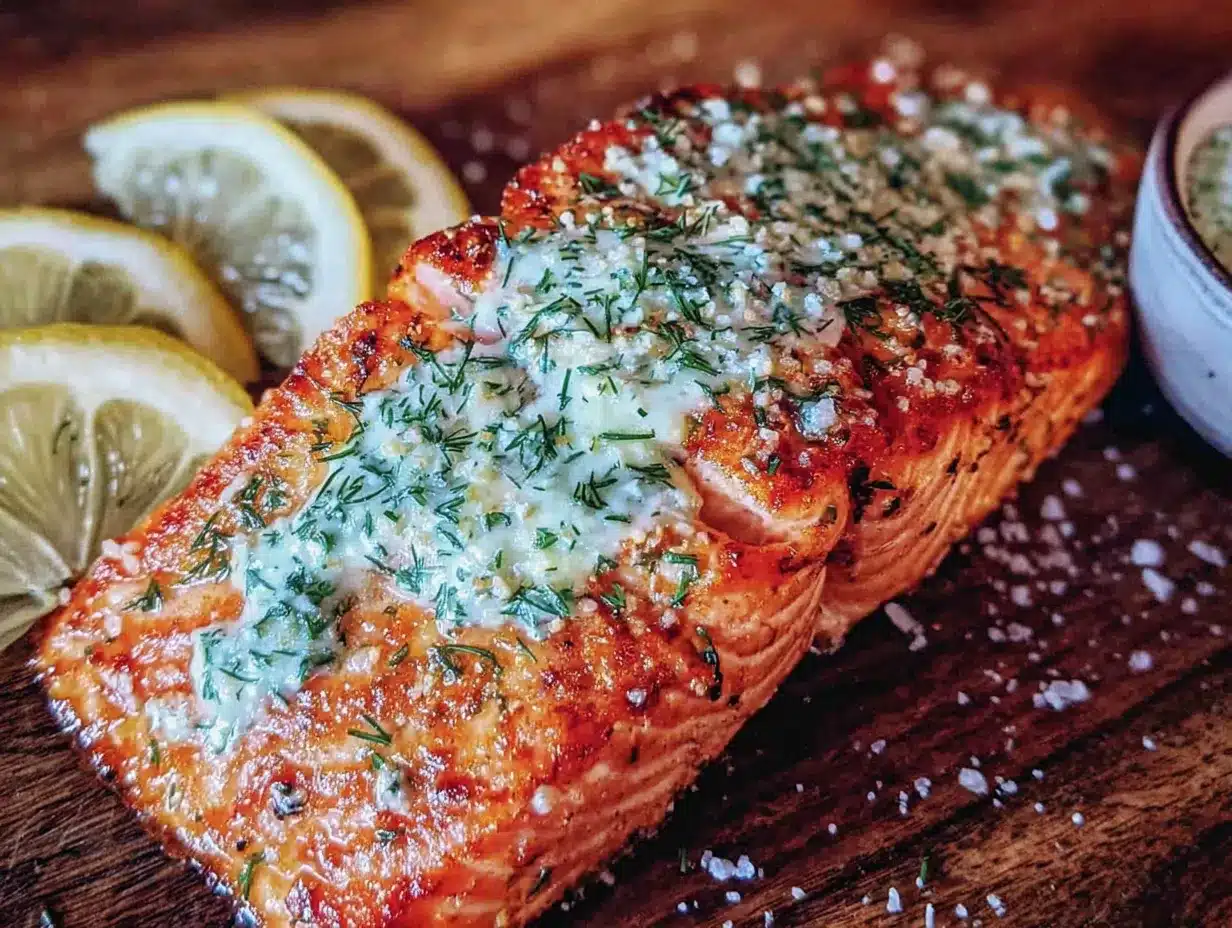
- Preheat your oven to 375°F (190°C). This moderate temperature is the sweet spot for gently cooking the salmon without drying it out. While the oven heats, get your ingredients ready.
- Prepare the butter mixture. In a small bowl, combine the 4 tablespoons of melted unsalted butter, the juice of half the lemon (about 1 tablespoon), the 2 minced garlic cloves, and the 3 tablespoons of chopped fresh dill. Whisk it together with a fork. It should smell incredibly fragrant already. Set it aside.
- Slice the remaining half of the lemon. Cut it into thin rounds, about ¼-inch thick. These will go under the salmon in the foil packets, so they don’t need to be perfect—just even enough to create a little bed.
- Prepare the foil packets. Tear off four large sheets of aluminum foil, each about 12 inches long. You want enough to fold over and seal completely. Place one lemon slice (or two, depending on size) in the center of each foil sheet. This is where the salmon will sit.
- Season the salmon. Pat the salmon fillets dry with a paper towel. This step is important—dry fish browns better and absorbs the seasoning more evenly. Place one fillet on top of the lemon slices on each foil sheet. Sprinkle each fillet evenly with the salt and black pepper.
- Add the butter mixture. Spoon the butter, dill, and garlic mixture over each fillet, dividing it equally among the four. Use the back of the spoon to spread it gently so the top of each fillet is coated. Don’t worry if some drips onto the foil—it will all steam together.
- Seal the packets. Fold the foil over the salmon and crimp the edges tightly to create a sealed packet. You want it closed so the steam stays inside, but leave a little air space around the fish. Think of it as a little tent. Place the packets on the baking sheet.
- Bake for 15-18 minutes. The exact time depends on the thickness of your fillets. For standard 6-ounce fillets that are about 1 inch thick, 16 minutes is usually perfect. The salmon is done when it flakes easily with a fork and the internal temperature reaches 125°F to 130°F. If you don’t have a thermometer, look for the fish to turn from translucent to opaque all the way through.
- Rest and serve. Carefully open one end of the foil packet to let the steam escape (watch out—it’s hot!). Let the salmon rest in the open packet for 2-3 minutes. This allows the juices to redistribute. Transfer the fillets to plates, spoon any buttery juices from the packet over the top, and garnish with fresh dill sprigs and lemon wedges.
A quick note from my own trials: the first time I made this, I opened the oven every five minutes to check on it. Don’t do that! The heat escapes, and your cooking time gets thrown off. Trust the timer and the thermometer. Also, if your fillets are significantly different in thickness, you can cut the thicker ones in half lengthwise or check the thinner ones a minute or two early.
Cooking Tips & Techniques
I’ve learned a few things the hard way so you don’t have to. The biggest mistake people make with baked salmon is overcooking it. The foil packet method is forgiving, but you still want to pull it at the right moment. Here are my best tips for perfect results every time.
Don’t skip the resting step. After you open the foil packet, let the salmon sit for a couple of minutes. This allows the carryover cooking to finish gently and the juices to settle. If you cut into it immediately, the moisture will run out onto the plate, leaving you with drier fish. I’ve made that mistake more than once, and it’s heartbreaking.
Use a thermometer. Honestly, an instant-read thermometer takes all the guesswork out of cooking fish. Insert it into the thickest part of the fillet. For salmon, 125°F to 130°F is medium, which is perfectly flaky and moist. If you prefer it more well-done, you can go to 135°F, but be careful—it can go from perfect to dry very quickly after that.
Fresh dill really matters. I know it’s tempting to use dried dill when the fresh stuff is wilted in the fridge, but the flavor difference is massive. Fresh dill has a bright, grassy, almost citrusy quality that dried dill just can’t replicate. If you absolutely have to use dried, reduce the amount to 1 teaspoon and add it to the butter mixture, but I promise fresh is worth the extra dollar.
Make extra butter mixture. If you’re feeling generous, double the butter, lemon, dill, and garlic mixture. Spoon the extra over the salmon after it’s cooked, or serve it on the side for dipping. It’s also incredible drizzled over roasted vegetables or rice.
Variations & Adaptations
This lemon dill baked salmon is a fantastic base recipe that welcomes all kinds of tweaks. Here are a few ways I’ve adapted it depending on what I have in the fridge or who I’m cooking for.
- Herb Swap: Not a dill fan? Substitute fresh parsley, chives, or tarragon. Tarragon has a lovely anise flavor that works beautifully with salmon. I’ve also used a combination of parsley and chives when my dill went bad, and it was still delicious.
- Citrus Twist: Swap the lemon for orange or lime. Orange pairs surprisingly well with salmon, especially if you add a pinch of red pepper flakes for a little heat. Lime gives it a more tropical, zesty vibe that’s perfect for summer.
- Garlic Butter Base: Omit the lemon and dill entirely and go straight garlic butter. Add an extra clove of garlic and a sprinkle of smoked paprika. It’s simple, rich, and incredibly satisfying.
- Spicy Version: Add ½ teaspoon of red pepper flakes or a thinly sliced fresno chili to the butter mixture. The heat cuts through the richness of the salmon and butter beautifully.
- Dairy-Free Adaptation: Substitute the butter with olive oil or avocado oil. Use about 3 tablespoons of oil instead of 4 tablespoons of butter. The flavor will be a little different—more fruity and less rich—but it’s still fantastic.
- Parchment Packet Method: If you prefer, use parchment paper instead of foil for a more eco-friendly option. The cooking time and method are identical. Just make sure the parchment is folded tightly to trap the steam.
Serving & Storage Suggestions
This salmon is versatile enough to serve with almost anything. I love it with a simple side of roasted asparagus or green beans, but it also pairs beautifully with rice, quinoa, or a crisp green salad. For a low-carb option, serve it over cauliflower rice or zucchini noodles. The buttery lemon dill sauce is perfect for drizzling over your sides.
For a complete meal, I often make a batch of creamy lemon orzo or garlic parmesan roasted potatoes to serve alongside. The flavors complement each other perfectly.
Storage: Leftover salmon keeps well in an airtight container in the refrigerator for up to 3 days. The flavor actually mellows and melds overnight, making it great for lunch the next day. To reheat, place the salmon in a low oven (300°F) for about 10 minutes, or microwave it gently in 30-second bursts. Be careful not to overheat it, or it will dry out.
Freezing: Cooked salmon freezes well for up to 2 months. Wrap each fillet tightly in plastic wrap, then place in a freezer-safe bag. Thaw overnight in the refrigerator before reheating. The texture won’t be quite as perfect as fresh, but it’s still delicious for salads or flaked over pasta.
Make-Ahead Tip: You can assemble the foil packets up to 4 hours in advance and keep them in the refrigerator. When you’re ready to cook, just pop them in the oven straight from the fridge, adding 2-3 minutes to the cooking time.
Nutritional Information & Benefits
This lemon dill baked salmon is not only delicious but also packed with nutrients. Salmon is an excellent source of high-quality protein, omega-3 fatty acids, and vitamin D. The butter adds a small amount of fat, but it’s mostly healthy, heart-friendly fat from the fish. Here are the approximate nutritional values per serving (one fillet with butter sauce):
- Calories: 320
- Protein: 34g
- Fat: 20g
- Saturated Fat: 8g
- Carbohydrates: 2g
- Fiber: 0g
- Sugar: 1g
- Sodium: 480mg
This recipe is naturally gluten-free, low-carb, and keto-friendly. It’s also a great option for anyone following a Mediterranean diet, thanks to the heart-healthy fats and fresh herbs. The only potential allergen is dairy from the butter, which can be easily swapped for olive oil as noted in the variations section.
From a wellness perspective, I love that this meal feels indulgent but is actually incredibly good for you. It’s the kind of dinner that leaves you feeling satisfied and energized, not heavy and sluggish. That’s a win in my book.
Conclusion
This lemon dill baked salmon has become my go-to for so many reasons. It’s fast, it’s forgiving, and it tastes like you spent way more effort than you actually did. Whether you’re cooking for a crowd on a holiday or just trying to get dinner on the table on a chaotic Tuesday, this recipe delivers every single time.
I really hope you give it a try. Don’t be afraid to play with the herbs or swap the citrus—the method is what makes it work, and the flavors are just the fun part. If you make it, I’d love to hear how it turned out. Leave a comment below and let me know what you served it with, or tag me in your photos if you share them online. Happy cooking, friends!
Frequently Asked Questions
Can I use frozen salmon for this recipe?
Yes, you can use frozen salmon, but you need to thaw it completely in the refrigerator first. Pat it very dry before seasoning, as frozen fish releases more moisture. You may also need to add 2-3 minutes to the cooking time.
How do I know when the salmon is done without a thermometer?
Look for the fish to turn from translucent to opaque all the way through. Gently press the thickest part with a fork—if it flakes easily and separates, it’s done. The flesh should also feel firm but still have a little give.
Can I make this recipe in an air fryer?
Absolutely! Preheat your air fryer to 375°F. Place the seasoned salmon fillets in the basket (without foil) and cook for 8-10 minutes, depending on thickness. The texture will be slightly different—crisper on the edges—but it’s still delicious.
What can I serve with lemon dill baked salmon?
This salmon pairs beautifully with roasted vegetables like asparagus, broccoli, or green beans. It’s also great with rice, quinoa, couscous, or a simple green salad. For a low-carb option, try cauliflower rice or zucchini noodles.
Can I prepare the foil packets ahead of time?
Yes! Assemble the packets up to 4 hours in advance and store them in the refrigerator. When you’re ready to cook, add 2-3 minutes to the baking time since you’re starting from cold. This makes it perfect for meal prep or entertaining.
Pin This Recipe!
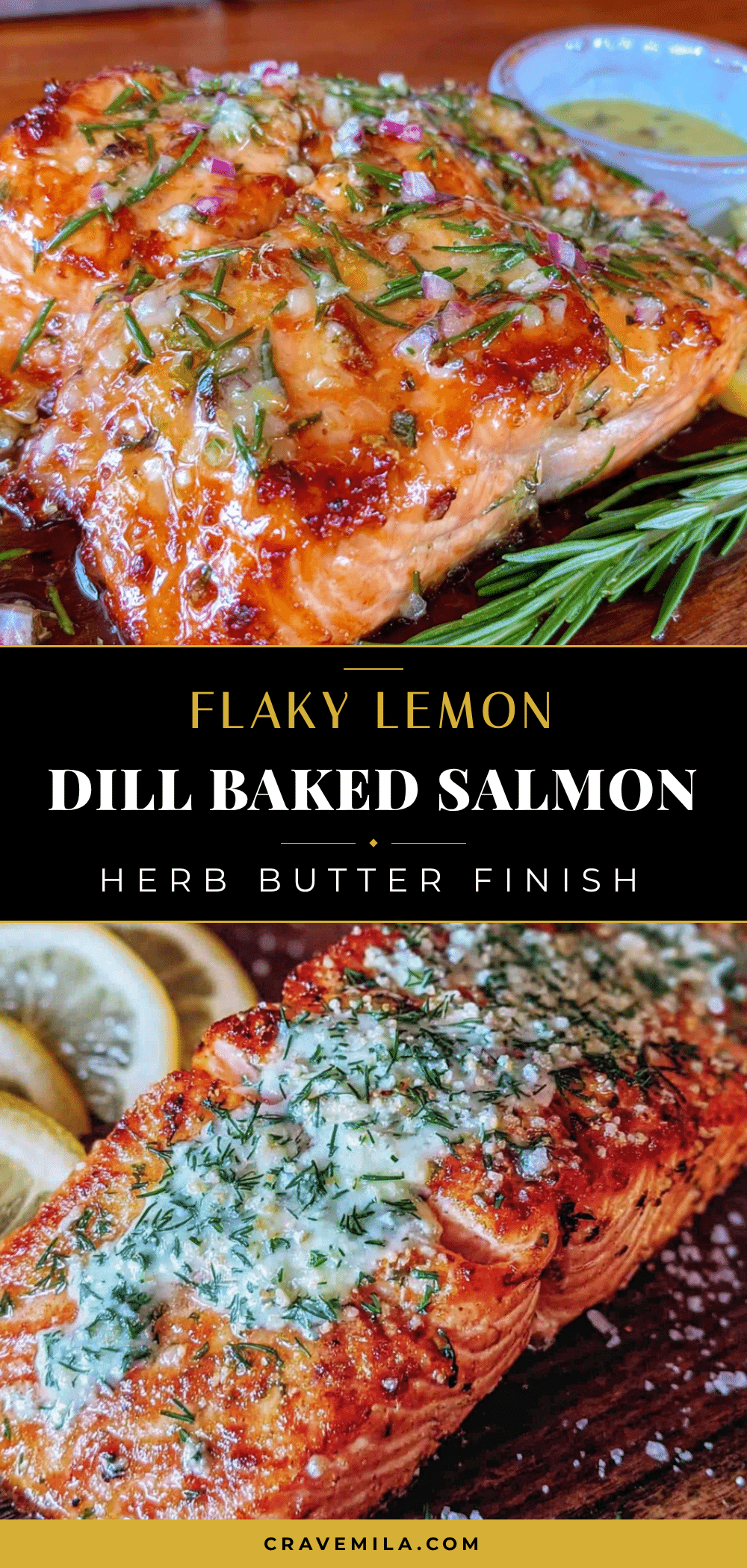
Easy Lemon Dill Baked Salmon: Best Flaky Recipe
This lemon dill baked salmon is a quick, easy, and foolproof recipe that delivers perfectly flaky, tender fish every time. Made with simple ingredients like lemon, dill, and butter, it’s perfect for busy weeknights or elegant dinners.
- Prep Time: 10 minutes
- Cook Time: 18 minutes
- Total Time: 28 minutes
- Yield: 4 servings 1x
- Category: Main Course
- Cuisine: American
Ingredients
- 4 salmon fillets (about 6 oz / 170g each)
- 4 tablespoons (56g) unsalted butter, melted
- 1 large lemon (juice and slices)
- 3 tablespoons fresh dill, chopped
- 2 cloves garlic, minced
- 1 teaspoon fine sea salt
- ½ teaspoon freshly ground black pepper
- Fresh dill sprigs and lemon wedges for garnish (optional)
Instructions
- Preheat your oven to 375°F (190°C).
- In a small bowl, combine the melted butter, juice of half the lemon (about 1 tablespoon), minced garlic, and chopped dill. Whisk together.
- Slice the remaining half of the lemon into thin rounds, about ¼-inch thick.
- Tear off four large sheets of aluminum foil, each about 12 inches long. Place one or two lemon slices in the center of each sheet.
- Pat the salmon fillets dry with a paper towel. Place one fillet on top of the lemon slices on each foil sheet. Sprinkle evenly with salt and black pepper.
- Spoon the butter mixture over each fillet, dividing equally. Spread gently to coat the top.
- Fold the foil over the salmon and crimp the edges tightly to create a sealed packet, leaving a little air space around the fish. Place packets on a baking sheet.
- Bake for 15-18 minutes, until the salmon flakes easily with a fork and the internal temperature reaches 125°F to 130°F.
- Carefully open one end of each foil packet to let steam escape. Let rest for 2-3 minutes. Transfer fillets to plates, spoon buttery juices over the top, and garnish with fresh dill sprigs and lemon wedges.
Notes
Don’t open the oven to check on the salmon frequently, as heat escapes and affects cooking time. If fillets vary in thickness, check thinner ones a minute or two early. For best results, use fresh dill and an instant-read thermometer. The foil packet method creates a gentle steam environment that keeps the fish moist.
Nutrition
- Serving Size: 1 fillet with butter
- Calories: 320
- Sugar: 1
- Sodium: 480
- Fat: 20
- Saturated Fat: 8
- Carbohydrates: 2
- Protein: 34
Keywords: baked salmon, lemon dill salmon, easy salmon recipe, healthy salmon, weeknight dinner, gluten-free, low-carb, keto-friendly