I was elbow-deep in a pile of tax receipts—the kind of Saturday afternoon that makes you question every life choice that led you there—when my accountant, Mr. Henderson, started talking about peach cobbler. Mr. Henderson is a man of few words, mostly numbers and sighs, so when he leaned back in his creaky office chair and said, “You know, the secret to a good cobbler is a bad biscuit,” I nearly dropped my coffee. He wasn’t talking about finances. He was talking about buttermilk biscuits that are so tender, so flaky, they barely hold themselves together. And that, apparently, is exactly what you want sitting on top of a bubbling, syrupy pan of peaches. I scribbled his instructions on the back of an envelope, paid my taxes, and went straight home to test his theory. Honestly, I was skeptical. A biscuit that falls apart on purpose? But let me tell you, that first bite changed everything. The way the buttery, craggy biscuit soaks up the sweet peach juices without turning to mush—it’s a textural masterpiece. It’s the kind of dessert that makes you close your eyes and forget you were ever stressed about anything. And it’s the dish I now bring to every single gathering, because it never, ever fails to impress. Maybe you’ve been searching for that one dessert that feels both rustic and show-stopping? This is it.
Why You’ll Love This Recipe
This isn’t just another peach cobbler. This is the one that gets requested by name. I’ve tested this recipe more times than I can count—through different peach varieties, biscuit flours, and baking dish sizes—and I can tell you with total confidence: this version works every single time.
- Incredibly Easy: You don’t need to be a pastry chef to nail this. The biscuit dough comes together in one bowl, and the filling is as simple as stirring fruit with sugar. We’re talking about 15 minutes of active work.
- Simple, Pantry-Friendly Ingredients: No trips to a specialty store. You need butter, flour, buttermilk, peaches, and a few basic staples. That’s it.
- Perfect for Hosting: This is the dessert you make when you want to look like you spent hours in the kitchen but actually spent most of the time chatting with your guests. It bakes while you relax.
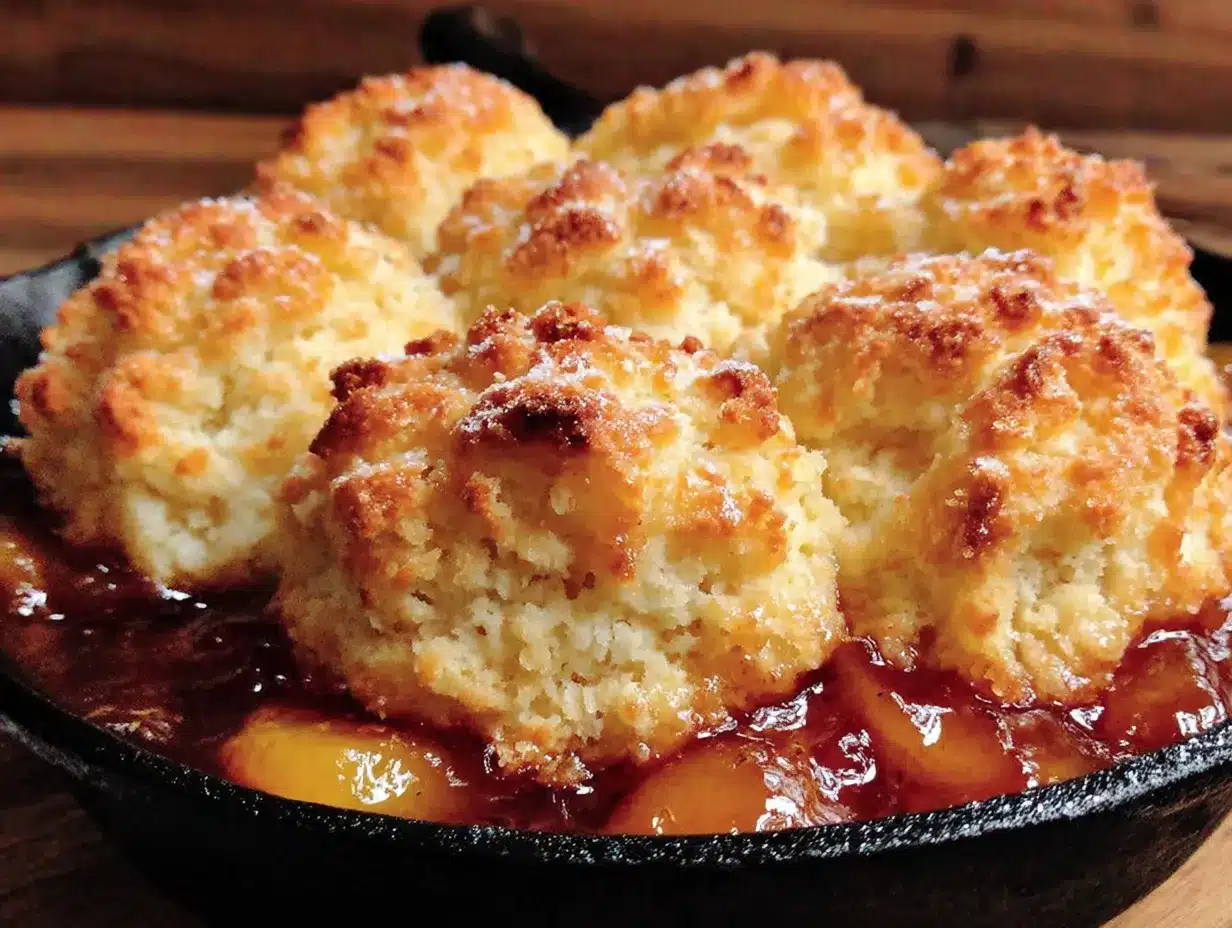
- Unforgettable Texture: The biscuit topping is golden and crisp on the outside, impossibly tender and almost custard-like where it meets the fruit. The peaches break down into a jammy, spiced syrup that’s pure comfort.
- Always a Crowd-Pleaser: I’ve served this at potlucks, holiday dinners, and casual backyard barbecues. The dish comes back empty every single time. Kids and adults alike go back for seconds.
What sets this recipe apart is the technique. Most cobblers use a drop biscuit that sits on top of the fruit. Here, we use a rolled and cut biscuit that’s arranged in a single layer. It bakes up with more structure, more flaky layers, and a beautiful golden top that makes it look like you fussed. You didn’t. But they don’t need to know that.
What Ingredients You Will Need
This recipe relies on a handful of quality ingredients to deliver big flavor. Here’s what you’ll need and why each one matters.
For the Peach Filling
- 6 cups fresh or frozen sliced peaches (about 6-7 medium peaches). If using fresh, look for freestone peaches—they’re easier to pit. If using frozen, don’t thaw them first; they’ll release their juices as they bake, which is exactly what you want. In a pinch, canned peaches in juice (drained) work, but the texture won’t be quite as good.
- 3/4 cup granulated sugar. This sweetens the fruit and helps create that gorgeous syrup. You can reduce it to 1/2 cup if your peaches are very ripe and sweet.
- 2 tablespoons cornstarch. This thickens the peach juices so the filling isn’t watery. It’s the secret to a cobbler that holds together on a plate.
- 1 tablespoon fresh lemon juice. A splash of acid brightens the flavor of the peaches and balances the sweetness. Don’t skip it.
- 1/2 teaspoon ground cinnamon. Adds warmth and depth. I prefer Saigon cinnamon for its stronger, sweeter flavor.
- 1/4 teaspoon ground nutmeg. Freshly grated is best, but pre-ground works fine. It adds a subtle, aromatic note.
- Pinch of salt. Salt makes everything taste more like itself, including fruit.
For the Buttermilk Biscuits
- 2 cups all-purpose flour (spooned and leveled). I use King Arthur Flour for its consistent protein content, which gives reliable results every time.
- 1 tablespoon baking powder. Make sure it’s fresh—old baking powder won’t give you the rise you need.
- 1/2 teaspoon baking soda. This reacts with the acidic buttermilk to create extra lift and tenderness.
- 1 tablespoon granulated sugar. Just a touch of sweetness in the biscuit to complement the fruit.
- 1/2 teaspoon salt. Essential for flavor.
- 6 tablespoons cold unsalted butter, cut into small cubes. The butter must be cold. Pop it in the freezer for 10 minutes before you start. I prefer Plugrà or Kerrygold for their higher butterfat content, which makes for flakier biscuits.
- 3/4 cup cold buttermilk, plus more for brushing. Shake the carton well before measuring. If you don’t have buttermilk, you can make a quick substitute by adding 1 tablespoon of lemon juice or white vinegar to 3/4 cup of milk and letting it sit for 5 minutes.
- 1 tablespoon turbinado or coarse sugar, for sprinkling on top. This gives the biscuits a lovely crunchy, sparkly top.
Equipment Needed
- 9×13-inch baking dish (or a 10-inch cast-iron skillet). A glass or ceramic dish works best for even baking. I love using my enameled cast-iron skillet because it goes straight from oven to table and keeps the cobbler warm for ages.
- Large mixing bowls (one for the filling, one for the biscuits).
- Pastry cutter or two forks for cutting the butter into the flour. You could also use a food processor, but be careful not to over-process.
- 2-inch round biscuit cutter. A sharp-edged cutter gives the cleanest rise. If you don’t have one, a drinking glass works in a pinch.
- Rolling pin. Or just use a wine bottle—I’ve done it.
- Pastry brush for the buttermilk wash.
- Measuring cups and spoons.
- Chef’s knife and cutting board for prepping the peaches.
Preparation Method
- Preheat your oven to 375°F (190°C). Position a rack in the center of the oven. While it’s heating, get your filling started.
- Make the peach filling. In a large bowl, combine the sliced peaches, 3/4 cup sugar, cornstarch, lemon juice, cinnamon, nutmeg, and a pinch of salt. Stir gently until the peaches are evenly coated. Let this mixture sit for about 10 minutes while you make the biscuits. This allows the peaches to start releasing their juices—that’s a good thing.
- Make the biscuit dough. In a separate large bowl, whisk together the 2 cups of flour, baking powder, baking soda, 1 tablespoon of sugar, and 1/2 teaspoon of salt. Add the cold butter cubes. Using a pastry cutter or two forks, cut the butter into the flour until the mixture looks like coarse meal with some pea-sized butter pieces remaining. Don’t overwork it—those little bits of butter are what create flaky layers.
- Add the buttermilk. Pour the cold buttermilk into the flour-butter mixture. Stir with a fork just until the dough comes together. It will be shaggy and a little sticky. That’s perfect. Do not overmix, or your biscuits will be tough.
- Turn out and fold. Lightly flour your work surface. Turn the dough out onto it. Gently pat the dough into a rectangle about 1/2-inch thick. Fold it in half like a book, then pat it out again. Repeat this folding process 3 to 4 times. This creates those beautiful, flaky layers. After the final fold, pat the dough to a 3/4-inch thickness.
- Cut the biscuits. Dip your biscuit cutter in flour, then press straight down into the dough without twisting. Twisting seals the edges and prevents the biscuits from rising properly. Cut out as many biscuits as you can, re-rolling the scraps once if needed. You should get about 10 to 12 biscuits.
- Assemble the cobbler. Pour the peach mixture (including all the juices) into your ungreased 9×13-inch baking dish. Arrange the biscuits on top in a single layer, spacing them evenly. They will spread a bit as they bake, so leave a little room between them.
- Brush and sprinkle. Using a pastry brush, lightly brush the tops of the biscuits with a little buttermilk. Sprinkle generously with turbinado or coarse sugar.
- Bake. Place the dish on a baking sheet to catch any drips (trust me on this). Bake for 35 to 40 minutes, until the biscuits are deep golden brown and the filling is bubbling up around the edges. The filling should be thick and jammy, not watery. If the biscuits are browning too quickly, tent the dish loosely with foil for the last 10 minutes.
- Cool slightly. Let the cobbler cool on a wire rack for at least 15 minutes before serving. This allows the filling to set up so it doesn’t run all over the plate. The waiting is the hardest part, I know.
Cooking Tips & Techniques
I’ve made this cobbler more times than I can count, and I’ve learned a few things the hard way. Here’s what I wish someone had told me the first time.
Keep everything cold. The butter, the buttermilk, even your hands if you can manage it. Warm butter melts into the flour instead of creating steam pockets, and steam pockets are what make biscuits flaky. If your kitchen is hot, pop the cut biscuits in the fridge for 15 minutes before baking.
Don’t skip the folding step. I know it seems fussy, but that simple fold-and-pat process is what transforms a good biscuit into a great one. It creates those delicate, buttery layers that make people think you’re a pastry prodigy.
Watch your baking time. Ovens vary wildly. My old oven took a full 40 minutes; my new one does it in 32. Start checking at the 30-minute mark. The filling should be bubbling thickly, and the biscuits should be a rich, golden brown. If the top is done but the filling seems thin, give it a few more minutes.
One mistake I made early on was using too small a baking dish. The filling bubbled over and made a smoky mess in the oven. Always use a dish that gives the filling room to bubble—a 9×13 is ideal. And always put a baking sheet underneath, just in case.
For the best texture, serve the cobbler warm, not hot. Letting it rest for 15 to 20 minutes allows the cornstarch to fully thicken the juices. If you serve it straight out of the oven, you’ll have a soupy mess. I learned that one the hard way at a dinner party.
Variations & Adaptations
This recipe is wonderfully adaptable. Here are a few ways I’ve changed it up depending on the season, the crowd, or just my mood.
Berry Peach Cobbler: Swap half the peaches for fresh or frozen blueberries, raspberries, or blackberries. The berries add a tangy contrast to the sweet peaches and create a gorgeous purple-red syrup. I made this for a Fourth of July barbecue, and it was the first dish to disappear.
Gluten-Free Version: Substitute the all-purpose flour with a good 1-to-1 gluten-free baking flour blend (I like Bob’s Red Mill). Add an extra tablespoon of buttermilk, as gluten-free flours tend to absorb more liquid. The texture will be a bit more tender and less flaky, but still absolutely delicious.
Spiced Variation: Add 1/4 teaspoon of cardamom or ginger to the peach filling along with the cinnamon. A tiny pinch of cloves also works. This gives the cobbler a more complex, almost chai-like warmth that’s perfect for fall gatherings.
Individual Servings: Divide the filling among 8 to 10 ramekins or small oven-safe bowls. Top each with a single biscuit (cut to fit). Bake for about 20 to 25 minutes. These are adorable for dinner parties and make serving a breeze.
Savory-Sweet Twist: This might sound odd, but trust me—add a teaspoon of fresh thyme leaves to the peach filling. The herbaceous note cuts through the sweetness and makes the cobbler taste surprisingly sophisticated. I tried this on a whim after seeing a similar combination in a fancy restaurant, and it’s become my secret-weapon version.
Serving & Storage Suggestions
This cobbler is best served warm, about 15 to 20 minutes after it comes out of the oven. The filling will be thick and jammy, and the biscuits will still have that perfect crisp-tender texture.
What to serve with it: A scoop of vanilla bean ice cream is the classic pairing, and for good reason—the cold, creamy ice cream melting into the warm, syrupy peaches is pure magic. A dollop of lightly sweetened whipped cream is a lighter alternative. For an extra-decadent dessert, drizzle each serving with a little caramel sauce.
For a brunch spread, serve the cobbler alongside a platter of crispy bacon or sausage links. The salty-sweet combination is unexpectedly perfect. I once served this at a holiday brunch, and guests were spooning it over their pancakes.
Storing leftovers: Cover the baking dish tightly with foil or transfer leftovers to an airtight container. Refrigerate for up to 4 days. The biscuits will soften as they sit, but the flavor only gets better.
Reheating: The best way to reheat is in a 350°F oven for about 10 to 15 minutes, until warmed through. This helps re-crisp the biscuits slightly. You can use the microwave in a pinch, but the biscuits will be quite soft.
Freezing: You can freeze the unbaked, assembled cobbler. Assemble it in a freezer-safe dish, wrap tightly in plastic wrap and then foil, and freeze for up to 3 months. Bake from frozen, adding about 15 minutes to the baking time. Or, freeze the baked and cooled cobbler for up to 2 months. Thaw overnight in the fridge and reheat in the oven.
Nutritional Information & Benefits
Let’s be real—this is a dessert, and it’s meant to be enjoyed. But you might be surprised to know it has a few redeeming qualities.
One serving (about 1/10th of the cobbler) contains approximately 320 calories, 10g fat, 55g carbohydrates, 3g fiber, and 4g protein. These are estimates and will vary based on your specific ingredients and portion sizes.
Peaches are a good source of vitamins A and C, which support immune health and skin health. They also contain antioxidants like chlorogenic acid, which may help reduce inflammation. Plus, the fiber in the fruit and the whole-grain potential of the biscuit (if you choose a whole wheat pastry flour) adds a little staying power.
This recipe is vegetarian and can be made dairy-free by using a plant-based butter and buttermilk substitute. For a lower-sugar version, reduce the sugar in the filling to 1/2 cup and use a sugar alternative in the biscuits.
My personal take? This dessert is about joy, not nutrition. But knowing that it starts with real, whole ingredients makes me feel a little better about going back for seconds.
Conclusion
This buttermilk biscuit peach cobbler has become my signature dish, and it all started with a tax accountant who knew more about biscuits than I ever expected. It’s the dessert I bring to every potluck, the one I make for friends who need a little comfort, and the one I turn to when I want to feel like a kitchen hero without spending all day in the kitchen.
The beauty of this recipe is how forgiving it is. The peaches can be fresh, frozen, or even canned. The biscuits come together in minutes. And the result is always, always spectacular. I hope you’ll make it your own—maybe with a different fruit, a new spice, or served with your favorite ice cream. That’s the joy of a good recipe: it’s a starting point, not a rulebook.
When you make this cobbler—and I hope you do—come back and let me know how it turned out. Did you add a twist? Did it disappear in record time? I’d love to hear your story. Until then, happy baking, and remember: sometimes the best recipes come from the most unexpected places.
Frequently Asked Questions
Can I use canned peaches instead of fresh or frozen?
Yes, you can. Use about 4 cans (15 ounces each) of peaches packed in juice, drained well. Reduce the sugar in the filling to 1/2 cup, since canned peaches are often packed in syrup. The texture will be softer, but the flavor will still be delicious.
Why did my biscuits turn out tough?
Overmixing is the most common culprit. When you stir the dough too much, you develop the gluten in the flour, which makes biscuits dense and tough. Mix just until the dough comes together, even if it looks a little shaggy. Also, make sure your butter is very cold.
Can I make this cobbler ahead of time?
Absolutely. You can assemble the entire cobbler (without baking) up to 24 hours in advance. Cover and refrigerate. When you’re ready to bake, add about 10 minutes to the baking time since you’re starting from cold. The flavor actually improves as the peaches and spices meld together.
How do I know when the cobbler is done?
The biscuits should be deep golden brown on top and the filling should be bubbling thickly around the edges. If you insert a toothpick into a biscuit, it should come out clean or with a few moist crumbs. The filling should look jammy, not watery.
Can I use a different fruit?
Yes! This recipe works beautifully with nectarines, plums, apricots, or a mix of summer stone fruits. For a winter version, try sliced apples or pears with a little extra cinnamon and a tablespoon of bourbon or vanilla extract. The cooking time stays about the same.
Pin This Recipe!
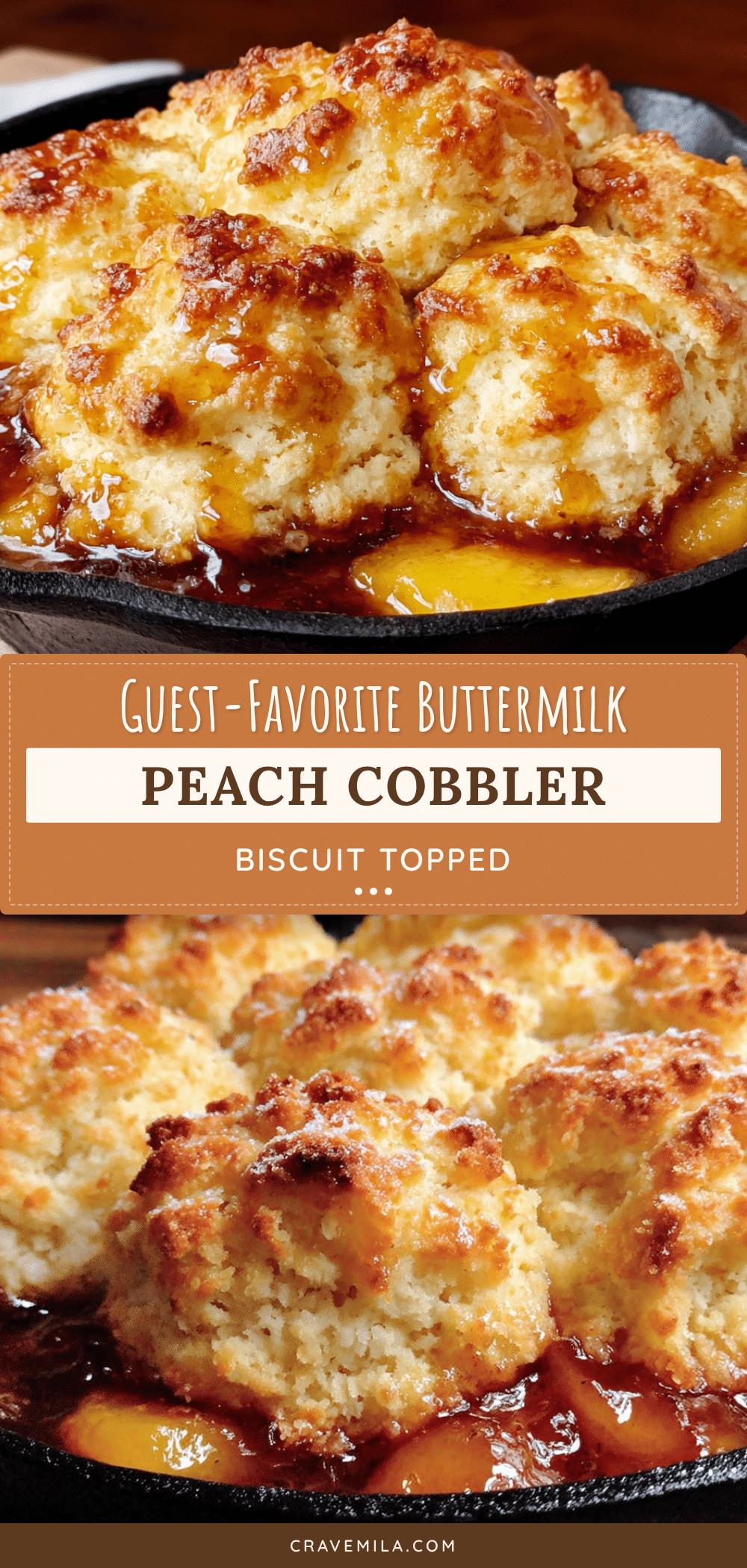
Easy Buttermilk Biscuit Peach Cobbler: Best Guest Dessert

This buttermilk biscuit peach cobbler features tender, flaky biscuits atop a bubbling, syrupy peach filling. It’s an incredibly easy, crowd-pleasing dessert that looks like you spent hours in the kitchen but actually comes together in minutes.
- Prep Time: 15 minutes
- Cook Time: 35-40 minutes
- Total Time: 50-55 minutes
- Yield: 10 servings 1x
- Category: Dessert
- Cuisine: American
Ingredients
- 6 cups fresh or frozen sliced peaches (about 6–7 medium peaches)
- 3/4 cup granulated sugar
- 2 tablespoons cornstarch
- 1 tablespoon fresh lemon juice
- 1/2 teaspoon ground cinnamon
- 1/4 teaspoon ground nutmeg
- Pinch of salt
- 2 cups all-purpose flour (spooned and leveled)
- 1 tablespoon baking powder
- 1/2 teaspoon baking soda
- 1 tablespoon granulated sugar
- 1/2 teaspoon salt
- 6 tablespoons cold unsalted butter, cut into small cubes
- 3/4 cup cold buttermilk, plus more for brushing
- 1 tablespoon turbinado or coarse sugar, for sprinkling
Instructions
- Preheat your oven to 375°F (190°C). Position a rack in the center of the oven.
- Make the peach filling: In a large bowl, combine the sliced peaches, 3/4 cup sugar, cornstarch, lemon juice, cinnamon, nutmeg, and a pinch of salt. Stir gently until the peaches are evenly coated. Let this mixture sit for about 10 minutes while you make the biscuits.
- Make the biscuit dough: In a separate large bowl, whisk together the 2 cups of flour, baking powder, baking soda, 1 tablespoon of sugar, and 1/2 teaspoon of salt. Add the cold butter cubes. Using a pastry cutter or two forks, cut the butter into the flour until the mixture looks like coarse meal with some pea-sized butter pieces remaining.
- Add the buttermilk: Pour the cold buttermilk into the flour-butter mixture. Stir with a fork just until the dough comes together. It will be shaggy and a little sticky.
- Turn out and fold: Lightly flour your work surface. Turn the dough out onto it. Gently pat the dough into a rectangle about 1/2-inch thick. Fold it in half like a book, then pat it out again. Repeat this folding process 3 to 4 times. After the final fold, pat the dough to a 3/4-inch thickness.
- Cut the biscuits: Dip your biscuit cutter in flour, then press straight down into the dough without twisting. Cut out as many biscuits as you can, re-rolling the scraps once if needed. You should get about 10 to 12 biscuits.
- Assemble the cobbler: Pour the peach mixture (including all the juices) into your ungreased 9×13-inch baking dish. Arrange the biscuits on top in a single layer, spacing them evenly.
- Brush and sprinkle: Using a pastry brush, lightly brush the tops of the biscuits with a little buttermilk. Sprinkle generously with turbinado or coarse sugar.
- Bake: Place the dish on a baking sheet to catch any drips. Bake for 35 to 40 minutes, until the biscuits are deep golden brown and the filling is bubbling up around the edges. If the biscuits are browning too quickly, tent the dish loosely with foil for the last 10 minutes.
- Cool slightly: Let the cobbler cool on a wire rack for at least 15 minutes before serving.
Notes
Keep all biscuit ingredients cold for flakiness. Don’t overmix the dough. Let the cobbler rest for 15-20 minutes after baking to allow the filling to set. For best results, use a baking sheet under the dish to catch drips.
Nutrition
- Serving Size: 1/10 of cobbler
- Calories: 320
- Sugar: 32
- Sodium: 320
- Fat: 10
- Saturated Fat: 6
- Carbohydrates: 55
- Fiber: 3
- Protein: 4
Keywords: peach cobbler, buttermilk biscuit, easy dessert, summer dessert, peach recipe, biscuit cobbler, crowd-pleaser