My friend Dave asked why I couldn’t just mix the glaze ingredients right into the meatloaf instead of brushing it on top. I started to explain why that wouldn’t work — then stopped. Honestly, I had no good reason. I just always did it the other way, you know? The summer we spent trading dinner duty, Dave kept suggesting wild changes to my recipes. Most of them I ignored. But this one stuck with me because I couldn’t stop thinking about it. What if the brown sugar caramelized from the inside out instead of just forming a sticky top layer?
So I tried it. I mixed a third of the glaze into the meat mixture before baking. The result was this incredible sweet-meets-savory thing happening in every single bite instead of just on the crust. I mean, the top still got that gorgeous sticky finish because I brushed more on halfway through. But the inside? Totally different texture. Little pockets of sweetness hiding in the beef. It was the kind of accidental discovery that makes you question everything you thought you knew about a dish you’ve made a hundred times.
That cracked ceramic loaf pan I bought at a garage sale for three dollars? It finally earned its keep that night. The meatloaf came out perfectly shaped, the glaze bubbled around the edges, and Dave just sat there nodding like he’d known all along. Maybe you’ve been there — someone suggests something so simple you almost dismiss it, and then it completely changes how you cook. This classic meatloaf recipe with brown sugar glaze is exactly that. It’s the version I wish I’d been making all along.
Why You’ll Love This Recipe
I tested this recipe seven times before I got it exactly right. Seven meatloaves in two weeks. My freezer was packed, my neighbors were fed, and I finally understood what makes this version special. It’s not just another meatloaf recipe — it’s the one that solves every problem I used to have with this dish.
- Quick & Easy : Comes together in about 15 minutes of prep, then the oven does the rest. Perfect for those Tuesday nights when you need dinner handled.
- Simple Ingredients : Ground beef, breadcrumbs, eggs, ketchup, brown sugar — you probably have most of this in your kitchen right now.
- Perfect for Family Dinners : Kids actually ask for leftovers. Adults ask for the recipe. It bridges that gap between comfort food and something you’re proud to serve.
- Crowd-Pleaser : I brought this to a potluck last month and three people emailed me for the recipe the next day. Not kidding.
- Unbelievably Delicious : The brown sugar glaze does something magical. It’s sweet and tangy and gets slightly caramelized on the edges. Every bite has that contrast between savory meat and sweet glaze.
What makes this recipe different from the rest? It’s the double-glaze method. Mixing some glaze into the meat and brushing the rest on top creates layers of flavor you just don’t get from a standard topping. The meat stays incredibly moist because the sugar helps lock in moisture during cooking. I also use a blend of ground beef and ground pork for better texture — something I learned from my grandmother’s meatball recipe.
This is the kind of meal that makes you close your eyes after the first bite. It’s comfort food reimagined — familiar but somehow better than you remembered. Perfect for impressing guests without stress, or turning a simple Wednesday dinner into something memorable.
What Ingredients You Will Need
This classic meatloaf recipe with brown sugar glaze uses simple, wholesome ingredients to deliver bold flavor and satisfying texture without the fuss. Most of these are pantry staples you probably already have on hand.
For the Meatloaf
- Ground beef (2 pounds, 80/20 blend) — the fat content keeps the meatloaf moist. I prefer 80/20 for the best balance of flavor and texture.
- Ground pork (1/2 pound) — adds richness and tenderness. You can use all beef if needed, but the pork makes a noticeable difference.
- Breadcrumbs (1 cup, plain) — helps bind everything together. Panko works great too. (use gluten-free breadcrumbs if needed)
- Yellow onion (1 medium, finely diced) — adds moisture and sweetness as it cooks.
- Garlic (3 cloves, minced) — because everything needs garlic.
- Eggs (2 large, lightly beaten) — the binder that holds it all together.
- Ketchup (1/4 cup) — adds tang and helps keep the meat tender.
- Worcestershire sauce (2 tablespoons) — that deep umami flavor you can’t quite identify but would miss if it wasn’t there.
- Dijon mustard (1 tablespoon) — cuts through the richness nicely. (use yellow mustard in a pinch)
- Salt (1 teaspoon) — I use kosher salt for better control.
- Black pepper (1/2 teaspoon, freshly ground) — freshly ground makes a difference here.
- Dried thyme (1 teaspoon) — earthy notes that complement the beef.
- Fresh parsley (2 tablespoons, chopped) — optional but adds freshness.
For the Brown Sugar Glaze
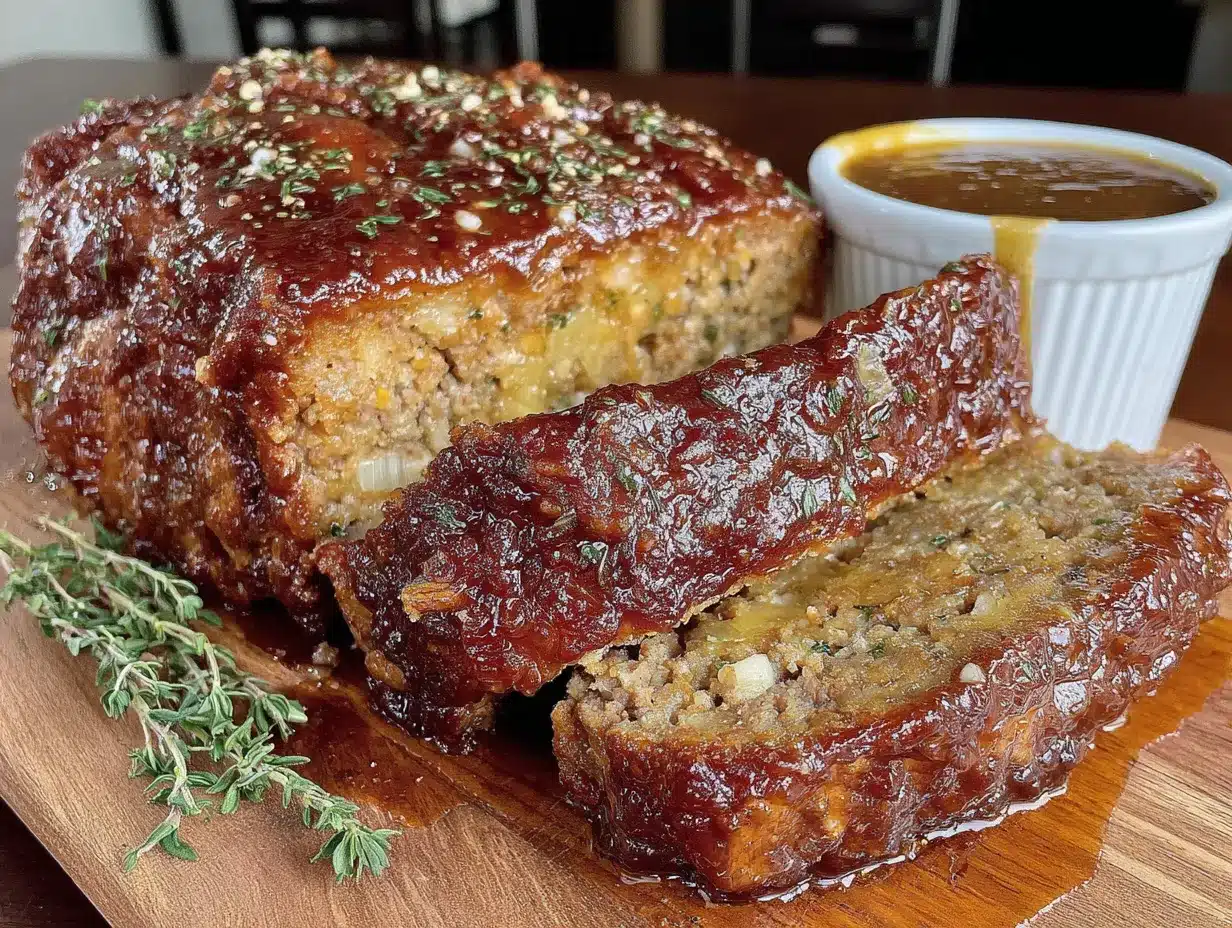
- Ketchup (1/2 cup) — the base of the glaze.
- Brown sugar (1/3 cup, packed) — light or dark both work. Dark brown sugar gives deeper molasses flavor.
- Apple cider vinegar (1 tablespoon) — balances the sweetness with acidity.
- Worcestershire sauce (1 teaspoon) — adds complexity.
- Garlic powder (1/2 teaspoon) — savory depth without raw garlic bite.
- Smoked paprika (1/2 teaspoon) — subtle smokiness that makes the glaze unforgettable.
I recommend using Heinz ketchup for consistency — I’ve tested others and the texture varies too much. For the brown sugar, Domino or any standard brand works fine. Just make sure it’s packed firmly in the measuring cup.
Equipment Needed
You don’t need fancy equipment for this recipe. Here’s what I use every time:
- Large mixing bowl — big enough to get your hands in there and mix everything together.
- Loaf pan (9×5 inch) — standard size works perfectly. Glass or metal both work, but metal gives better browning on the sides.
- Parchment paper — not required but makes cleanup so much easier. I learned this the hard way after scrubbing caramelized sugar off a pan for twenty minutes.
- Small bowl — for mixing the glaze.
- Pastry brush — for applying the glaze. A spoon works in a pinch but the brush gives more even coverage.
- Meat thermometer — honestly, this is non-negotiable. Guessing doneness with meatloaf is risky. I use a simple instant-read thermometer.
- Wire rack — for cooling the meatloaf after baking. Lets air circulate so the bottom doesn’t get soggy.
If you don’t have a loaf pan, you can shape the meatloaf free-form on a rimmed baking sheet. Just form it into a loaf shape and bake. The cooking time stays about the same. I actually prefer this method sometimes because more surface area gets that beautiful glaze.
Preparation Method
- Preheat your oven to 350°F (175°C). Position the rack in the center of the oven. Line your loaf pan with parchment paper, leaving some overhang on the sides — this makes lifting the meatloaf out so much easier.
- Make the brown sugar glaze first. In a small bowl, whisk together the ketchup, packed brown sugar, apple cider vinegar, Worcestershire sauce, garlic powder, and smoked paprika. Set aside about 1/4 cup of this mixture to mix into the meat. The rest will go on top.
- Prepare your onion and garlic. Finely dice the onion — you want small pieces so they cook through and don’t leave crunchy bits in the meatloaf. Mince the garlic cloves. If you’re using fresh parsley, chop it now.
- Combine the meat mixture. In your large mixing bowl, add the ground beef and ground pork. Break them up gently with your hands. Add the breadcrumbs, diced onion, minced garlic, beaten eggs, 1/4 cup ketchup, Worcestershire sauce, Dijon mustard, salt, pepper, dried thyme, and the 1/4 cup of glaze you set aside.
- Mix gently — this is crucial. Use your hands and mix until everything is just combined. Overmixing makes meatloaf tough and dense. You want to see everything distributed evenly, but stop as soon as it comes together. I usually mix for about 60 seconds total. Your hands should feel the mixture coming together but still slightly loose.
- Shape the meatloaf. Transfer the mixture to your prepared loaf pan. Press it in gently, making sure there are no air pockets. Shape the top into a slight dome — it’ll settle as it bakes. Don’t pack it down hard; just smooth it evenly.
- Apply the first layer of glaze. Brush about half of the remaining glaze over the top and sides of the meatloaf. Reserve the rest for later. This first layer will bake into the meat and start caramelizing.
- Bake for 45 minutes. Place the loaf pan on a baking sheet to catch any drips. Bake uncovered at 350°F for 45 minutes. Your kitchen will start smelling incredible around the 30-minute mark.
- Apply the second glaze layer. After 45 minutes, carefully remove the meatloaf from the oven. Brush on the remaining glaze. Return to the oven for another 15-20 minutes.
- Check the internal temperature. Insert your meat thermometer into the center of the meatloaf. You’re looking for 160°F (71°C). This is the safe temperature for ground meat. If it hasn’t reached 160°F yet, continue baking in 5-minute increments.
- Rest before slicing. This is the hardest part, I know. Let the meatloaf rest in the pan for 10-15 minutes. Use the parchment paper to lift it out and transfer to a wire rack or cutting board. Resting allows the juices to redistribute throughout the meat. If you slice too early, it’ll fall apart and the juices will run out onto the cutting board instead of staying in the meat.
- Slice and serve. Use a sharp knife to cut even slices, about 1-inch thick. Spoon any remaining pan juices over the slices if you want extra flavor.
A few things I’ve learned the hard way: Your meatloaf will look slightly puffed and feel firm to the touch when it’s done. The glaze should be bubbly and darkened around the edges. If the top is browning too quickly during baking, tent loosely with foil for the last 15 minutes.
Cooking Tips & Techniques
I’ve made enough dry, crumbly meatloaves in my life to know exactly what goes wrong. Here’s what I’ve learned so you don’t have to repeat my mistakes.
Don’t skip the panade. A panade is just a mixture of breadcrumbs and liquid that keeps meatloaf tender. The breadcrumbs absorb the egg and ketchup, creating a paste that prevents the meat proteins from tightening up too much during cooking. If your meatloaf always turns out dense, you’re probably not using enough breadcrumbs or you’re overmixing.
Temperature matters more than time. I ruined a meatloaf last Thanksgiving because I trusted the timer instead of the thermometer. It looked perfect on the outside but was still raw in the center. Every oven runs slightly different, and the shape of your meatloaf affects cooking time. Always, always use a meat thermometer. 160°F is your target.
Let the meat come to room temperature. Take your ground meat out of the fridge about 20 minutes before you start mixing. Cold meat doesn’t combine evenly, and you’ll end up overmixing trying to get everything incorporated. Room temperature meat mixes more easily and cooks more evenly.
The onion trick. If you have time, sauté the diced onion in a little oil for 3-4 minutes before adding it to the meat mixture. It softens the onion and brings out its sweetness. I don’t always do this, but when I do, the meatloaf has a more uniform texture without any raw onion crunch.
Make extra glaze. I always double the glaze recipe. Half goes on the meatloaf, and the remaining half gets heated up and served on the side. People love having extra to drizzle over their slices. It also keeps well in the fridge for a week.
Variations & Adaptations
This classic meatloaf recipe with brown sugar glaze is wonderfully adaptable. Here are some variations I’ve tested and loved:
Turkey Meatloaf : Substitute ground turkey for the beef and pork. Use 2 1/2 pounds of ground turkey (93/7 works best). Add 2 tablespoons of olive oil to compensate for the lower fat content. The cooking time stays about the same, but check temperature at 50 minutes — turkey can dry out quickly if overcooked.
Gluten-Free Version : Swap the breadcrumbs for gluten-free panko or crushed gluten-free crackers. I’ve used crushed Rice Chex in a pinch and it worked surprisingly well. Make sure your Worcestershire sauce is gluten-free — some brands contain malt vinegar.
Spicy Kick : Add 1-2 tablespoons of sriracha or your favorite hot sauce to the glaze. Mix a teaspoon of cayenne pepper into the meat mixture. The brown sugar balances the heat beautifully. My neighbor Mike requests this version every time I make meatloaf.
Cheese-Stuffed Meatloaf : Make a well in the center of the meat mixture before baking and stuff it with 1 cup of shredded cheddar or mozzarella. Press the meat back around the cheese to seal it. The melted cheese center is absolutely ridiculous in the best way.
Bacon-Wrapped Meatloaf : Weave 6-8 strips of bacon into a lattice on a piece of parchment paper. Place the shaped meatloaf in the center and wrap the bacon around it. Bake as directed, adding about 10 minutes to the cooking time. The bacon gets crispy and adds smoky flavor to the outside.
I personally love the turkey version for weeknight dinners — it feels lighter but still satisfies that meatloaf craving. The bacon-wrapped version is my go-to for company. It looks impressive with almost no extra effort.
Serving & Storage Suggestions
This meatloaf is best served warm, right after that 10-minute rest period. The glaze should be sticky and slightly caramelized, the meat tender and moist. Slice it thick — about 1-inch slices — and arrange them on a platter with any extra pan juices drizzled over the top.
What to serve with it: Mashed potatoes are the classic pairing, and for good reason — the glaze mixes with the butter and cream to create something magical. Roasted green beans or steamed broccoli add color and balance. A simple side salad with vinaigrette cuts through the richness. I also love serving it with crusty bread to soak up every last bit of glaze from the plate.
Storage: Leftover meatloaf keeps beautifully in the refrigerator for up to 4 days. Wrap it tightly in foil or place slices in an airtight container. The flavors actually deepen overnight — I sometimes think day-two meatloaf is even better.
Freezing: You can freeze the whole cooked meatloaf or individual slices. Wrap tightly in plastic wrap, then foil, and freeze for up to 3 months. Thaw overnight in the refrigerator before reheating.
Reheating: The best way to reheat meatloaf without drying it out is in a 300°F oven. Place slices on a baking sheet, cover loosely with foil, and heat for 10-15 minutes. You can also microwave individual slices for about 60 seconds, but the texture won’t be quite as good. For crispy edges, reheat slices in a skillet over medium heat with a splash of water and cover for 3-4 minutes.
Nutritional Information & Benefits
Here’s the nutritional breakdown for one serving (based on 8 servings per meatloaf):
| Nutrient | Amount Per Serving |
|---|---|
| Calories | 385 |
| Protein | 28g |
| Total Fat | 22g |
| Saturated Fat | 8g |
| Carbohydrates | 18g |
| Fiber | 1g |
| Sugar | 12g |
| Sodium | 680mg |
This meatloaf provides a solid amount of protein and iron from the beef and pork. The onions and garlic offer antioxidants and anti-inflammatory compounds. While it’s not exactly health food, it’s real food made from whole ingredients — and that counts for something.
For a lighter option, use ground turkey and reduce the brown sugar to 1/4 cup. You can also swap the breadcrumbs for rolled oats to add fiber. The glaze can be made with sugar-free ketchup to cut down on sugar without sacrificing flavor.
This recipe contains gluten (from breadcrumbs), dairy (if using cheese variations), and eggs. For allergen-friendly versions, see the variations section above.
Conclusion
This classic meatloaf recipe with brown sugar glaze is the one I keep coming back to. It’s the version that made my friend Dave stop mid-bite and say “okay, this is actually perfect.” It’s the recipe I send to friends who say they can’t cook, because it’s forgiving and flexible and always turns out well.
The double-glaze method — some mixed in, some brushed on top — creates something special. Every bite has that sweet-savory balance that makes meatloaf worth getting excited about. And honestly, if someone had told me years ago that mixing the glaze into the meat would change everything, I would have laughed. But here we are.
I’d love to hear how yours turns out. Did you try any variations? Did your family go back for seconds? Leave a comment below and let me know. And if you share it on social media, tag me — I want to see your beautiful glazed meatloaf in all its sticky, caramelized glory. Happy cooking!
Frequently Asked Questions
Can I make this meatloaf ahead of time?
Absolutely. You can assemble the meatloaf completely, cover it, and refrigerate for up to 24 hours before baking. Just add about 10 minutes to the cooking time since you’re starting from cold. The glaze can be made up to 3 days ahead and stored in the fridge.
Why did my meatloaf fall apart when I sliced it?
This usually happens for two reasons: not enough binder (breadcrumbs and eggs) or not letting it rest long enough after baking. Make sure you’re using the full cup of breadcrumbs and both eggs. And resist the urge to slice immediately — that 10-minute rest is essential for the structure to set.
Can I use ground turkey instead of beef?
Yes, I do this all the time. Use 2 1/2 pounds of ground turkey (93/7 lean-to-fat ratio) and add 2 tablespoons of olive oil to keep it moist. The cooking time is similar, but start checking the temperature at 50 minutes. Turkey dries out faster than beef, so don’t overcook it.
How do I prevent the glaze from burning?
If your glaze is getting too dark before the meatloaf is fully cooked, tent the pan loosely with aluminum foil for the last 15-20 minutes of baking. This protects the glaze from direct heat while the meat finishes cooking. Also make sure your oven isn’t running hot — an oven thermometer can help.
Can I freeze the meatloaf before baking?
Yes, and this is a great meal prep strategy. Assemble the meatloaf in the loaf pan, wrap it tightly in plastic wrap and then foil, and freeze for up to 3 months. Thaw overnight in the refrigerator before baking. You’ll need to add about 15-20 minutes to the baking time since it’s starting from cold. The glaze should be added just before baking, not before freezing.
Pin This Recipe!
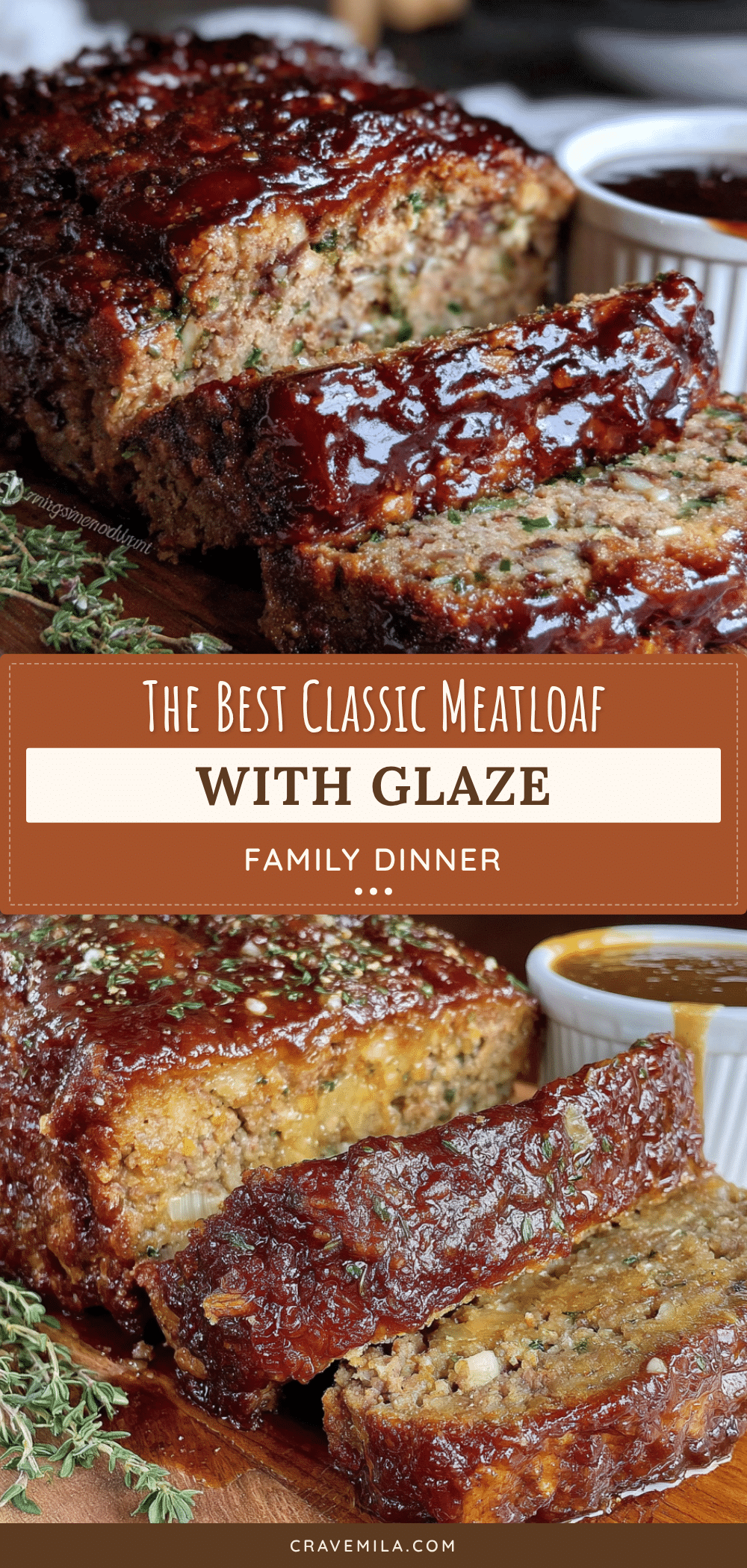
Classic Meatloaf Recipe with Brown Sugar Glaze Best Easy
This classic meatloaf recipe with brown sugar glaze uses a double-glaze method for incredible sweet-savory flavor in every bite. It’s quick, easy, and perfect for family dinners.
- Prep Time: 15 minutes
- Cook Time: 60 minutes
- Total Time: 1 hour 15 minutes
- Yield: 8 servings 1x
- Category: Main Course
- Cuisine: American
Ingredients
- 2 pounds ground beef (80/20 blend)
- 1/2 pound ground pork
- 1 cup plain breadcrumbs
- 1 medium yellow onion, finely diced
- 3 cloves garlic, minced
- 2 large eggs, lightly beaten
- 1/4 cup ketchup
- 2 tablespoons Worcestershire sauce
- 1 tablespoon Dijon mustard
- 1 teaspoon kosher salt
- 1/2 teaspoon freshly ground black pepper
- 1 teaspoon dried thyme
- 2 tablespoons fresh parsley, chopped (optional)
- 1/2 cup ketchup (for glaze)
- 1/3 cup packed brown sugar (light or dark)
- 1 tablespoon apple cider vinegar
- 1 teaspoon Worcestershire sauce (for glaze)
- 1/2 teaspoon garlic powder
- 1/2 teaspoon smoked paprika
Instructions
- Preheat your oven to 350°F (175°C). Position the rack in the center of the oven. Line your loaf pan with parchment paper, leaving some overhang on the sides.
- Make the brown sugar glaze first. In a small bowl, whisk together the ketchup, packed brown sugar, apple cider vinegar, Worcestershire sauce, garlic powder, and smoked paprika. Set aside about 1/4 cup of this mixture to mix into the meat. The rest will go on top.
- Prepare your onion and garlic. Finely dice the onion and mince the garlic cloves. If using fresh parsley, chop it now.
- Combine the meat mixture. In your large mixing bowl, add the ground beef and ground pork. Break them up gently with your hands. Add the breadcrumbs, diced onion, minced garlic, beaten eggs, 1/4 cup ketchup, Worcestershire sauce, Dijon mustard, salt, pepper, dried thyme, and the 1/4 cup of glaze you set aside.
- Mix gently using your hands until everything is just combined. Do not overmix. Mix for about 60 seconds total.
- Transfer the mixture to your prepared loaf pan. Press it in gently, making sure there are no air pockets. Shape the top into a slight dome.
- Brush about half of the remaining glaze over the top and sides of the meatloaf. Reserve the rest for later.
- Bake for 45 minutes at 350°F. Place the loaf pan on a baking sheet to catch any drips.
- After 45 minutes, carefully remove the meatloaf from the oven. Brush on the remaining glaze. Return to the oven for another 15-20 minutes.
- Check the internal temperature with a meat thermometer. It should reach 160°F (71°C) in the center.
- Let the meatloaf rest in the pan for 10-15 minutes. Use the parchment paper to lift it out and transfer to a wire rack or cutting board.
- Slice and serve with a sharp knife into 1-inch thick slices. Spoon any remaining pan juices over the slices if desired.
Notes
Don’t skip the panade (breadcrumbs and liquid) to keep meatloaf tender. Use a meat thermometer for accuracy. Let meat come to room temperature before mixing. Sauté onion for 3-4 minutes for a more uniform texture. Double the glaze recipe for extra to serve on the side.
Nutrition
- Serving Size: 1 slice (1-inch thic
- Calories: 385
- Sugar: 12
- Sodium: 680
- Fat: 22
- Saturated Fat: 8
- Carbohydrates: 18
- Fiber: 1
- Protein: 28
Keywords: meatloaf, brown sugar glaze, classic meatloaf, easy meatloaf, family dinner, comfort food