The farmer’s market was closing in twenty minutes and I’d spent the whole Saturday morning convincing myself I didn’t need to go. You know that feeling when the week has been so long that even the idea of choosing produce feels exhausting? Yeah, that was me. But I’d promised myself I’d make something from scratch this weekend, and there I was, sprinting between stalls with a canvas bag banging against my hip.
I grabbed three pints of cherry tomatoes from the last vendor packing up—he practically threw them at me for half price. They were those beautiful mixed-color ones, some deep red, some orange, a few almost purple. Honestly, I had no plan. I just knew they’d go bad if I didn’t buy them. Back home, I dumped them on the counter and stared. What was I supposed to do with three pounds of cherry tomatoes on a Tuesday night?
That’s when the idea hit me—roast them. Low and slow, let them get all jammy and sweet. I had a bunch of basil wilting in the fridge and a head of garlic that was starting to sprout. It was one of those meals that comes together from the edge of the pantry, you know? The result was so good I actually texted my sister a photo mid-bite. She asked for the recipe before I’d even swallowed. This flavorful roasted cherry tomato sauce with fresh basil has been a staple in my kitchen ever since, and honestly, it’s the kind of thing you’ll want to make on repeat. Let me show you why.
Why You’ll Love This Recipe
I’ve tested this homemade roasted cherry tomato sauce with basil more times than I can count. Each batch taught me something new—like how the size of the tomatoes affects roasting time, or why you shouldn’t skip the step of smashing the garlic cloves. Here’s what makes this recipe stand out from the rest:
- Simple Ingredients : You likely have everything already. Cherry tomatoes, garlic, basil, olive oil, salt, and pepper. That’s it. No trips to a specialty store.
- Hands-Off Cooking : The oven does the heavy lifting. You toss everything on a sheet pan, roast until caramelized, then blend. Minimal effort, maximum reward.
- Incredibly Versatile : Use it on pasta, spread it on crusty bread, spoon it over grilled chicken, or mix it into risotto. It adapts to whatever you’re craving.
- Freezer-Friendly : Make a double batch and stash some for busy weeknights. It tastes just as bright and fresh months later.
- Naturally Healthy : No added sugar, no heavy cream, just pure roasted vegetable goodness. It’s vegan, gluten-free, and packed with antioxidants.
This isn’t just another tomato sauce recipe. The roasting process concentrates the natural sugars in the cherry tomatoes, creating a depth of flavor you can’t get from stovetop simmering. Plus, the fresh basil adds that bright, peppery finish that makes you close your eyes after the first bite. It’s comfort food that feels light and nourishing at the same time.
What Ingredients You Will Need
This recipe uses simple, wholesome ingredients to deliver bold flavor and satisfying texture without the fuss. Most of these are pantry staples, especially during the summer months when cherry tomatoes are at their peak.
- Cherry tomatoes (3 pounds) – Look for firm, ripe tomatoes with vibrant color. I prefer a mix of red and orange varieties for visual appeal, but any color works. (adds natural sweetness when roasted)
- Garlic cloves (6-8 large) – Leave the skins on during roasting, then squeeze out the soft, caramelized flesh. This method gives you sweet, mellow garlic without any bitterness. (use fresh garlic, not pre-minced)
- Fresh basil leaves (1 cup, packed) – Save a few leaves for garnish. Basil loses some brightness when cooked, so adding it fresh after blending is key. (I recommend growing your own if you can—it makes a difference)
- Extra-virgin olive oil (¼ cup) – Use a good-quality oil here since it’s a primary flavor. The oil helps the tomatoes caramelize and carries the basil’s aroma. (adds richness and helps blending)
- Kosher salt (1 teaspoon) – Season generously. Salt draws out moisture from the tomatoes, which concentrates their flavor during roasting.
- Black pepper (½ teaspoon, freshly ground) – Adds a subtle warmth that balances the sweetness of the roasted tomatoes.
- Optional: Red pepper flakes (¼ teaspoon) – If you like a little heat, sprinkle these over the tomatoes before roasting. It adds a gentle kick without overpowering the sauce.
- Optional: Balsamic vinegar (1 tablespoon) – A splash before blending adds acidity and complexity. I use this when my tomatoes aren’t as flavorful as I’d like.
If you’re out of fresh basil, you can substitute 2 tablespoons of dried basil, but add it after roasting, not before—dried herbs burn easily. For a deeper flavor, try using roasted garlic instead of raw garlic cloves. Just toss a whole head of garlic (cut side down) on the pan with the tomatoes.
Equipment Needed
You don’t need fancy kitchen gadgets for this recipe, which is part of its charm. Here’s what you’ll need:
- Rimmed baking sheet (18×13 inches) – A half-sheet pan works perfectly. The rim catches any juices that bubble up during roasting. I’ve used both non-stick and aluminum pans, and both work fine—just line the aluminum one with parchment paper for easier cleanup.
- Parchment paper or silicone baking mat – Not strictly necessary, but it makes cleanup a breeze. The caramelized tomato juices can stick to the pan otherwise.
- Blender or food processor – An immersion blender also works if you want to blend directly in a bowl. I prefer a standard blender for the smoothest texture. (my Vitamix handles this in seconds)
- Chef’s knife and cutting board – You’ll only need to halve the larger tomatoes and chop the basil, so nothing fancy required.
- Large bowl – For tossing the tomatoes with oil and seasonings before roasting.
- Rubber spatula – To scrape every last bit of that roasted goodness into the blender. Trust me, you don’t want to waste the caramelized bits.
If you don’t have a blender, you can mash the roasted tomatoes with a potato masher for a chunkier sauce. It’s a different texture but equally delicious. I’ve done it when my blender was in the dishwasher, and honestly, I liked the rustic feel.
Preparation Method
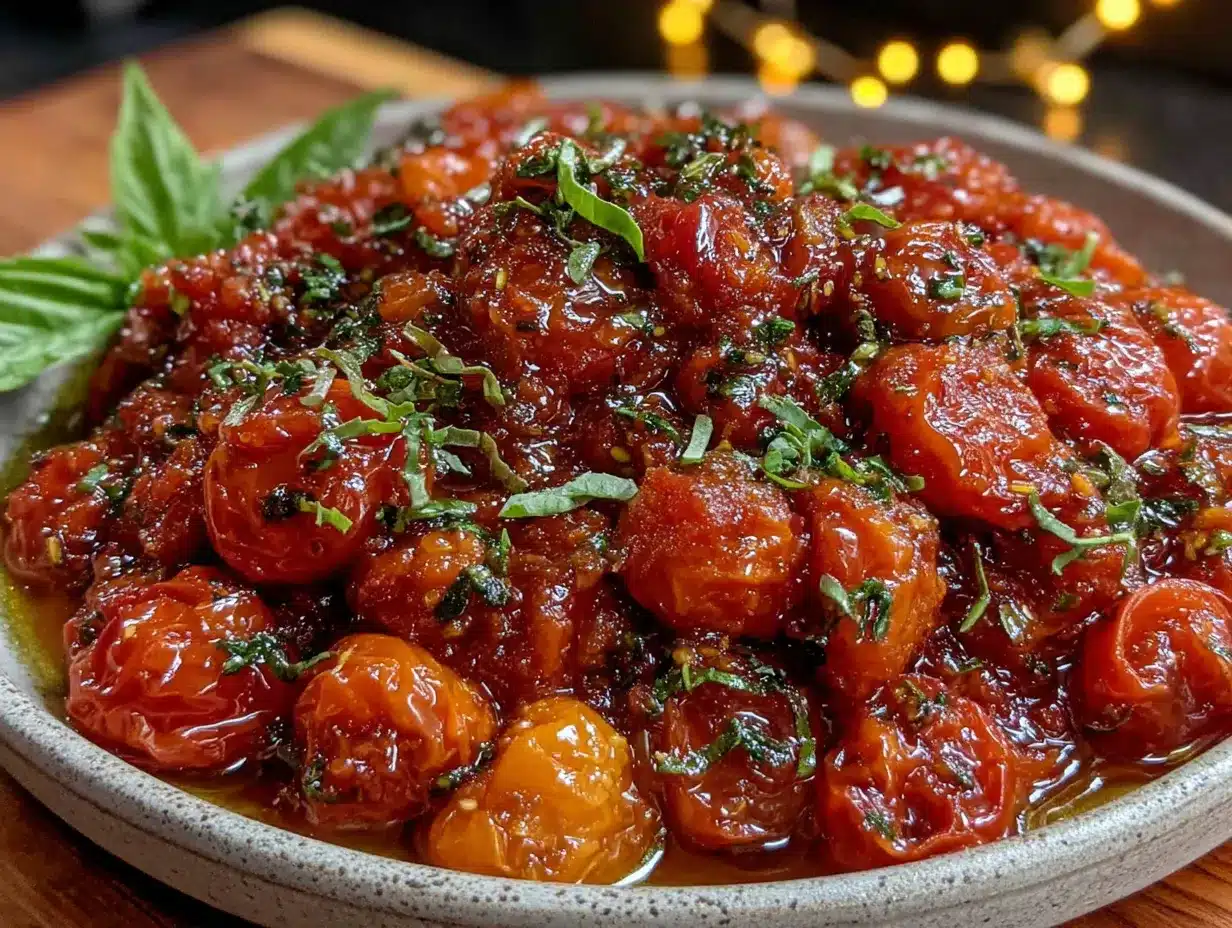
Let’s walk through this step by step. The whole process takes about 45 minutes, with most of that being hands-off roasting time.
- Preheat your oven to 400°F (200°C). Position the rack in the middle of the oven. While it heats, wash and dry your cherry tomatoes. If any are especially large (bigger than a golf ball), slice them in half. Small ones can stay whole—they’ll burst open during roasting anyway.
- Prepare the garlic. Separate the garlic cloves but leave the skins on. Don’t peel them! The skin protects the garlic from burning and turns it into a soft, spreadable paste. Toss the cloves in with the tomatoes.
- Season the tomatoes. On your baking sheet (or in a large bowl), combine the cherry tomatoes, garlic cloves, olive oil, salt, pepper, and red pepper flakes if using. Toss everything together with your hands until every tomato is coated. Spread them in a single layer—crowding leads to steaming instead of roasting. (use two pans if needed)
- Roast for 30-35 minutes. The tomatoes should be wrinkled, burst open, and lightly browned on the edges. The garlic will feel soft when squeezed. About halfway through, give the pan a gentle shake to rotate the tomatoes. You’ll smell the sweetness filling your kitchen—that’s how you know it’s working.
- Cool slightly. Remove the pan from the oven and let it sit for 5 minutes. This makes handling easier and prevents the hot tomatoes from splattering in the blender.
- Squeeze the garlic. Once cool enough to touch, pick up each garlic clove and squeeze the softened flesh into the blender. Discard the skins. This step is oddly satisfying—the garlic just slides right out.
- Blend the sauce. Transfer the roasted tomatoes and any juices from the pan into the blender. Add the fresh basil leaves and balsamic vinegar if using. Blend on low speed, gradually increasing to high, until the sauce reaches your desired consistency. I like mine smooth but with a little texture, so I pulse it a few times instead of running it continuously.
- Taste and adjust. Give the sauce a taste. Does it need more salt? Another drizzle of olive oil? A pinch more pepper? This is your moment to dial it in. Remember, flavors mellow after blending, so season slightly more than you think necessary.
- Serve or store. Use immediately, or let it cool completely before transferring to storage containers. The sauce thickens slightly as it cools.
A quick warning: when blending hot liquids, don’t fill the blender more than halfway, and remove the center cap from the lid to let steam escape. Cover the opening with a folded kitchen towel instead. I learned this the hard way when hot tomato sauce exploded all over my ceiling. Trust me, you don’t want that.
Cooking Tips & Techniques
After making this roasted cherry tomato sauce with basil at least two dozen times, I’ve picked up a few tricks that make a real difference.
Don’t skip the single layer. I know it’s tempting to pile all the tomatoes on one pan to save dishes, but overcrowding creates steam. Steam means your tomatoes boil instead of roast, and you lose that deep, caramelized flavor. Use two pans if you have to—it’s worth the extra dish.
Roast at the right temperature. 400°F is the sweet spot. Lower temperatures won’t caramelize the sugars enough, and higher temperatures risk burning the garlic before the tomatoes are done. If your oven runs hot, check the pan at 25 minutes.
Save those juices. When you transfer the roasted tomatoes to the blender, don’t leave behind the syrupy liquid on the pan. That’s pure flavor. Use a rubber spatula to scrape every bit into the blender. I’ve even added a splash of water to the hot pan to loosen stubborn bits—that liquid gold goes into the sauce too.
Let the basil shine. Adding fresh basil after roasting (rather than before) preserves its bright, peppery flavor. If you roast basil, it turns bitter and loses its character. This is the single most important tip I can give you.
Texture control. For a chunkier sauce, pulse the blender just a few times. For a silky smooth sauce, blend on high for 30 seconds. I’ve made both versions depending on my mood, and neither is wrong. My kids prefer smooth; I like it rustic.
Variations & Adaptations
This recipe is incredibly forgiving, so feel free to make it your own. Here are some variations I’ve tried and loved:
- Herb Swap : If you’re out of basil, try fresh oregano or thyme. Add them to the pan during the last 10 minutes of roasting. Rosemary also works but use it sparingly—it’s strong.
- Roasted Pepper Addition : Toss a couple of red bell peppers (halved and seeded) on the pan with the tomatoes. Roast them together, then blend everything. The peppers add sweetness and a slightly smoky flavor.
- Spicy Version : Add a whole dried chili (like arbol or chipotle) to the pan before roasting. Remove it before blending, or leave it in for extra heat. I’ve done this for a arrabbiata-style sauce that’s fantastic on pasta.
- Dairy-Free Creamy Sauce : After blending, stir in ¼ cup of cashew cream or coconut cream. It makes the sauce velvety without any dairy. My vegan friends request this version constantly.
- Balsamic Glaze Finish : Instead of blending balsamic vinegar into the sauce, drizzle a balsamic reduction over the finished dish. The sweet-tart contrast is beautiful.
I once made this with yellow cherry tomatoes and basil from my neighbor’s garden—the sauce was a stunning golden color and tasted like summer in a bowl. Don’t be afraid to experiment with what you have on hand.
Serving & Storage Suggestions
This sauce is incredibly versatile, so let’s talk about how to enjoy it and keep it fresh.
Serving ideas: Toss it with al dente pasta (spaghetti or pappardelle are my favorites) and finish with fresh basil and grated Parmesan. Spread it on toasted sourdough for the best bruschetta you’ve ever had. Spoon it over grilled chicken or fish during the last few minutes of cooking. Use it as a pizza sauce base—it’s a game-changer. Serve it warm or at room temperature; both are delicious.
Storage: Let the sauce cool completely, then transfer to an airtight container. It keeps in the refrigerator for up to 5 days. The flavors actually deepen after a day or two, so don’t worry if you’re making it ahead.
Freezing: This sauce freezes beautifully. Pour it into freezer-safe bags or containers, leaving an inch of headspace for expansion. It keeps for up to 3 months. Thaw overnight in the refrigerator or reheat directly from frozen in a saucepan over low heat. I freeze mine in 1-cup portions so I can grab exactly what I need.
Reheating: Warm the sauce gently in a saucepan over medium-low heat, stirring occasionally. If it thickens too much, add a splash of pasta water or olive oil to loosen it. Avoid boiling, as it can dull the fresh basil flavor.
Nutritional Information & Benefits
This homemade roasted cherry tomato sauce with basil is as nutritious as it is delicious. Here’s what you’re getting per serving (about ½ cup, without pasta):
- Approximately 90 calories
- 7g total fat (mostly from heart-healthy olive oil)
- 6g carbohydrates (with 2g fiber and 4g natural sugar)
- 2g protein
- Vitamin C: 30% of the Daily Value
- Vitamin A: 25% of the Daily Value
- Potassium: 10% of the Daily Value
Cherry tomatoes are packed with lycopene, a powerful antioxidant linked to heart health and reduced inflammation. Roasting actually increases the bioavailability of lycopene, so your body absorbs it more easily. The olive oil provides healthy monounsaturated fats, and the garlic offers immune-supporting compounds. Basil adds vitamin K and essential oils with anti-inflammatory properties. This sauce is naturally vegan, gluten-free, dairy-free, and nut-free, making it suitable for a wide range of dietary needs.
Conclusion
This flavorful roasted cherry tomato sauce with fresh basil has become a non-negotiable in my kitchen, and I think it will be in yours too. It’s proof that simple ingredients, treated with a little care, can create something truly special. The roasting brings out a sweetness you didn’t know cherry tomatoes had, and the fresh basil keeps it bright and lively. It’s the kind of recipe that makes you feel like a genius without actually doing much work.
I’d love to hear how this turns out for you. Did you try any variations? Add something unexpected? Share your experience in the comments below—it makes my day to see what you’re cooking. And if you snap a photo, tag me so I can cheer you on. Happy cooking, friend. You’ve got this.
Frequently Asked Questions
Can I use regular tomatoes instead of cherry tomatoes?
Yes, but the texture and flavor will differ. Roma or plum tomatoes work best as a substitute because they have less water content. Cut them into 1-inch chunks and roast for 5-10 minutes longer. The sauce will be slightly less sweet, so you may want to add a pinch of sugar.
Do I need to peel the tomatoes before roasting?
No, absolutely not. The skins become tender during roasting and blend completely smooth. Leaving the skins on adds fiber and nutrients, and saves you a tedious step. I never peel them.
Can I make this sauce oil-free?
You can, but the texture won’t be as silky. Roast the tomatoes and garlic without oil on a parchment-lined pan. After blending, stir in a tablespoon of water or vegetable broth to achieve a saucier consistency. The flavor will still be excellent, just a bit lighter.
How can I thicken the sauce if it’s too thin?
If your sauce is thinner than you’d like, return it to a saucepan and simmer over medium-low heat for 5-10 minutes, stirring frequently. The excess moisture will evaporate, and the sauce will concentrate further. You can also add a tablespoon of tomato paste for extra body.
Can I add meat or protein to this sauce?
Absolutely. Brown some Italian sausage or ground beef before roasting the tomatoes, then add it back in after blending. Or keep it vegetarian and stir in cooked lentils or white beans for protein. The sauce is a fantastic base for whatever you have on hand.
Pin This Recipe!
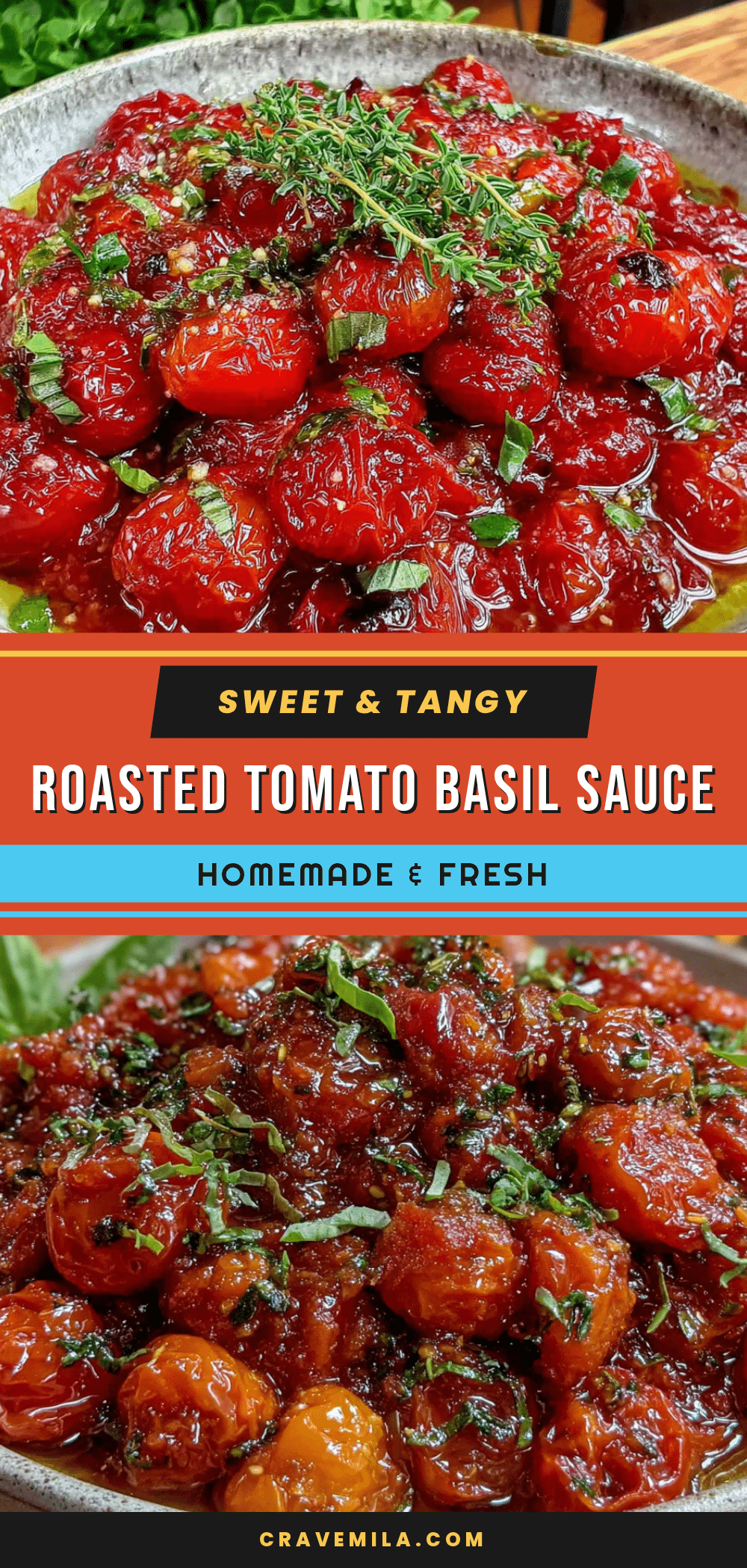
Best Homemade Roasted Cherry Tomato Sauce with Basil
This flavorful roasted cherry tomato sauce with fresh basil is made with simple ingredients and minimal effort. The oven does the heavy lifting, resulting in a sweet, jammy sauce that’s perfect on pasta, bread, or chicken.
- Prep Time: 10 minutes
- Cook Time: 35 minutes
- Total Time: 45 minutes
- Yield: 4 servings 1x
- Category: Sauce
- Cuisine: Italian
Ingredients
- 3 pounds cherry tomatoes
- 6–8 large garlic cloves
- 1 cup packed fresh basil leaves
- 1/4 cup extra-virgin olive oil
- 1 teaspoon kosher salt
- 1/2 teaspoon freshly ground black pepper
- 1/4 teaspoon red pepper flakes (optional)
- 1 tablespoon balsamic vinegar (optional)
Instructions
- Preheat your oven to 400°F (200°C). Position the rack in the middle of the oven.
- Wash and dry the cherry tomatoes. Halve any larger than a golf ball; small ones can stay whole.
- Separate the garlic cloves but leave the skins on. Do not peel.
- On a rimmed baking sheet or in a large bowl, combine the cherry tomatoes, garlic cloves, olive oil, salt, pepper, and red pepper flakes (if using). Toss to coat evenly.
- Spread the tomatoes and garlic in a single layer on the baking sheet. Do not overcrowd; use two pans if needed.
- Roast for 30-35 minutes, until the tomatoes are wrinkled, burst open, and lightly browned on the edges. The garlic should feel soft when squeezed. Halfway through, gently shake the pan to rotate the tomatoes.
- Remove from the oven and let cool for 5 minutes.
- Once cool enough to handle, squeeze the softened garlic flesh out of the skins into a blender. Discard the skins.
- Transfer the roasted tomatoes and any pan juices to the blender. Add the fresh basil leaves and balsamic vinegar (if using).
- Blend on low speed, gradually increasing to high, until the sauce reaches your desired consistency. For a smoother sauce, blend longer; for a chunkier sauce, pulse a few times.
- Taste and adjust seasoning with more salt, pepper, or olive oil as needed.
- Serve immediately, or let cool completely before storing.
Notes
When blending hot liquids, do not fill the blender more than halfway. Remove the center cap from the lid to let steam escape and cover the opening with a folded kitchen towel. For a chunkier sauce, use a potato masher instead of a blender. The sauce thickens slightly as it cools. Freezes well for up to 3 months.
Nutrition
- Serving Size: 1/2 cup
- Calories: 90
- Sugar: 4
- Sodium: 300
- Fat: 7
- Saturated Fat: 1
- Carbohydrates: 6
- Fiber: 2
- Protein: 2
Keywords: roasted cherry tomato sauce, homemade tomato sauce, basil sauce, vegan sauce, gluten-free sauce, easy tomato sauce