There used to be a tiny, wood-paneled restaurant tucked away on a side street in Portland called The Tin Fish that made a salmon dish I still dream about. When they closed suddenly three years ago—a handwritten sign on the door, just like that—I honestly felt a little lost. That lemon-garlic butter situation they had, with the perfectly flaky fish and those caramelized edges… I spent the next eighteen months trying to crack it. After seventeen tries—some burnt, some bland, one that my smoke alarm still holds a grudge about—I finally got it. And let me tell you, this sheet pan version might actually be better than the original. The secret? You don’t need a wood-fired grill or a secret recipe. You just need one pan, a handful of ingredients, and that same kind of stubborn determination. This Easy Sheet Pan Salmon with Lemon Garlic Butter is the result of all those trials, and every single one was worth it.
The first time I nailed it, I actually texted my friend Sarah a blurry photo with the caption “We’re back.” She knew exactly what I meant. There’s something about chasing a specific food memory that feels almost ridiculous—until you take that first bite and the whole world rights itself. Maybe you’ve been there, standing in your kitchen with a whisk in hand, determined to recreate a taste that feels just out of reach. That’s exactly where this recipe comes from. It’s not complicated. It’s not fancy. But it is, I promise you, that good.
Why You’ll Love This Recipe
Look, I’ve tested this recipe more times than I care to admit. I’ve burned the butter, undercooked the salmon, and once forgot the lemon entirely (don’t ask). But through all those kitchen disasters, I learned exactly what makes this version work. And honestly, it’s become my go-to for everything from frantic Tuesday dinners to when I want to impress someone without breaking a sweat.
- Ready in 25 Minutes: From fridge to table in under half an hour. That’s faster than takeout in my neighborhood, and trust me, I’ve timed it.
- Simple Pantry Ingredients: You probably have everything already. Butter, garlic, lemon, salmon, and a few spices. No weird grocery store hunts.
- One Pan, Zero Drama: The sheet pan does all the work. You roast the veggies, add the salmon, and dinner practically makes itself.
- Perfect for Healthy Weeknights: This is the kind of meal that makes you feel good without feeling deprived. Light, fresh, and satisfying.
- Always Impressive: The lemon garlic butter creates this glossy, flavorful coating that looks like you spent hours. I won’t tell if you don’t.
What really sets this apart from other salmon recipes is the way the butter interacts with the lemon juice on the hot pan. It creates this almost caramelized edge on the salmon that’s pure magic. Plus, the vegetables roast in all those flavorful juices, so everything on the plate tastes incredible. This isn’t just another healthy dinner—it’s the one you’ll actually look forward to making.
What Ingredients You Will Need
This recipe uses fresh, simple ingredients that work together to create something genuinely special. The beauty of a sheet pan dinner is that every component gets to shine without a lot of fuss.
- Salmon Fillets (4 fillets, about 6 ounces each): Look for wild-caught if you can, but honestly, good-quality farmed salmon works beautifully here. I prefer center-cut fillets for even cooking. Pat them dry with paper towels before seasoning—this step makes a real difference in getting that nice sear.
- Unsalted Butter (4 tablespoons, melted): I use Kerrygold when I’m feeling fancy, but any good unsalted butter works. The unsalted part is important because we’re controlling the salt ourselves.
- Fresh Garlic (4 cloves, minced): Please, please use fresh garlic here. The jarred stuff has a different flavor that just doesn’t do this dish justice. Trust me on this one.
- Fresh Lemon (1 large lemon): You’ll need both the zest and the juice. Roll the lemon on the counter before juicing to get every last drop. I also like to save a few thin slices for garnish.
- Fresh Asparagus (1 bunch, trimmed): Thicker spears hold up better to roasting. Snap off the woody ends—they’ll naturally break where they should.
- Cherry Tomatoes (1 pint): These burst open in the oven and create the most incredible little pockets of sweetness. Any color works, but a mix looks gorgeous.
- Baby Potatoes (1 pound, halved): I prefer Yukon Gold or red potatoes. They get crispy on the outside and creamy on the inside. No need to peel them.
- Olive Oil (2 tablespoons): A good extra virgin olive oil for coating the vegetables. It helps everything get golden and delicious.
- Dried Oregano (1 teaspoon): This adds a subtle earthiness that pairs beautifully with the lemon and garlic.
- Salt and Black Pepper (to taste): I use kosher salt for cooking and flaky sea salt for finishing. Freshly ground black pepper makes a difference here.
- Fresh Parsley (for garnish, optional): A sprinkle of fresh herbs at the end adds color and a fresh pop of flavor.
Equipment Needed
You don’t need a fancy kitchen for this recipe. A few basic tools and you’re ready to go.
- Large Sheet Pan (18×13 inches): A rimmed baking sheet is essential. The rim catches all those delicious juices. I’ve had good luck with both non-stick and uncoated aluminum pans.
- Parchment Paper or Aluminum Foil: For easy cleanup. I prefer parchment because nothing sticks to it, but foil works in a pinch.
- Chef’s Knife: For trimming asparagus and halving potatoes. A sharp knife makes everything easier and safer.
- Cutting Board: Any sturdy board will do. I have a wooden one that’s seen better days, but it still works perfectly.
- Small Bowl: For mixing the lemon garlic butter. A cereal bowl works fine.
- Measuring Spoons: For accurate seasoning. I’ve eyeballed it before, and it’s not the same.
- Instant-Read Thermometer (optional but helpful): Salmon is perfectly cooked at 125-130°F in the thickest part. Takes the guesswork out completely.
Preparation Method
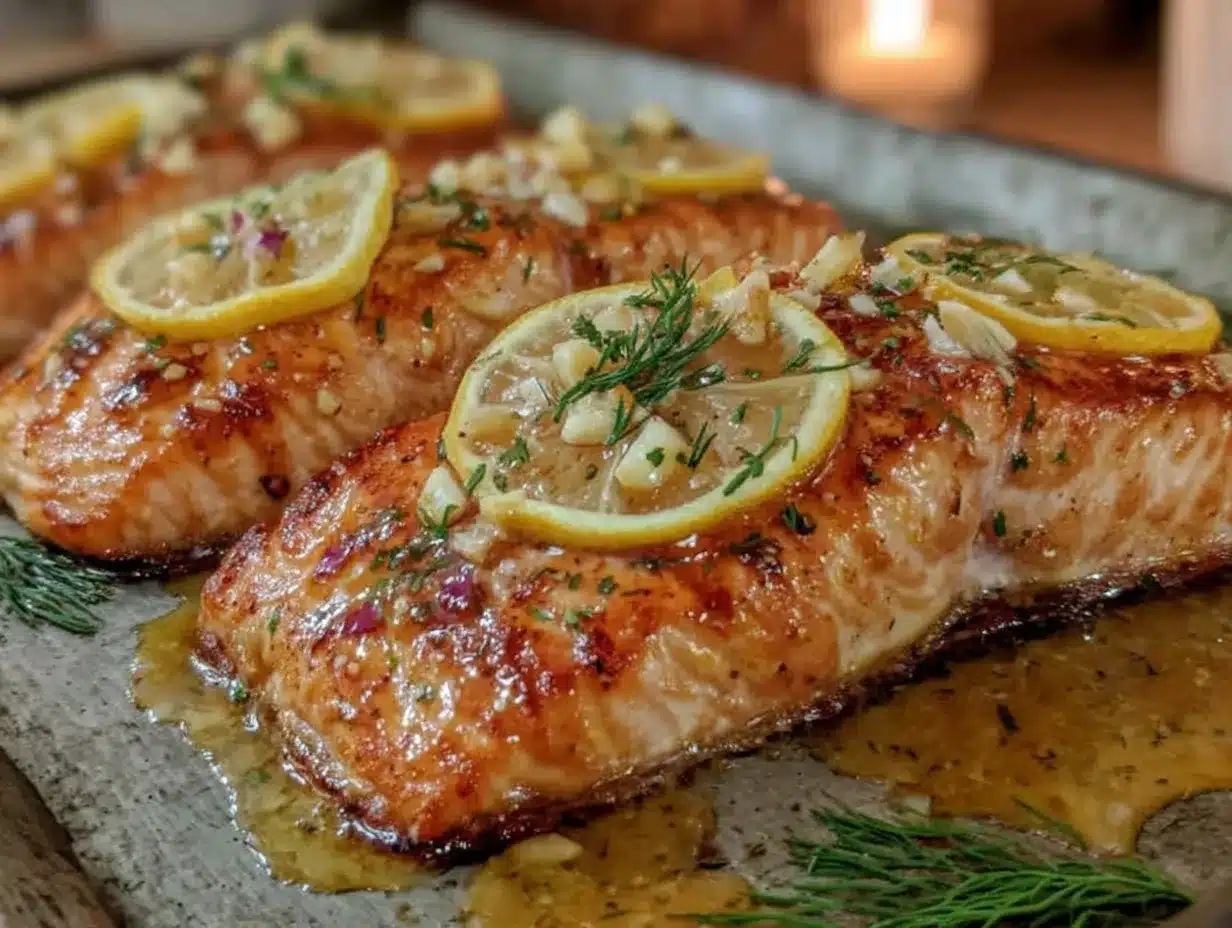
Alright, let’s make this happen. The whole process takes about 25 minutes, and most of that is hands-off oven time.
- Preheat your oven to 400°F (200°C). Give it a full 15 minutes to come to temperature. A properly preheated oven makes all the difference in getting those crispy edges.
- Prep your vegetables. Wash and halve the baby potatoes. Trim the woody ends off the asparagus. Leave the cherry tomatoes whole—they’ll burst beautifully on their own.
- Toss the potatoes with olive oil, oregano, salt, and pepper. Spread them in a single layer on your sheet pan. Pop them in the oven for 10 minutes. This head start ensures they get tender and golden.
- While the potatoes roast, make the lemon garlic butter. In a small bowl, combine the melted butter, minced garlic, lemon zest (about 1 teaspoon), and lemon juice (about 2 tablespoons). Whisk it together. The smell alone is incredible.
- Season the salmon. Pat the fillets dry with paper towels. Season both sides with salt and pepper. Place the salmon skin-side down on a plate while you wait for the potatoes.
- After 10 minutes, remove the pan from the oven. Add the asparagus and cherry tomatoes to the pan, nestling them around the potatoes. Place the salmon fillets in the center, leaving a little space between each piece.
- Brush the lemon garlic butter over the salmon. Use all of it—every last drop. Don’t worry if some drips onto the vegetables; that’s flavor gold right there.
- Return the pan to the oven and roast for 12-15 minutes. The salmon should be opaque and flake easily with a fork. The vegetables should be tender and starting to caramelize at the edges.
- Optional but recommended: Switch the oven to broil for the last 1-2 minutes. Watch it carefully—you want golden, not burnt. This gives the salmon those gorgeous browned edges.
- Let it rest for 2 minutes before serving. This is hard, I know, but it lets the juices redistribute. Sprinkle with fresh parsley and a squeeze of extra lemon if you’re feeling fancy.
Cooking Tips & Techniques
After seventeen attempts, I’ve gathered a few hard-won lessons. Here’s what I wish I’d known from the start.
Don’t overcrowd the pan. If your salmon fillets are touching, they’ll steam instead of roast. Give them space. If you need to, use two sheet pans and rotate them halfway through.
Pat the salmon dry. This is non-negotiable. Wet salmon doesn’t brown properly, and you want those beautiful caramelized edges. Use paper towels and really get in there.
The butter situation. I once used salted butter and added extra salt—disaster. Stick with unsalted and control the seasoning yourself. Also, don’t skip the lemon zest. It adds a brightness that juice alone can’t achieve.
Watch the cooking time. Salmon continues to cook after it comes out of the oven. I pull mine when it’s just barely opaque in the center. The residual heat finishes the job perfectly. An instant-read thermometer is your best friend here.
Vegetable timing matters. Potatoes need a head start because they take longer to cook. If you’re swapping in quicker-cooking veggies like zucchini or bell peppers, add them with the salmon instead.
Multitask like a pro. While the potatoes get their head start, prep everything else. Wash the asparagus, mince the garlic, make the butter. By the time the potatoes come out, you’re ready to assemble and go.
Variations & Adaptations
This recipe is wonderfully flexible. Here are a few ways I’ve adapted it depending on what’s in my fridge or who’s coming to dinner.
- Mediterranean Twist: Swap the oregano for dried thyme and add kalamata olives and crumbled feta cheese in the last 5 minutes of cooking. The salty feta against the lemon butter is incredible.
- Spicy Version: Add 1/2 teaspoon of red pepper flakes to the butter mixture. I did this on a whim one night and it’s become my husband’s favorite version. The heat cuts through the richness beautifully.
- Vegetable Swap: No asparagus? Use broccoli florets or green beans instead. In the summer, I use zucchini and yellow squash. Just cut them into similar-sized pieces so they cook evenly.
- Herb Crust: Mix 2 tablespoons of fresh dill or parsley with panko breadcrumbs and sprinkle over the salmon before roasting. It creates a lovely crunchy topping.
- Dairy-Free Option: Substitute the butter with a good quality olive oil or vegan butter. The flavor changes slightly, but it’s still delicious. Add an extra squeeze of lemon at the end.
Serving & Storage Suggestions
This dish is best served warm, straight from the oven. The salmon should be flaky and tender, the vegetables roasted to perfection.
How to serve: Plate the salmon alongside the roasted vegetables. A simple side salad with a light vinaigrette complements the richness of the butter. Or serve it over a bed of quinoa or rice to soak up all those incredible pan juices. I’ve also flaked the leftover salmon over a big green salad for lunch the next day—highly recommend.
Storage: Store leftovers in an airtight container in the refrigerator for up to 3 days. The salmon will lose some of its crispness, but the flavor only gets better as it sits.
Reheating: The best way to reheat is in a 300°F oven for about 5-7 minutes. The microwave works in a pinch, but it can dry out the salmon. If you’re in a hurry, flake the cold salmon over a salad or mix it into pasta for an easy second meal.
Freezing: I don’t recommend freezing the fully cooked dish, as the texture of both the salmon and vegetables will suffer. However, you can freeze the lemon garlic butter mixture separately for up to 3 months.
Nutritional Information & Benefits
This meal is as nourishing as it is delicious. Here’s a rough breakdown per serving (based on 4 servings):
- Calories: Approximately 420-450 per serving
- Protein: 35-40 grams (salmon is a fantastic source of high-quality protein)
- Healthy Fats: 22-25 grams (rich in omega-3 fatty acids from the salmon and butter)
- Carbohydrates: 25-30 grams (from the potatoes and vegetables)
- Fiber: 5-7 grams
Salmon is packed with heart-healthy omega-3s, vitamin D, and B vitamins. The vegetables add fiber, vitamins A and C, and antioxidants. This is the kind of meal that leaves you feeling satisfied and energized, not heavy or sluggish. It fits beautifully into a balanced, health-conscious lifestyle without feeling like a sacrifice.
Conclusion
This Easy Sheet Pan Salmon with Lemon Garlic Butter is proof that you don’t need complicated techniques or exotic ingredients to create something genuinely memorable. It’s the recipe I turn to when I want to feel like I’m eating at that little Portland restaurant again, even if I’m just in my own kitchen on a random Tuesday night.
I’d love to hear how this turns out for you. Did you try any of the variations? Did you discover a new favorite vegetable combination? Drop a comment below and let me know—I read every single one and I’m always looking for new ideas to try. And if you loved it, share it with a friend who needs a good sheet pan dinner in their life. Happy cooking, friends!
Frequently Asked Questions
Can I use frozen salmon for this recipe?
Yes, but thaw it completely in the refrigerator overnight first. Pat it very dry before seasoning, as frozen salmon tends to release more moisture. You may need to add a few extra minutes to the cooking time.
What if I don’t have a sheet pan?
A large baking dish or even a cast iron skillet will work. Just make sure it’s large enough to hold everything in a single layer. If using a smaller pan, cook the vegetables and salmon separately.
Can I prep this ahead of time?
You can chop the vegetables and make the lemon garlic butter up to a day in advance. Store them separately in the refrigerator. When you’re ready to cook, just assemble and roast.
How do I know when the salmon is done?
The salmon should be opaque and flake easily with a fork. For the most accurate result, use an instant-read thermometer—125-130°F in the thickest part is perfect. Remember, it will continue cooking slightly after you remove it from the oven.
What other vegetables work well here?
Broccoli florets, green beans, bell peppers, zucchini, and snap peas all work beautifully. Just adjust the cooking time based on how dense the vegetable is—harder vegetables like carrots should be added earlier or cut smaller.
Pin This Recipe!
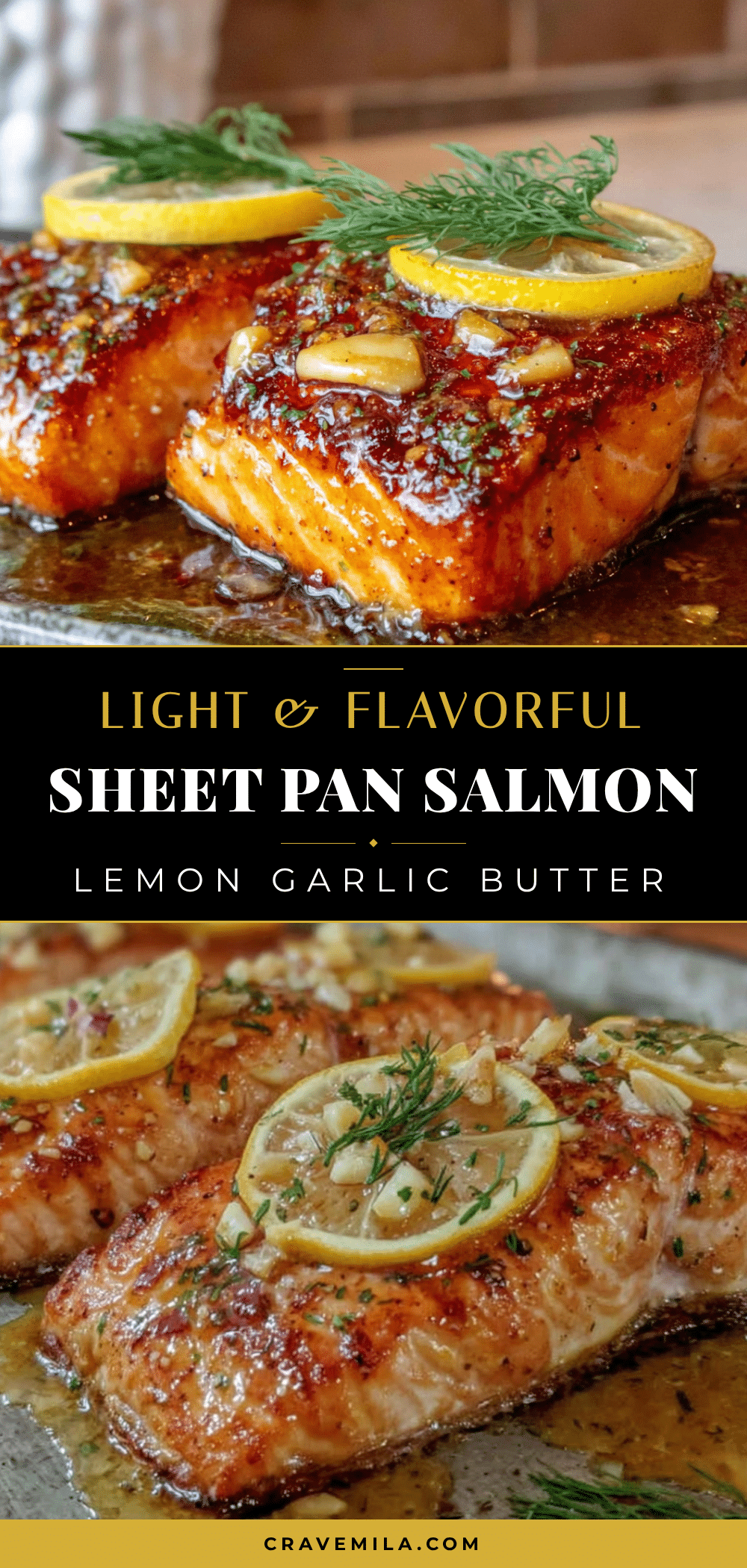
Best Easy Sheet Pan Salmon with Lemon Garlic Butter

This Easy Sheet Pan Salmon with Lemon Garlic Butter is a quick, one-pan dinner that delivers perfectly flaky salmon and caramelized roasted vegetables in just 25 minutes. Inspired by a beloved restaurant dish, this recipe is simple, healthy, and always impressive.
- Prep Time: 10 minutes
- Cook Time: 15 minutes
- Total Time: 25 minutes
- Yield: 4 servings 1x
- Category: Main Course
- Cuisine: American
Ingredients
- 4 salmon fillets (about 6 ounces each)
- 4 tablespoons unsalted butter, melted
- 4 cloves garlic, minced
- 1 large lemon (zest and juice)
- 1 bunch fresh asparagus, trimmed
- 1 pint cherry tomatoes
- 1 pound baby potatoes (Yukon Gold or red), halved
- 2 tablespoons extra virgin olive oil
- 1 teaspoon dried oregano
- Salt and black pepper to taste
- Fresh parsley for garnish (optional)
Instructions
- Preheat your oven to 400°F (200°C).
- Wash and halve the baby potatoes. Trim the woody ends off the asparagus. Leave the cherry tomatoes whole.
- Toss the potatoes with olive oil, oregano, salt, and pepper. Spread them in a single layer on a large sheet pan. Roast for 10 minutes.
- While the potatoes roast, make the lemon garlic butter: In a small bowl, combine melted butter, minced garlic, lemon zest (about 1 teaspoon), and lemon juice (about 2 tablespoons). Whisk together.
- Pat the salmon fillets dry with paper towels. Season both sides with salt and pepper.
- After 10 minutes, remove the pan from the oven. Add the asparagus and cherry tomatoes around the potatoes. Place the salmon fillets in the center, leaving space between each piece.
- Brush the lemon garlic butter over the salmon, using all of it.
- Return the pan to the oven and roast for 12-15 minutes, until the salmon is opaque and flakes easily with a fork, and vegetables are tender.
- Optional: Switch the oven to broil for the last 1-2 minutes for browned edges. Watch carefully.
- Let rest for 2 minutes before serving. Garnish with fresh parsley and extra lemon if desired.
Notes
Don’t overcrowd the pan; give salmon space to roast. Pat salmon dry for better browning. Use unsalted butter to control salt. Salmon continues cooking after removal; pull when just barely opaque. Potatoes need a head start; add quicker-cooking veggies with salmon.
Nutrition
- Serving Size: 1 serving (1 salmon
- Calories: 435
- Sugar: 4
- Sodium: 480
- Fat: 24
- Saturated Fat: 9
- Carbohydrates: 28
- Fiber: 6
- Protein: 38
Keywords: sheet pan salmon, lemon garlic butter salmon, easy salmon recipe, healthy weeknight dinner, one pan salmon, roasted salmon with vegetables