Leo wasn’t trying to impress anyone. I’d stopped by to drop off a bag of lemons for his lemonade stand fundraiser and the scent of toasted nuts and herbs hit me before I even got inside. It wasn’t the usual holiday prep smell of cinnamon or gingerbread. It was deeper, richer, with this earthy undertone that made my stomach growl loud enough to echo in the hallway.
I found Leo in his kitchen, wearing a t-shirt with a coffee stain on the hem. He was stirring a pot on the stove like he was checking the oil in his car. There was no platter of roast turkey nearby, no festive table setting. Just him, a whisk, and a small saucepan that looked well-loved. He didn’t turn around when I walked in. He just kept watching the butter foam and settle.
“It’s just gravy,” he said, as if he’d just mixed a batch of paint. “You’re making a fuss over brown butter.”
But it wasn’t just gravy. It was the kind of sauce that makes you close your eyes. It was creamy, nutty, and packed with sage. I stood there by the door, holding my bag of lemons, feeling a little envious of his casual mastery. He didn’t care about the perfect presentation. He cared about the flavor. The casualness was the whole point. This recipe was made like it was nothing, but it tasted like everything.
He poured me a small cup—no, a shot glass—of the warm liquid. I took a sip. It was velvety and complex. The sage cut through the richness of the butter perfectly. I wanted the recipe immediately. Leo laughed, wiped his hands on a towel, and told me to write it down. I did. And every time I make it now, I’m reminded that the best recipes often come from people who aren’t trying to be chefs. They’re just making dinner. And honestly, that’s why this creamy brown butter sage turkey gravy stays with you. It’s simple, it’s soulful, and it turns a simple meal into something memorable.
Why You’ll Love This Recipe
There is a reason this brown butter sage turkey gravy has become the star of my holiday table. It’s not just about convenience, though it is quicker than making a traditional roux-based gravy from scratch. It’s about the depth of flavor that you can’t fake. When you brown butter, you’re caramelizing the milk solids, which adds a nutty, toasty dimension that plain butter just doesn’t have. Adding sage gives it an earthy, aromatic punch that pairs beautifully with the savory notes of turkey.
- Quick & Easy: This comes together in under 20 minutes. If you have store-bought broth, you can have this ready while the turkey rests. It’s perfect for busy weeknights or last-minute holiday dinners when stress levels are high.
- Simple Ingredients: You likely already have everything in your kitchen. Butter, flour, sage, and broth. No fancy grocery trips needed. This is pantry-friendly cooking at its finest.
- Perfect for Holiday Mornings: Great for brunch leftovers or a cozy dinner. It transforms leftover turkey into a gourmet meal.
- Crowd-Pleaser: Always gets rave reviews from kids and adults alike. The nutty flavor is sophisticated enough for guests but comforting enough for family.
- Unbelievably Delicious: The texture is silky and smooth, with a rich mouthfeel that coats the palate. It’s next-level comfort food.
What makes this recipe different from the rest is the technique. Many people burn their butter or make lumpy gravy. This method ensures a smooth, glossy finish every time. The browning of the butter is the secret weapon. It adds complexity without requiring hours of simmering. It’s the kind of recipe that makes you feel like a pro chef, even if you’re a beginner. It’s comfort food reimagined—richer, faster, but with the same soul-soothing satisfaction. You’ll find yourself making extra just to have more for dipping bread.
What Ingredients You Will Need
This recipe uses simple, wholesome ingredients to deliver bold flavor and satisfying texture without the fuss. The magic lies in the quality of the butter and the freshness of the sage. Here is what you’ll need to create this creamy brown butter sage turkey gravy.
- Unsalted Butter: 1/2 cup (115g). I recommend using high-quality European-style butter like Plugrá or Kerrygold. These have a higher fat content, which helps create a richer flavor and smoother texture. Unsalted is crucial so you can control the saltiness of the final dish.
- All-Purpose Flour: 1/4 cup (30g). This acts as the thickening agent. Make sure it’s sifted or whisked well to avoid lumps. If you need a gluten-free option, you can use a 1:1 gluten-free flour blend, but the texture might be slightly different.
- Fresh Sage Leaves: 10-12 leaves. Fresh sage is non-negotiable here. Dried sage lacks the vibrant, pine-like aroma that fresh leaves provide. Look for bright green leaves that aren’t wilted. If you can’t find fresh sage, you can use 1 tablespoon of dried sage, but add it later in the process to prevent bitterness.
- Chicken or Turkey Broth: 2 cups (480ml). Use low-sodium broth so you can adjust the salt to your taste. Homemade turkey stock is ideal if you have it, but a high-quality store-bought carton works perfectly. Warm the broth before adding it to the roux to prevent lumps.
- Heavy Cream: 1/4 cup (60ml). This adds the creamy richness and helps balance the nuttiness of the brown butter. You can substitute with half-and-half for a lighter version, or use coconut cream for a dairy-free option, though the flavor will change slightly.
- Salt and Black Pepper: To taste. Always season at the end. Start with 1/2 teaspoon of salt and add more as needed. Freshly cracked black pepper adds a nice bite.
- Optional: Nutmeg: A tiny pinch. This adds warmth and depth, especially if you’re serving this with turkey. Just a little goes a long way.
Remember, the quality of your ingredients matters. Good butter makes a huge difference. And don’t skimp on the fresh sage. It’s the star of the show.
Equipment Needed
You don’t need fancy gadgets to make this gravy, but having the right tools makes the process smoother. A medium-sized saucepan is essential. I prefer a heavy-bottomed saucepan because it distributes heat evenly, which helps prevent the butter from burning. A non-stick pan works too, but you’ll need to watch it closely.
A whisk is your best friend here. Use a silicone or stainless steel whisk to break up any lumps in the roux. A wooden spoon can work, but it’s harder to get a smooth consistency. I also recommend a measuring cup with a spout for pouring the broth. It helps control the flow and prevents splashing.
If you don’t have a saucepan, you can use a skillet, but the gravy might cool faster. For storage, a glass jar with a lid is perfect. Avoid plastic containers if you’re storing hot gravy, as they can retain odors. Clean your equipment immediately after use, especially the saucepan, as brown butter can stick and burn if left to cool.
Preparation Method

Let’s break this down into simple steps. The key is patience when browning the butter. Don’t rush it.
- Prep the Sage: Rinse the sage leaves and pat them dry with paper towels. Remove the leaves from the stems. If the leaves are large, tear them in half. This helps release their oils. (2 minutes)
- Brown the Butter: Melt the butter in your saucepan over medium heat. Swirl the pan occasionally. The butter will foam up. As it foams, watch for the color change. It will turn from yellow to a light amber. You’ll see brown specks at the bottom. This is the milk solids browning. Smell it—it should smell nutty, like toasted hazelnuts. This takes about 5-7 minutes. Be careful not to burn it. If it smells acrid, start over.
- Add the Sage: Once the butter is browned, immediately add the sage leaves. They will sizzle. Stir them in for 30 seconds. The heat will infuse the butter with sage flavor. Remove the pan from the heat briefly if you’re worried about burning the sage.
- Make the Roux: Sprinkle the flour over the brown butter and sage. Whisk constantly. You want to cook the flour for about 1-2 minutes. This removes the raw flour taste. The mixture will look like a thick paste. It might look a bit clumpy at first, but keep whisking.
- Add the Broth: Slowly pour in the warm broth while whisking vigorously. Add it in stages. Pour a little, whisk until smooth, then add more. This prevents lumps. Continue adding broth until you’ve used it all. The mixture will thin out and become smooth.
- Simmer: Return the pan to medium-low heat. Let the gravy simmer for 5-10 minutes. Stir occasionally. It will thicken as it cooks. If it gets too thick, add a splash more broth. If it’s too thin, let it simmer longer.
- Add Cream and Season: Stir in the heavy cream. Let it warm through for 1-2 minutes. Taste the gravy. Add salt and pepper as needed. If you’re using nutmeg, add a tiny pinch now. Remove from heat.
- Strain (Optional): For a ultra-smooth gravy, strain it through a fine-mesh sieve to remove the sage leaves and any brown butter solids. If you like the texture of the sage, skip this step.
Keep an eye on the consistency. It should coat the back of a spoon. If it’s too thick, add more broth. If it’s too thin, simmer longer.
Cooking Tips & Techniques
Here are some pro tips to ensure your gravy is perfect every time. First, don’t walk away from the butter. Browning butter happens quickly, and it can go from perfect to burnt in seconds. If you burn it, the whole batch will taste bitter, and there’s no fixing it. Start over if you have to.
Second, always use warm broth. Adding cold broth to hot butter can cause the fat to solidify, leading to a greasy, separated gravy. Warm the broth in the microwave or a separate pot before adding it. Third, whisk constantly when adding the flour and broth. This is the key to a smooth, lump-free gravy. If you let it sit, you’ll end up with lumps that are hard to whisk out.
Fourth, taste as you go. The saltiness of the broth varies by brand. Always season at the end. Fifth, if your gravy splits or looks oily, don’t panic. You can rescue it by blending it with an immersion blender or whisking in a teaspoon of cold butter. This emulsifies the fat and smooths out the texture.
Finally, don’t stress about perfection. Homemade gravy has character. It’s about flavor, not restaurant presentation. And remember, a little sage goes a long way. Too much can make it taste medicinal. Start with a small amount and adjust to your liking.
Variations & Adaptations
This recipe is versatile. Here are some ways to adapt it to your needs.
- Dairy-Free: Use vegan butter and coconut cream. The flavor will be slightly different, but it will still be delicious. You can also use olive oil, but it won’t have the same richness.
- Gluten-Free: Use a gluten-free flour blend or cornstarch. If using cornstarch, mix it with cold water to make a slurry before adding it to the brown butter. Then add the broth.
- Herb Swap: If you don’t like sage, try thyme or rosemary. Thyme adds a lemony note, while rosemary is more piney. Use the same amount.
- Spicy Kick: Add a pinch of red pepper flakes when you add the sage. This adds a subtle heat that pairs well with the richness.
- Wine Addition: Deglaze the pan with a splash of white wine after browning the butter and before adding the flour. This adds acidity and complexity. Let the wine reduce for a minute before adding the flour.
I once made this with rosemary and it was amazing. The piney flavor complemented the turkey perfectly. Don’t be afraid to experiment. That’s the fun of cooking.
Serving & Storage Suggestions
Serve this gravy warm. It’s perfect poured over sliced turkey, mashed potatoes, or stuffing. For presentation, garnish with a fresh sage leaf or a crack of black pepper. It looks elegant and appetizing.
Store leftovers in an airtight container in the refrigerator for up to 3 days. The gravy will thicken as it cools. To reheat, add a splash of broth or water and warm it gently on the stove, stirring constantly. You can also freeze it for up to 2 months. Thaw in the refrigerator overnight before reheating. The texture might change slightly after freezing, but the flavor will still be great.
Flavors develop over time. If you make it a day ahead, it will taste even better. The sage flavor melds with the butter and broth, creating a deeper, more complex taste. So don’t be afraid to make it ahead of time.
Nutritional Information & Benefits
This gravy is rich in fat and calories, so enjoy it in moderation. A typical serving (1/4 cup) contains approximately 150 calories, 15g of fat, 4g of carbohydrates, and 2g of protein. The brown butter provides conjugated linoleic acid (CLA), which has been linked to various health benefits, including improved body composition. Sage contains antioxidants and anti-inflammatory compounds. However, this is a indulgent side dish, so balance it with lighter sides like roasted vegetables or a green salad.
For those watching their sodium, use low-sodium broth and skip the added salt. The natural flavors of the brown butter and sage are enough. If you’re dairy-free, use the adaptations mentioned earlier. Always check the labels of your ingredients to ensure they fit your dietary needs.
Conclusion
This creamy brown butter sage turkey gravy is a game-changer. It’s simple, delicious, and impressive. I love it because it turns a simple meal into something special. It’s the kind of recipe that brings people together. So go ahead and make it. Customize it to your taste. Add more sage, less cream, or a splash of wine. Make it your own.
I hope you enjoy this recipe as much as I do. Please leave a comment below and let me know how it turned out. Share your variations and tips. And if you make it, tag me on social media. I’d love to see your creations. Happy cooking!
Frequently Asked Questions
Can I make this gravy ahead of time?
Yes, you can make it up to 3 days in advance. Store it in the refrigerator and reheat gently with a splash of broth. The flavor often improves overnight.
What if my gravy is too thick?
Simply whisk in more warm broth or water, one tablespoon at a time, until you reach the desired consistency.
Can I use dried sage instead of fresh?
You can, but use only 1 teaspoon of dried sage. Add it with the flour to cook out the raw flavor. Fresh sage is preferred for its brighter aroma.
How do I prevent lumps in the gravy?
Whisk constantly when adding the flour and broth. Use warm broth, and add it slowly in stages while whisking vigorously.
Can I freeze this gravy?
Yes, freeze it in an airtight container for up to 2 months. Thaw in the refrigerator and reheat gently. The texture may change slightly but will still be delicious.
Pin This Recipe!
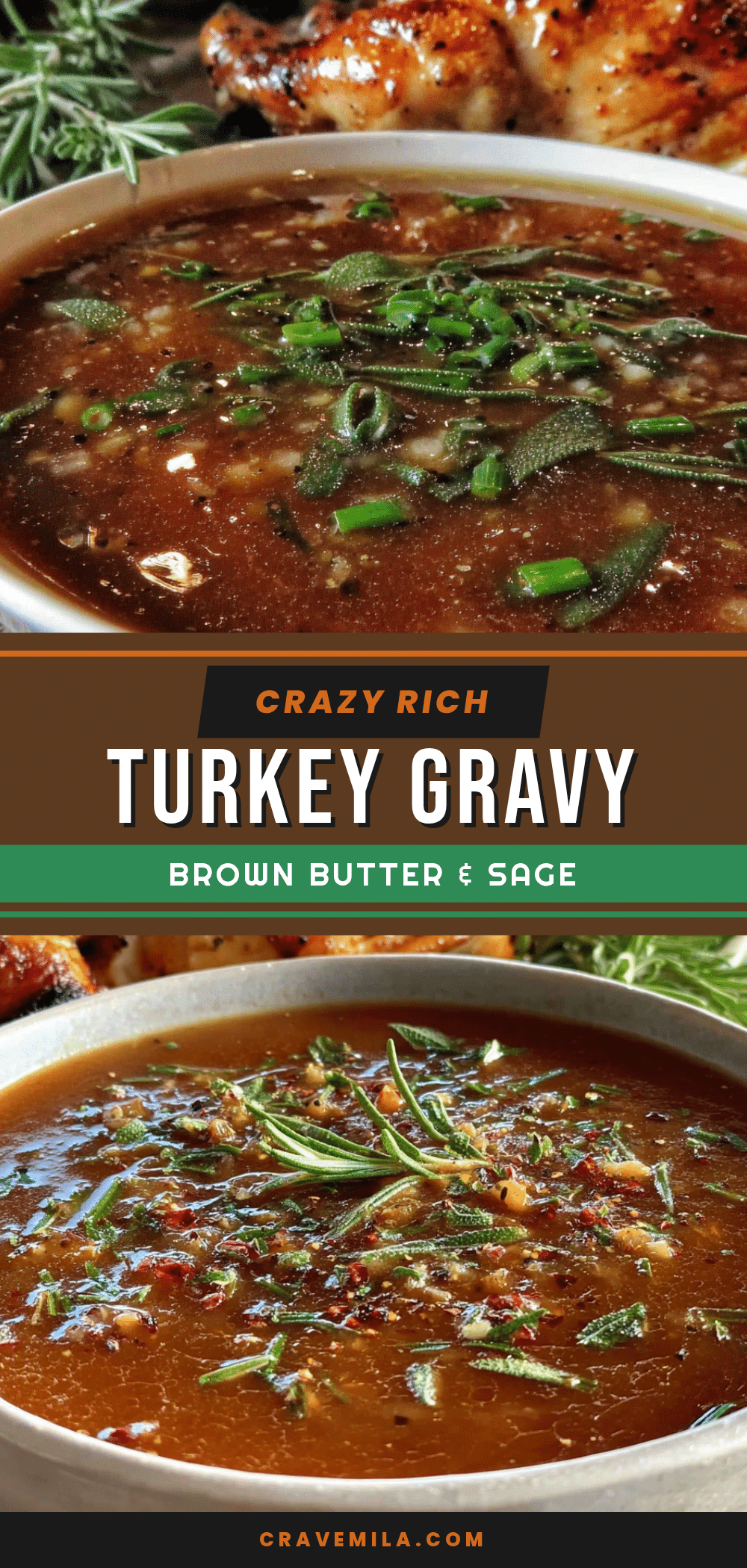
Creamy Brown Butter Sage Turkey Gravy

A rich, nutty, and silky smooth gravy made with browned butter, fresh sage, and heavy cream. This quick and easy recipe adds a sophisticated depth of flavor to holiday turkey or leftover meals.
- Prep Time: 2 minutes
- Cook Time: 18 minutes
- Total Time: 20 minutes
- Yield: 4 servings 1x
- Category: Side Dish
- Cuisine: American
Ingredients
- 1/2 cup (115g) unsalted butter
- 1/4 cup (30g) all-purpose flour
- 10–12 fresh sage leaves
- 2 cups (480ml) chicken or turkey broth (low-sodium)
- 1/4 cup (60ml) heavy cream
- Salt and black pepper to taste
- Optional: Tiny pinch of nutmeg
Instructions
- Rinse and pat dry sage leaves, removing them from stems. Tear large leaves in half.
- Melt butter in a medium saucepan over medium heat. Swirl occasionally until it foams, turns light amber, and smells nutty (5-7 minutes). Watch closely to avoid burning.
- Add sage leaves to the browned butter and stir for 30 seconds to infuse flavor. Remove from heat briefly if needed.
- Sprinkle flour over the butter and sage. Whisk constantly for 1-2 minutes to cook the flour and form a thick paste (roux).
- Slowly pour in warm broth while whisking vigorously, adding in stages to prevent lumps. Continue until all broth is incorporated and the mixture is smooth.
- Return pan to medium-low heat and simmer for 5-10 minutes, stirring occasionally, until the gravy thickens.
- Stir in heavy cream and warm through for 1-2 minutes. Season with salt, pepper, and optional nutmeg.
- Strain through a fine-mesh sieve for a ultra-smooth texture, or leave sage leaves in for texture.
Notes
Use warm broth to prevent the fat from solidifying. Brown butter carefully as it can burn quickly. For a dairy-free version, use vegan butter and coconut cream. For gluten-free, use a 1:1 GF flour blend or cornstarch slurry. The gravy can be made ahead and reheated gently with added broth.
Nutrition
- Serving Size: 1/4 cup
- Calories: 150
- Fat: 15
- Saturated Fat: 9
- Carbohydrates: 4
- Protein: 2
Keywords: brown butter gravy, sage gravy, turkey gravy, holiday recipe, easy gravy, creamy gravy, gluten-free option, dairy-free option