It was 11:47 PM on a random Tuesday in late October, and I was obsessively scrolling through old photos on my phone. Not vacation pics or anything cute—photos of Thanksgiving tables from years past. The good ones, the messy ones, the ones where the turkey was slightly dry but nobody cared because the dressing was perfect. And there it was, staring back at me: a golden, craggy pan of cornbread dressing from three years ago, the one my aunt brought that we fought over like it was the last food on earth. I didn’t have her recipe. I mean, I had bits and pieces scribbled on a napkin somewhere, but not the real thing. What I did have was a bag of cornmeal, a half-empty carton of buttermilk, and a stubborn idea that wouldn’t let me sleep. So I got up, pulled on my fuzzy slippers, and started measuring.
Honestly, the first batch I made at 1 AM was a little dry. Let’s be real—it was a crumbly mess. But that’s the thing about late-night cooking experiments: you’re not afraid to mess up because nobody’s watching. You can add a little more broth, toss in an extra egg, taste the raw mixture and think, “Hmm, needs sage.” By the third try (yes, I made three versions that week), I had something that made me close the refrigerator door slowly and just stand there, chewing. It was the one. The cozy, Southern-style cornbread dressing that tastes like Thanksgiving should taste—rich, savory, a little bit rustic, and absolutely nothing like the boxed stuff.
Maybe you’ve been there, standing in your kitchen at an ungodly hour, chasing a flavor from your memory. That’s what this recipe is. It’s not fancy, and it doesn’t try to be. It’s the dressing that sits in the middle of the table, gets passed around twice, and leaves everyone asking for the recipe. I’ve been making it every Thanksgiving since that sleepless October night, and I finally feel ready to share it. Because honestly, some recipes are too good to keep to yourself.
Why You’ll Love This Recipe
Let me tell you why this isn’t just another cornbread dressing recipe floating around the internet. I tested this one six times before I felt confident enough to write it down for you. Six times. My neighbors started asking if I was opening a restaurant. But you know what? It was worth every single crumb because this dressing hits different.
- Made with Simple, Real Ingredients : No cream of mushroom soup, no weird cans of condensed broth. This is old-school Southern cooking with ingredients you can actually pronounce. Butter, onions, celery, fresh herbs, and homemade cornbread. That’s it.
- Perfect for Thanksgiving (or Any Cozy Gathering) : This dressing was born for the holiday table. It pairs beautifully with roast turkey, mashed potatoes, and cranberry sauce. But honestly? I’ve made it for a random Sunday dinner in January and it was just as good.
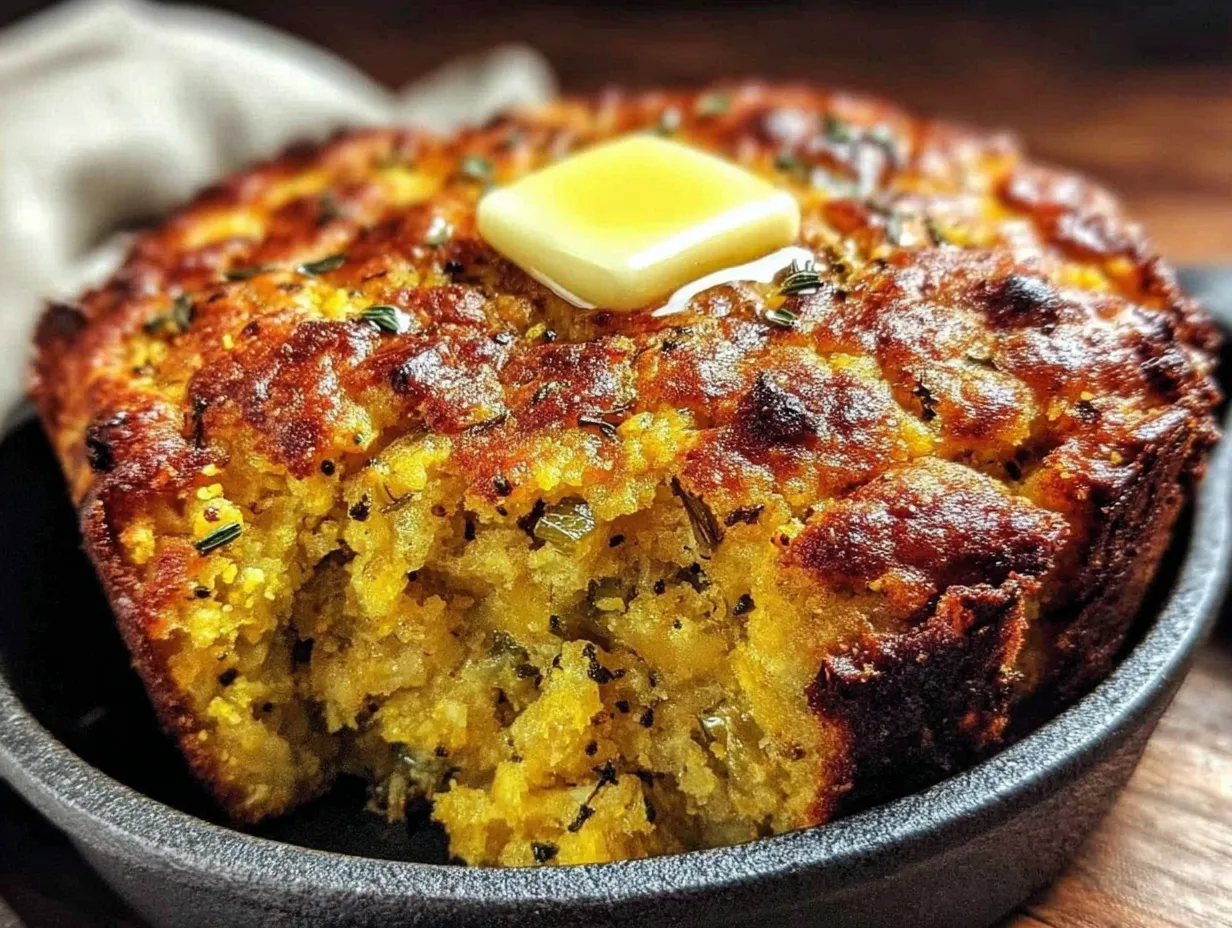
- That Perfect Texture : You know the struggle—dressing that’s either a dry, crumbly brick or a soggy, wet mess. This one hits the sweet spot. Moist but not mushy, with a golden, slightly crispy top and a tender, almost custard-like interior. It’s the texture you dream about.
- Crowd-Pleaser Approved : I brought this to a Friendsgiving last year and three separate people asked for the recipe before the plates were cleared. Kids liked it. Grandparents liked it. Even my cousin who “doesn’t do stuffing” went back for seconds.
- Make-Ahead Friendly : Thanksgiving morning is chaotic enough. This dressing can be assembled the night before and baked when you’re ready. One less thing to stress about. You’re welcome.
What makes this recipe different from the rest? It’s the technique. I spent years making dry, disappointing dressing before I figured out the secret: you have to let the cornbread sit out overnight to stale slightly, and you have to use enough broth to make the mixture look almost too wet before it goes in the oven. Trust the process. It comes out perfect every single time.
This is the kind of recipe that makes you close your eyes after the first bite. It’s comfort food at its finest—simple, honest, and deeply satisfying. Perfect for impressing your in-laws without spending all day in the kitchen, or for turning a regular Thursday dinner into something worth gathering around.
What Ingredients You Will Need
This recipe uses simple, honest ingredients to build layers of flavor without any fuss. Most of these are pantry staples, especially if you keep a well-stocked kitchen during the fall and winter months. Let me walk you through each one and why it matters.
For the Cornbread:
- 2 cups yellow cornmeal (I prefer a medium-grind stone-ground cornmeal for better texture—avoid the super fine stuff)
- 1 cup all-purpose flour
- 1 tablespoon baking powder
- 1 teaspoon baking soda
- 1 teaspoon salt
- 2 large eggs, room temperature
- 1 ½ cups buttermilk, shaken (adds tenderness and a slight tang)
- ½ cup unsalted butter, melted and cooled slightly (I use Land O’Lakes)
- 1 tablespoon honey (optional, but it rounds out the savory flavors beautifully)
For the Dressing:
- 8 cups crumbled day-old cornbread (about one 9×13 pan full—staling it overnight is key)
- 4 tablespoons unsalted butter, divided
- 1 large yellow onion, finely diced (about 1 ½ cups)
- 3 celery ribs, finely diced (about 1 cup)
- 4 cloves garlic, minced
- 1 teaspoon salt, plus more to taste
- ½ teaspoon black pepper
- 1 tablespoon fresh sage, chopped (or 1 teaspoon dried—but fresh really shines here)
- 2 teaspoons fresh thyme leaves (or ½ teaspoon dried)
- 1 teaspoon fresh rosemary, finely chopped (optional, but I love it)
- 2 large eggs, lightly beaten
- 2 ½ to 3 cups low-sodium chicken or turkey broth (homemade is amazing, but Swanson works great)
- ¼ cup fresh parsley, chopped (for garnish)
A few notes on ingredients: I recommend using a good quality cornmeal like Bob’s Red Mill or a local mill if you have one. The flavor difference is noticeable. For the broth, low-sodium is important because the cornbread and seasonings already have salt. You want to control the saltiness yourself. If you’re feeling fancy, you can also add ½ cup of cooked, crumbled breakfast sausage or bacon to the dressing—just reduce the butter by a tablespoon or two. I’ve done it both ways, and the sausage version is incredible for a heartier meal.
For substitutions, you can use gluten-free all-purpose flour in the cornbread if needed, and swap the buttermilk for 1 ½ cups of milk mixed with 1 ½ tablespoons of lemon juice or vinegar. Let it sit for 5 minutes before using. Dairy-free butter works well too, though the texture will be slightly different. This recipe is flexible, which is part of why I love it.
Equipment Needed
Nothing too fancy here—this is real home cooking, not a Michelin-star kitchen. Here’s what you’ll need:
- 9×13-inch baking dish (glass or ceramic works best for even heat distribution)
- Large mixing bowl for the cornbread batter
- Medium skillet for sautéing the vegetables
- Large mixing bowl for combining the dressing ingredients
- Whisk for the cornbread batter
- Wooden spoon or silicone spatula for mixing the dressing
- Sharp knife and cutting board
- Measuring cups and spoons
- Cooling rack for the cornbread
If you don’t have a 9×13 dish, you can use a 12-inch cast iron skillet for a more rustic look—just reduce the baking time by about 5 minutes. I actually prefer the cast iron version sometimes because the edges get extra crispy. A 9-inch square pan works too, but you’ll need to bake it a little longer since the dressing will be deeper. I’ve used a disposable aluminum pan for holiday potlucks and it works fine, just keep an eye on the baking time.
Preparation Method
Let me walk you through this step by step. I promise it’s easier than it looks, and I’ve included all the little tricks I learned from my late-night experiments.
Step 1: Make the Cornbread (Day Before or at Least 4 Hours Ahead)
Preheat your oven to 400°F. Grease a 9×13-inch baking dish or a 10-inch cast iron skillet with butter. In a large bowl, whisk together the cornmeal, flour, baking powder, baking soda, and salt. In a separate bowl, whisk the eggs, buttermilk, melted butter, and honey until smooth. Pour the wet ingredients into the dry and stir until just combined—a few lumps are totally fine. Overmixing makes the cornbread tough. Pour the batter into the prepared dish and bake for 20-25 minutes, until golden brown and a toothpick inserted in the center comes out clean. Let it cool completely on a wire rack. Once cool, cover loosely with a kitchen towel and let it sit out overnight to stale. If you’re in a hurry, you can cube it and spread it on a baking sheet in a 300°F oven for 10-15 minutes to dry it out.
Step 2: Prep Your Vegetables
About an hour before you want to bake the dressing, preheat your oven to 350°F. In a medium skillet over medium heat, melt 2 tablespoons of butter. Add the diced onion and celery and cook, stirring occasionally, for 8-10 minutes until softened and translucent. Add the garlic and cook for another minute until fragrant. Remove from heat and let it cool slightly. The smell at this point is incredible—earthy and sweet.
Step 3: Crumble the Cornbread
Break the stale cornbread into coarse crumbs into a very large mixing bowl. You want a mix of textures—some fine crumbs, some small chunks. This gives the dressing character. Aim for pieces no larger than a pea. If you have any really hard edges, break those up separately or just leave them out (they won’t soften properly).
Step 4: Combine the Dressing
Add the sautéed vegetables to the crumbled cornbread. Sprinkle in the salt, pepper, sage, thyme, and rosemary. Toss everything together with your hands or a wooden spoon until the herbs are evenly distributed. In a small bowl, whisk the beaten eggs with 2 ½ cups of broth. Pour this over the cornbread mixture and stir gently until everything is moistened. The mixture should look quite wet—almost like a thick porridge. If it looks dry, add the remaining ½ cup of broth. This is the most important step: if it looks too wet, you’re on the right track. Trust me on this.
Step 5: Bake
Melt the remaining 2 tablespoons of butter and drizzle it over the dressing mixture. Stir once more, then transfer everything to your greased 9×13 baking dish (or use the same dish you baked the cornbread in). Spread it into an even layer. Bake at 350°F for 40-45 minutes, until the top is golden brown and the edges are crispy. The center should be set but still slightly jiggly—it will firm up as it cools. Let it rest for 10 minutes before serving. Garnish with fresh parsley and a little extra black pepper.
Cooking Tips & Techniques
Here are the things I wish someone had told me years ago. These little details make all the difference between good dressing and unforgettable dressing.
Don’t Skip Staling the Cornbread
Fresh cornbread is too soft and will turn into mush when you add the broth. Staling it overnight (or drying it in the oven) gives it structure so it can absorb the liquid without falling apart. I learned this the hard way when my first attempt came out like savory cornmeal pudding. Tasty, but not what I was going for.
Season in Layers
Don’t just dump all the salt and herbs in at the end. Season the sautéed vegetables, season the cornbread crumbs, and season the broth if it’s unsalted. Each layer builds flavor. I also like to add a pinch of cayenne pepper or a dash of hot sauce to the broth for a tiny kick that nobody can quite identify. It just makes the dressing more interesting.
The Broth is Non-Negotiable
Use a good quality broth. Homemade turkey or chicken broth is ideal, but if you’re using store-bought, go for low-sodium. I’ve made the mistake of using regular broth and ended up with dressing so salty it was almost inedible. You can always add more salt, but you can’t take it out.
Let It Rest
I know it’s hard to wait when the whole house smells like Thanksgiving, but letting the dressing rest for 10-15 minutes after baking allows it to set properly. If you cut into it too soon, it will be loose and soupy. Patience pays off here.
Make It Ahead
This dressing can be assembled completely (minus the final bake) the night before. Cover it tightly with foil and refrigerate. The next day, let it sit on the counter for 30 minutes to take the chill off, then bake as directed. You might need to add 5-10 extra minutes since it’s starting cold. This is a lifesaver on Thanksgiving morning.
Variations & Adaptations
One of the best things about this recipe is how flexible it is. Here are some ways to make it your own.
Southern Sausage Dressing
Cook ½ pound of breakfast sausage (I like Jimmy Dean’s hot variety) in the skillet before sautéing the vegetables. Remove the sausage, crumble it, and add it back when you combine the dressing. Reduce the butter by 1 tablespoon. The rendered fat adds incredible flavor. My brother-in-law refuses to eat dressing without sausage now.
Vegetarian Version
Use vegetable broth instead of chicken broth, and add an extra cup of sautéed mushrooms for umami. I’ve also added roasted butternut squash cubes and dried cranberries for a sweeter, more autumnal version. It’s completely satisfying without any meat.
Gluten-Free Adaptation
Use a gluten-free all-purpose flour blend in the cornbread (I like King Arthur’s Measure for Measure). Make sure your broth is gluten-free as well. The texture will be slightly crumblier, but the flavor is still spot on. I’ve served this to gluten-free friends and they couldn’t tell the difference.
Extra Herby Version
Double the fresh herbs and add ¼ cup of chopped fresh chives or green onions. If you have access to fresh marjoram or tarragon, throw some in too. Herbs are what make this dressing taste alive and vibrant, especially in the middle of winter when everything else feels heavy.
Cornbread and Biscuit Dressing
Replace 2 cups of the cornbread crumbs with 2 cups of crumbled day-old buttermilk biscuits. This adds a fluffier, more bread-like texture that some people prefer. My grandmother used to do this, and it’s a lovely twist if you have leftover biscuits lying around.
Serving & Storage Suggestions
This dressing is best served warm, straight from the oven, with the top still crispy and the inside tender. I like to spoon it onto plates alongside roast turkey, mashed potatoes, and a dollop of cranberry sauce. It also pairs beautifully with roasted vegetables like Brussels sprouts or green beans. For a truly Southern spread, serve it with collard greens and cornbread (I know, more cornbread—it’s a lifestyle).
If you have leftovers (lucky you), let the dressing cool completely, then transfer it to an airtight container. It will keep in the refrigerator for up to 4 days. The flavors actually meld and deepen overnight, so leftovers might taste even better than the fresh batch. I’ve been known to eat cold dressing straight from the fridge at 2 AM, and I regret nothing.
To reheat, place individual portions in a 350°F oven for 10-15 minutes, or microwave for 1-2 minutes. For larger amounts, cover with foil and reheat at 325°F for 20-25 minutes. Add a splash of broth if it seems dry. You can also freeze the dressing for up to 3 months. Wrap it tightly in plastic wrap and then foil. Thaw overnight in the fridge before reheating.
One thing I love about this dressing is that it’s just as good the next day. The top loses some of its crunch, but the flavors get even more cozy and blended. It’s the kind of dish that keeps giving.
Nutritional Information & Benefits
Here’s an estimated nutritional breakdown per serving (based on 12 servings):
- Calories: 320
- Total Fat: 16g
- Saturated Fat: 9g
- Cholesterol: 85mg
- Sodium: 620mg
- Total Carbohydrates: 37g
- Dietary Fiber: 3g
- Sugars: 6g
- Protein: 8g
This dressing isn’t exactly health food, but it does have some redeeming qualities. Cornmeal provides fiber and essential minerals like iron and magnesium. Celery and onions are low-calorie vegetables that add vitamins A, C, and K. The eggs and broth contribute protein. And fresh herbs like sage and thyme are packed with antioxidants and anti-inflammatory compounds. Plus, there’s something to be said for the comfort of a homemade meal shared with people you love. That counts for something, right?
If you’re watching your sodium, use unsalted butter and low-sodium broth, and go light on the added salt. For a lower-fat version, you can reduce the butter to 3 tablespoons total and use egg whites instead of whole eggs. The texture will be a little less rich, but still delicious.
Conclusion
This cozy Southern cornbread dressing has become my go-to Thanksgiving recipe, and I think it’s going to become yours too. It’s the kind of dish that doesn’t try to be fancy or complicated—it just shows up, tastes amazing, and makes everyone at the table feel a little bit warmer inside. Whether you’re making it for a big holiday gathering or a quiet Sunday dinner, it delivers that deep, savory comfort that only a really good dressing can.
I hope you’ll give it a try and make it your own. Add a little more sage, throw in some sausage, or keep it simple and classic. The beauty of this recipe is that it’s forgiving and adaptable, just like the best family traditions. And please, if you make it, come back and let me know how it turned out. Did you add your own twist? Did your family fight over the last piece? I want to hear all about it. Drop a comment below, share a photo, or tag me on social media. This recipe is meant to be shared, and I can’t wait to see what you do with it.
Until next time, happy cooking—and happy Thanksgiving.
Frequently Asked Questions
Can I use boxed cornbread mix for this recipe?
Absolutely. If you’re short on time, a 15-ounce box of Jiffy or Marie Callender’s mix works fine. Just bake it according to the package directions, let it cool and stale, and proceed with the recipe. The flavor won’t be quite as rich as homemade, but it’s still delicious.
Can I make this dressing without eggs?
Yes, you can substitute the 2 eggs with 2 tablespoons of ground flaxseed mixed with 6 tablespoons of water. Let it sit for 5 minutes to thicken before adding. The texture will be slightly less fluffy, but it will still hold together well.
Why is my dressing soggy?
Soggy dressing usually means too much broth or not enough staling time. Make sure your cornbread is thoroughly dried out before crumbling. Also, check that you’re not overmixing—gentle folding keeps the texture light. If it’s already baked and soggy, try spreading it on a baking sheet and crisping it under the broiler for a few minutes.
Can I cook the dressing inside the turkey?
I don’t recommend it for food safety reasons. Stuffing cooked inside the turkey needs to reach 165°F, which often leads to overcooked turkey or undercooked stuffing. Baking it separately gives you more control and a better texture. Plus, you get those crispy edges.
How far in advance can I make the cornbread?
You can bake the cornbread up to 3 days in advance. Let it cool completely, then store it uncovered at room temperature. If you need it to last longer, wrap it tightly and freeze it for up to a month. Thaw overnight at room temperature before crumbling.
Pin This Recipe!
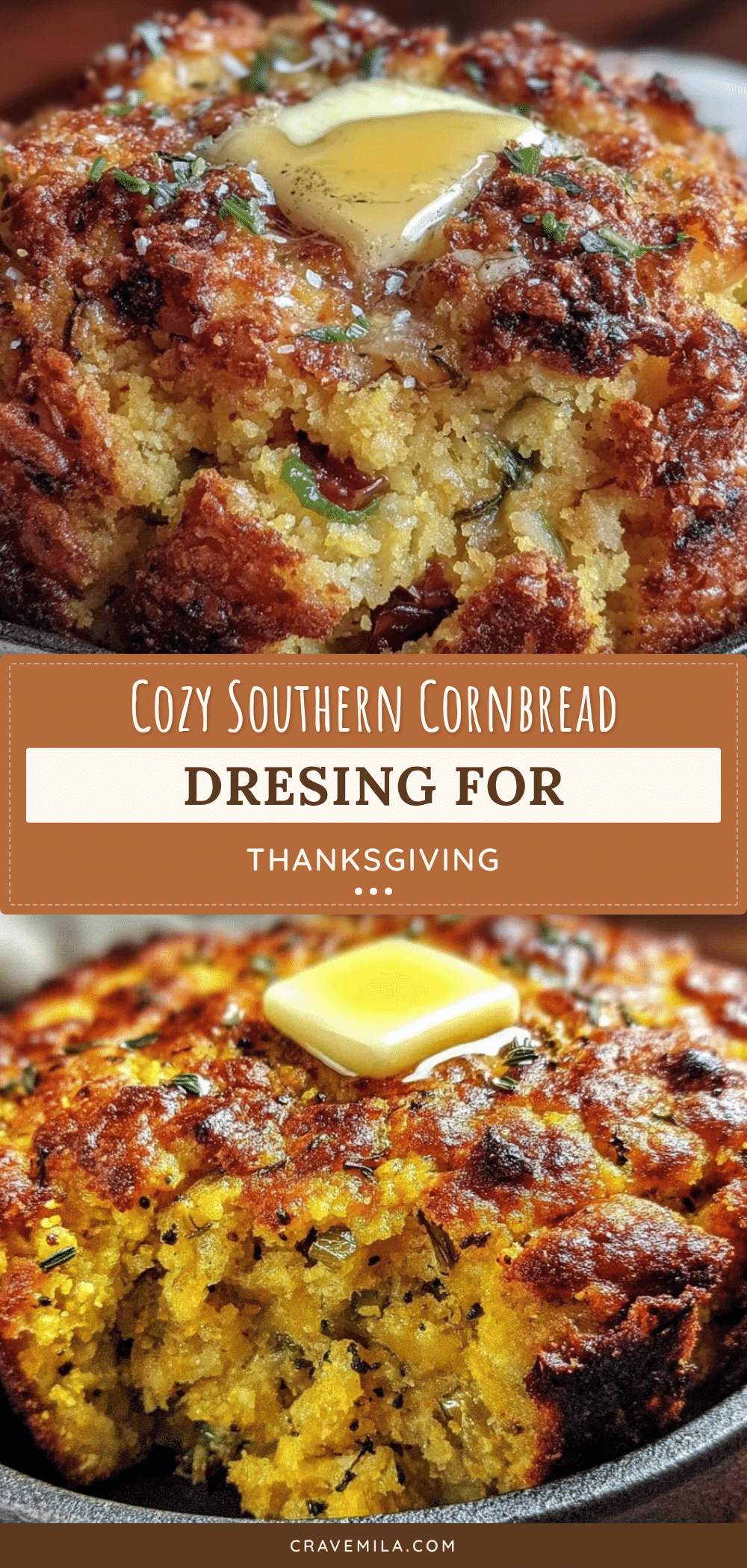
Cozy Southern Cornbread Dressing: Easy Thanksgiving Recipe

This cozy Southern cornbread dressing is rich, savory, and perfectly textured—moist but not mushy, with a golden, crispy top. Made with simple, real ingredients, it’s the ultimate Thanksgiving side dish that will have everyone asking for the recipe.
- Prep Time: 30 minutes
- Cook Time: 45 minutes
- Total Time: 1 hour 15 minutes (plus overnight staling for cornbread)
- Yield: 12 servings 1x
- Category: Side Dish
- Cuisine: Southern
Ingredients
- 2 cups yellow cornmeal (medium-grind stone-ground preferred)
- 1 cup all-purpose flour
- 1 tablespoon baking powder
- 1 teaspoon baking soda
- 1 teaspoon salt
- 2 large eggs, room temperature
- 1 ½ cups buttermilk, shaken
- ½ cup unsalted butter, melted and cooled slightly
- 1 tablespoon honey (optional)
- 8 cups crumbled day-old cornbread (about one 9x13 pan full)
- 4 tablespoons unsalted butter, divided
- 1 large yellow onion, finely diced (about 1 ½ cups)
- 3 celery ribs, finely diced (about 1 cup)
- 4 cloves garlic, minced
- 1 teaspoon salt, plus more to taste
- ½ teaspoon black pepper
- 1 tablespoon fresh sage, chopped (or 1 teaspoon dried)
- 2 teaspoons fresh thyme leaves (or ½ teaspoon dried)
- 1 teaspoon fresh rosemary, finely chopped (optional)
- 2 large eggs, lightly beaten
- 2 ½ to 3 cups low-sodium chicken or turkey broth
- ¼ cup fresh parsley, chopped (for garnish)
Instructions
- Make the cornbread (day before or at least 4 hours ahead): Preheat oven to 400°F. Grease a 9×13-inch baking dish or 10-inch cast iron skillet with butter. In a large bowl, whisk together cornmeal, flour, baking powder, baking soda, and salt. In a separate bowl, whisk eggs, buttermilk, melted butter, and honey until smooth. Pour wet into dry and stir until just combined (a few lumps are fine). Pour batter into prepared dish and bake for 20-25 minutes until golden and a toothpick comes out clean. …
- Prep vegetables: About an hour before baking, preheat oven to 350°F. In a medium skillet over medium heat, melt 2 tablespoons butter. Add diced onion and celery, cook 8-10 minutes until softened. Add garlic and cook 1 minute until fragrant. Remove from heat and let cool slightly.
- Crumble cornbread: Break stale cornbread into coarse crumbs into a very large mixing bowl. Aim for a mix of textures—some fine crumbs, some small chunks no larger than a pea.
- Combine dressing: Add sautéed vegetables to crumbled cornbread. Sprinkle with salt, pepper, sage, thyme, and rosemary. Toss to distribute. In a small bowl, whisk beaten eggs with 2 ½ cups broth. Pour over cornbread mixture and stir gently until moistened. Mixture should look quite wet—like thick porridge. If dry, add remaining ½ cup broth.
- Bake: Melt remaining 2 tablespoons butter and drizzle over dressing. Stir once, then transfer to greased 9×13 baking dish. Spread evenly. Bake at 350°F for 40-45 minutes until top is golden brown and edges are crispy. Center should be set but slightly jiggly. Let rest 10 minutes before serving. Garnish with fresh parsley and extra black pepper.
Notes
Let cornbread stale overnight for best texture. The dressing mixture should look quite wet before baking—trust the process. For make-ahead, assemble completely (minus final bake) the night before, cover, and refrigerate. Add 5-10 minutes to baking time if starting cold. For a heartier version, add ½ cup cooked crumbled breakfast sausage or bacon, reducing butter by 1-2 tablespoons.
Nutrition
- Serving Size: 1 serving (about 1/1
- Calories: 320
- Sugar: 6
- Sodium: 620
- Fat: 16
- Saturated Fat: 9
- Carbohydrates: 37
- Fiber: 3
- Protein: 8
Keywords: cornbread dressing, Southern dressing, Thanksgiving dressing, cornbread stuffing, holiday side dish, Southern cornbread dressing, easy Thanksgiving recipe