My accountant, Mr. Henderson, is the last person I’d expect cooking advice from. I mean, the man wears the same gray cardigan every day and once told me he considered a can of soup “a gourmet meal.” But there I was, stuck in his office during tax season, staring at a pile of receipts, when he started talking about salmon. “You’ve got to try it with maple syrup and mustard,” he said, not looking up from my W-2s. “Trust me on this.”
I almost laughed. But something about the way he said it—with this quiet confidence, like he’d discovered a secret—made me jot it down on a sticky note. That weekend, I had a dinner party planned, and I was desperate for something that looked impressive but didn’t require me to be chained to the stove. I had eight people coming over, and honestly, I was already stressed about the appetizers.
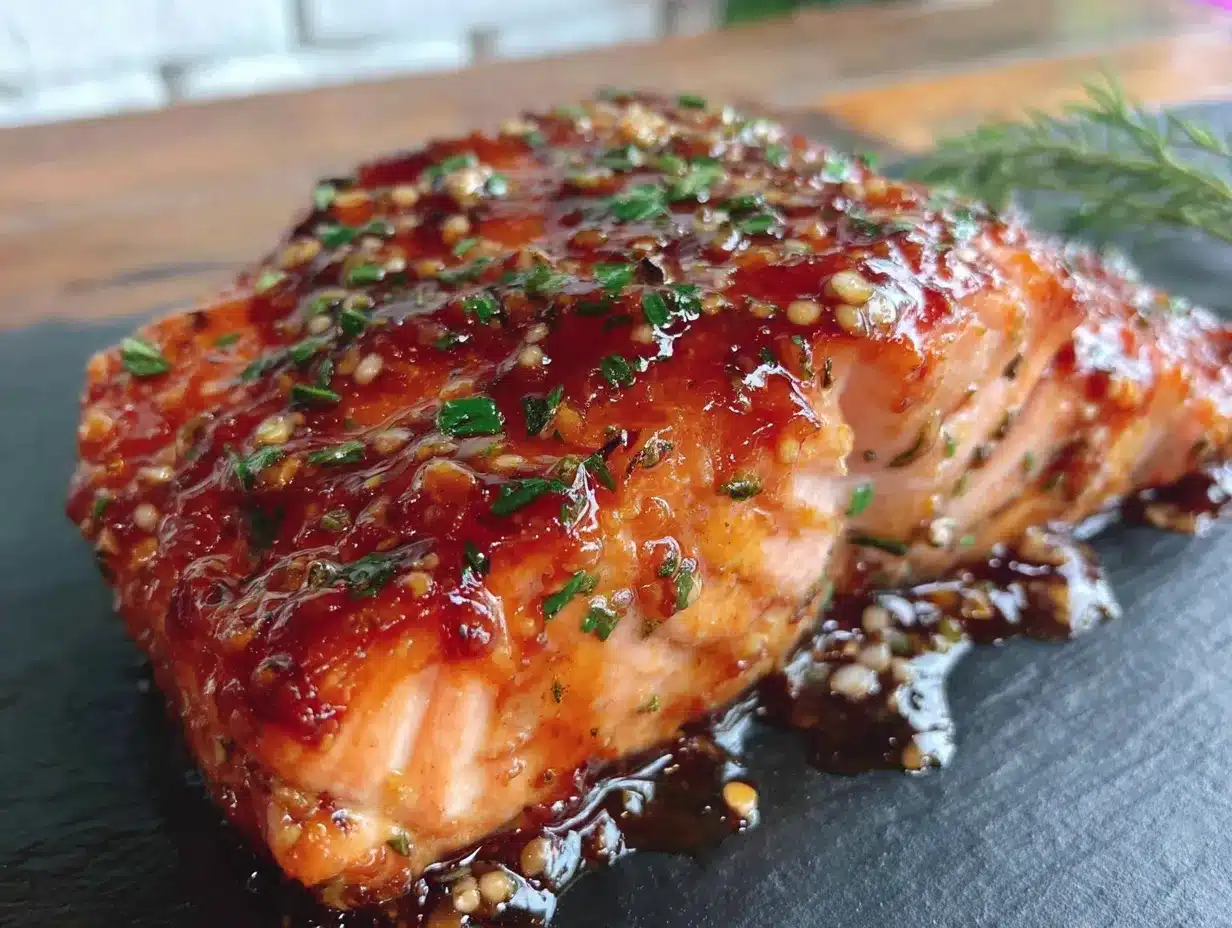
So I tried his suggestion. And let me tell you, that sticky note changed everything. The salmon came out of the oven with this gorgeous, sticky glaze that caught the light, and the smell—sweet and tangy with a little kick—filled the whole kitchen. My guests actually stopped talking when I set the platter down. Someone asked for the recipe before they’d even taken a bite. That’s when you know you’ve got something special.
This Best Maple Dijon Glazed Salmon has become my go-to for hosting. It’s the dish I make when I want to feel like a rockstar in the kitchen without actually working that hard. Maybe you’ve been there—staring at a grocery store salmon fillet, wondering how to make it taste like it came from a fancy restaurant. This is your answer.
Why You’ll Love This Recipe
I’ve tested this recipe more times than I can count, and it never fails. It’s the kind of dish that makes people think you spent hours in the kitchen when really, you had time to shower and pour yourself a glass of wine before anyone showed up. Here’s why it works so well for hosting:
- Quick & Easy: From start to finish, this comes together in about 15 minutes. Seriously. You can prep it while your guests are sipping their first drink.
- Simple Ingredients: You probably have maple syrup and Dijon mustard in your fridge right now. No fancy trips to specialty stores needed.
- Perfect for Dinner Parties: This salmon looks stunning on a platter, and it pairs beautifully with almost any side dish. It’s a crowd-pleaser that feels special without being fussy.
- Always Gets Raves: Every single time I’ve served this, someone asks for the recipe. Kids love it, adults love it, even people who “don’t really like salmon” end up going back for seconds.
- Unbelievably Delicious: The glaze caramelizes into this sticky, sweet-tangy coating that keeps the fish incredibly moist. It’s next-level comfort food that happens to be healthy.
What makes this version different from all the other maple salmon recipes out there? It’s the balance. I spent a lot of time tweaking the ratio of maple syrup to Dijon mustard, and I added a tiny pinch of cayenne that nobody can quite identify but everyone notices. It’s not just another recipe—it’s my best version, tested on actual dinner party guests who have zero problem being honest with me.
This is the recipe you make when you want to impress without stress. It’s comfort food reimagined—faster, healthier, but with the same soul-soothing satisfaction that makes everyone at the table close their eyes after the first bite.
What Ingredients You Will Need
This recipe uses simple, wholesome ingredients that work together to create something truly special. Most of these are pantry staples, which is exactly what you want when you’re hosting.
- Salmon Fillets: 4 (6-ounce) fillets, skin-on or skinless. I prefer skin-on because it helps keep the fish moist and makes for a beautiful presentation. Look for fillets that are roughly the same thickness so they cook evenly. If you can, ask your fishmonger for center-cut fillets—they’re the most uniform.
- Pure Maple Syrup: ¼ cup. Please don’t use pancake syrup here. Real maple syrup makes a huge difference in flavor and texture. Grade A dark amber is my favorite for this recipe because it has a stronger maple taste that stands up to the mustard.
- Dijon Mustard: 2 tablespoons. I recommend Grey Poupon for its smooth texture and sharp flavor. The mustard cuts through the sweetness of the maple syrup and adds that essential tangy kick.
- Whole Grain Mustard: 1 tablespoon. This adds texture and little pops of mustard seed that look beautiful in the glaze. If you don’t have it, just use an extra tablespoon of Dijon.
- Olive Oil: 2 tablespoons, plus more for the pan. Use a good-quality extra virgin olive oil for the best flavor.
- Garlic: 2 cloves, minced. Fresh garlic is non-negotiable here. The pre-minced stuff in a jar won’t give you the same punch.
- Soy Sauce: 1 tablespoon. This adds depth and umami that balances the sweetness. Use low-sodium if you’re watching your salt intake.
- Cayenne Pepper: ⅛ teaspoon. Just a pinch. It doesn’t make the salmon spicy, but it adds a warmth that makes the other flavors pop.
- Salt and Black Pepper: To taste. I use kosher salt and freshly ground black pepper.
- Fresh Dill or Parsley: For garnish. This is optional but highly recommended—it adds a fresh, bright finish that looks gorgeous on the platter.
Ingredient Selection Tips: When buying salmon, look for fillets that are bright in color and smell like the ocean, not fishy. The flesh should be firm to the touch. For the maple syrup, I always use Maple Grove Farms or Coaticook—both are reliable and flavorful. If you’re serving guests with dietary restrictions, this recipe is naturally gluten-free as long as you use tamari instead of soy sauce.
Equipment Needed
You don’t need much fancy equipment for this recipe, which is another reason it’s perfect for hosting. Here’s what you’ll need:
- Baking Sheet: A rimmed baking sheet works best. Line it with parchment paper or aluminum foil for easy cleanup. Trust me, you don’t want to be scrubbing caramelized glaze off a pan when your guests are still at the table.
- Small Bowl: For whisking together the glaze. Any small mixing bowl will do.
- Whisk: To combine the glaze ingredients smoothly. A fork works in a pinch.
- Basting Brush: For brushing the glaze onto the salmon. If you don’t have one, you can use the back of a spoon.
- Instant-Read Thermometer: This is optional but highly recommended. Salmon is perfectly cooked at 125°F to 130°F in the thickest part. It’s the best way to avoid overcooking, which is the most common mistake people make.
- Fish Spatula: A thin, slotted spatula makes flipping and transferring the salmon much easier. A regular spatula works, but you might break the fillets.
I bought my instant-read thermometer for about $12 on Amazon, and it’s been a game-changer for cooking fish. My fish spatula was a thrift store find for $2. You really don’t need to spend a lot to cook like a pro.
Preparation Method
Let’s get cooking. This is where the magic happens. Remember, we’re making this for a dinner party, so I’ve included tips to help you stay calm and organized while your guests are around.
- Preheat your oven to 400°F (200°C). Position the rack in the center of the oven. Line a rimmed baking sheet with parchment paper or foil for easy cleanup.
- Make the glaze. In a small bowl, whisk together ¼ cup maple syrup, 2 tablespoons Dijon mustard, 1 tablespoon whole grain mustard, 2 tablespoons olive oil, 2 minced garlic cloves, 1 tablespoon soy sauce, and ⅛ teaspoon cayenne pepper. Whisk until smooth and well combined. Taste it—you want a balance of sweet, tangy, and savory. Adjust if needed.
- Prepare the salmon. Pat your 4 salmon fillets dry with paper towels. This is important because it helps the glaze stick. Season both sides with salt and freshly ground black pepper. Place the fillets skin-side down on the prepared baking sheet, leaving a little space between each one so they cook evenly.
- Apply the glaze. Using a basting brush or the back of a spoon, brush a generous layer of the maple Dijon glaze over the tops and sides of each fillet. Don’t be shy—you want a nice, even coating. Reserve about half of the glaze for later.
- Bake the salmon. Place the baking sheet in the preheated oven and bake for 6-8 minutes, depending on the thickness of your fillets. For 1-inch thick fillets, start checking at 6 minutes. The salmon should be mostly opaque but still slightly translucent in the center.
- Broil for the finish. Switch your oven to broil. Brush the remaining glaze over the salmon fillets. Broil for 2-3 minutes, watching closely, until the glaze is bubbly and caramelized. The edges should be slightly charred but not burnt. This step creates that gorgeous, sticky crust that makes the dish look so impressive.
- Check for doneness. The salmon is done when it flakes easily with a fork and the internal temperature reaches 125°F to 130°F (52°C to 54°C) in the thickest part. Remember, it will continue to cook slightly after you take it out of the oven.
- Rest and serve. Let the salmon rest for 2-3 minutes on the baking sheet. This allows the juices to redistribute. Transfer the fillets to a serving platter, spoon any extra glaze from the pan over the top, and garnish with fresh dill or parsley. Serve immediately.
Prep Ahead Tip for Hosting: You can make the glaze up to 3 days in advance and store it in the fridge. You can also season the salmon fillets and keep them covered in the fridge for up to 4 hours before cooking. This way, all you have to do is brush on the glaze and bake when your guests are ready to eat.
Cooking Tips & Techniques
I’ve made this salmon more times than I can count, and I’ve learned a few things along the way. Here are my best tips for getting it perfect every time:
- Don’t overcook the salmon. This is the number one mistake people make. Salmon goes from perfectly moist to dry and flaky in about 60 seconds. Use an instant-read thermometer if you have one. If you don’t, look for the visual cues: the salmon should be opaque on the outside but still slightly translucent in the center when you take it out. It will finish cooking as it rests.
- Pat the salmon dry. I know I said this already, but it’s worth repeating. Moisture is the enemy of a good glaze. If the salmon is wet, the glaze will slide right off instead of sticking and caramelizing.
- Watch the broiler closely. Broilers vary wildly in intensity. What takes 2 minutes in my oven might take 4 minutes in yours, or it might burn in 30 seconds. Stay by the oven and keep an eye on it. You want the glaze to bubble and darken, not turn into a blackened mess.
- Use room temperature salmon. Take the fillets out of the fridge 15-20 minutes before cooking. Cold salmon cooks unevenly, with the outside getting done before the center is warm.
- Scale up easily. For a bigger dinner party, you can easily double or triple this recipe. Just use a larger baking sheet or two sheets, and rotate them halfway through baking. The glaze recipe multiplies beautifully.
- My biggest failure: The first time I made this, I forgot to line the pan. The glaze caramelized onto the baking sheet, and I spent 20 minutes scrubbing it while my guests ate. Learn from my mistake—always use parchment paper or foil.
Variations & Adaptations
This recipe is wonderfully flexible. Here are some ways I’ve adapted it for different guests and occasions:
- Spicy Maple Salmon: Add an extra ¼ teaspoon of cayenne pepper and a teaspoon of sriracha to the glaze. The heat pairs beautifully with the sweetness. I made this version for a friend who loves spicy food, and she ate three fillets.
- Herb-Crusted Salmon: After brushing on the glaze, press a mixture of fresh chopped dill, parsley, and chives onto the top of each fillet before baking. The herbs get slightly crispy in the oven and add a lovely freshness.
- Lemon-Dijon Variation: Replace the maple syrup with honey and add the zest and juice of half a lemon. This version is brighter and less sweet, perfect for spring or summer dinner parties.
- Garlic Butter Salmon: For a richer version, melt 2 tablespoons of butter and whisk it into the glaze instead of the olive oil. The butter adds a luxurious mouthfeel that feels extra indulgent.
- Dietary Adaptations: This recipe is naturally gluten-free if you use tamari instead of soy sauce. For a dairy-free version, skip the butter variation and stick with olive oil. If you’re watching your sugar intake, you can reduce the maple syrup to 2 tablespoons and add an extra tablespoon of Dijon mustard.
Serving & Storage Suggestions
This salmon is a showstopper on any dinner party table. Here’s how to serve it and what to do with leftovers:
- Serving Temperature: Serve the salmon warm, straight from the oven. The glaze is at its best when it’s still sticky and slightly runny. If you’re serving a crowd, you can keep the salmon warm on a platter in a 200°F oven for up to 15 minutes, but any longer and it will start to dry out.
- Presentation Tips: Arrange the fillets on a white platter to make the golden glaze pop. Garnish with fresh dill sprigs, lemon wedges, and a sprinkle of flaky sea salt. I like to add a few capers for a briny contrast. For a dinner party, I sometimes serve the salmon on a bed of arugula or mixed greens dressed lightly with lemon juice.
- What to Serve Alongside: This salmon pairs beautifully with roasted asparagus, garlic green beans, or a simple mixed green salad. For starch, try wild rice, quinoa, or crusty bread to soak up any extra glaze. A crisp white wine like Sauvignon Blanc or a light Pinot Noir is perfect.
- Storage: Leftover salmon keeps in an airtight container in the refrigerator for up to 3 days. The flavors actually meld together overnight, so it’s great for lunch the next day.
- Reheating: The best way to reheat salmon is in a low oven (300°F) for 5-7 minutes, or in a skillet over medium-low heat with a splash of water or broth. Avoid the microwave—it will make the salmon rubbery and dry out the glaze.
- Leftover Ideas: Flake the leftover salmon over salads, mix into pasta with a little cream sauce, or stuff into a wrap with greens and a dollop of Greek yogurt. It’s also amazing on top of avocado toast.
Nutritional Information & Benefits
This recipe isn’t just delicious—it’s also packed with nutrients. Here’s a breakdown per serving (based on 4 servings):
| Nutrient | Amount per Serving |
|---|---|
| Calories | 385 |
| Protein | 34g |
| Fat | 18g |
| Saturated Fat | 3g |
| Carbohydrates | 16g |
| Sugar | 13g |
| Fiber | 0g |
| Sodium | 480mg |
Pin This Recipe!
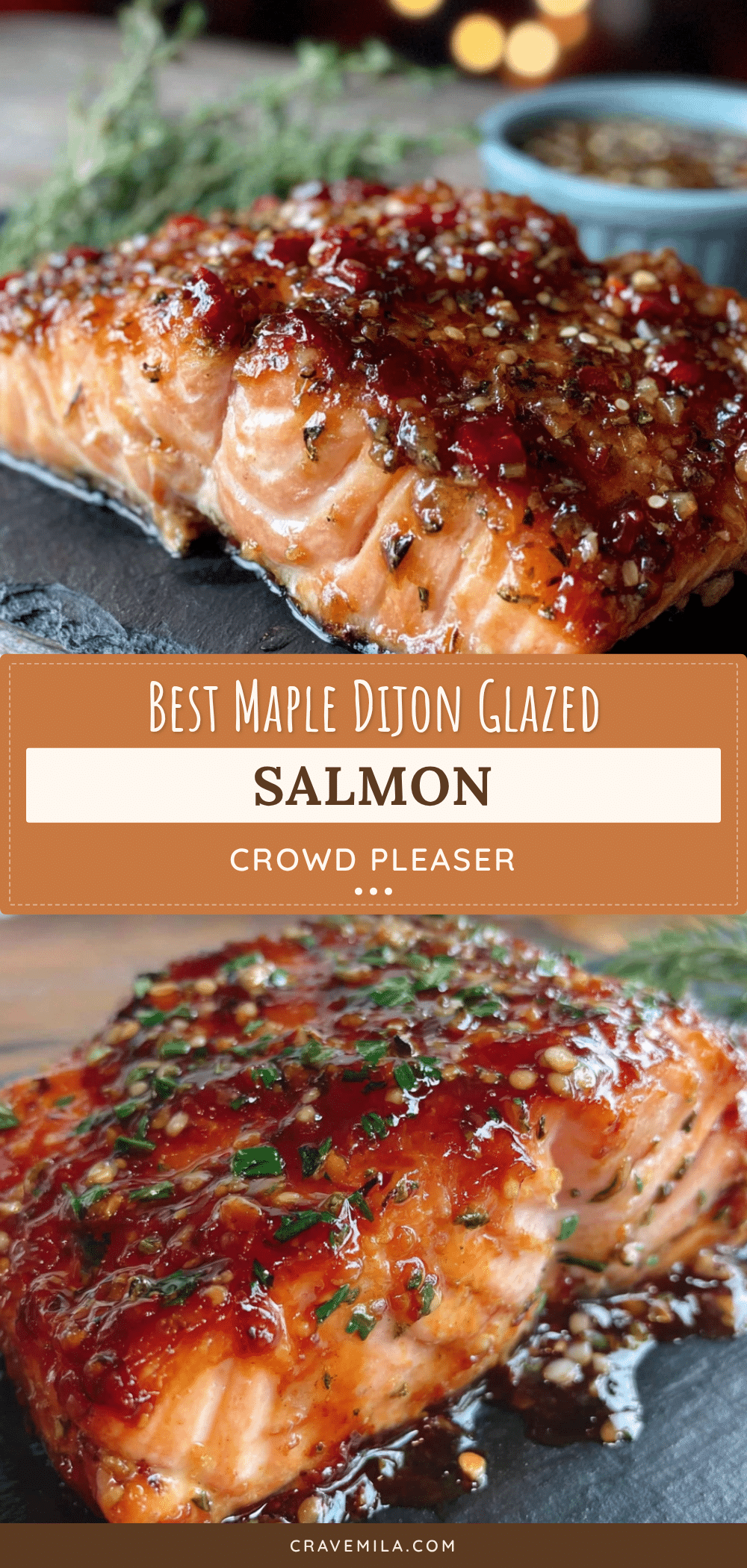
Best 15-Minute Maple Dijon Glazed Salmon Recipe
This quick and easy salmon recipe features a sweet and tangy maple Dijon glaze that caramelizes beautifully in the oven. Perfect for dinner parties, it comes together in just 15 minutes and always gets rave reviews.
- Prep Time: 5 minutes
- Cook Time: 10 minutes
- Total Time: 15 minutes
- Yield: 4 servings 1x
- Category: Main Course
- Cuisine: American
Ingredients
- 4 (6-ounce) salmon fillets, skin-on or skinless
- ¼ cup pure maple syrup
- 2 tablespoons Dijon mustard
- 1 tablespoon whole grain mustard
- 2 tablespoons olive oil, plus more for the pan
- 2 cloves garlic, minced
- 1 tablespoon soy sauce (or tamari for gluten-free)
- ⅛ teaspoon cayenne pepper
- Salt and black pepper to taste
- Fresh dill or parsley for garnish (optional)
Instructions
- Preheat your oven to 400°F (200°C). Position the rack in the center of the oven. Line a rimmed baking sheet with parchment paper or foil for easy cleanup.
- In a small bowl, whisk together ¼ cup maple syrup, 2 tablespoons Dijon mustard, 1 tablespoon whole grain mustard, 2 tablespoons olive oil, 2 minced garlic cloves, 1 tablespoon soy sauce, and ⅛ teaspoon cayenne pepper until smooth.
- Pat the 4 salmon fillets dry with paper towels. Season both sides with salt and black pepper. Place the fillets skin-side down on the prepared baking sheet, leaving space between each.
- Using a basting brush or the back of a spoon, brush a generous layer of the glaze over the tops and sides of each fillet. Reserve about half of the glaze for later.
- Bake the salmon for 6-8 minutes, depending on thickness. For 1-inch thick fillets, start checking at 6 minutes. The salmon should be mostly opaque but still slightly translucent in the center.
- Switch your oven to broil. Brush the remaining glaze over the salmon fillets. Broil for 2-3 minutes, watching closely, until the glaze is bubbly and caramelized. The edges should be slightly charred but not burnt.
- Check for doneness: the salmon is done when it flakes easily with a fork and the internal temperature reaches 125°F to 130°F (52°C to 54°C) in the thickest part.
- Let the salmon rest for 2-3 minutes on the baking sheet. Transfer to a serving platter, spoon any extra glaze from the pan over the top, and garnish with fresh dill or parsley. Serve immediately.
Notes
For best results, use room temperature salmon (take out of fridge 15-20 minutes before cooking). Pat the salmon dry to help the glaze stick. Watch the broiler closely as it can burn quickly. The glaze can be made up to 3 days ahead and stored in the fridge. Leftover salmon keeps in an airtight container in the refrigerator for up to 3 days.
Nutrition
- Serving Size: 1 fillet
- Calories: 385
- Sugar: 13
- Sodium: 480
- Fat: 18
- Saturated Fat: 3
- Carbohydrates: 16
- Protein: 34
Keywords: maple dijon salmon, glazed salmon, quick salmon recipe, dinner party salmon, 15-minute salmon