The Thanksgiving potluck at my daughter’s school was in twelve hours and I had completely forgotten. Everyone else would be bringing elaborate dishes—a from-scratch green bean casserole with fried shallots, a twice-baked potato situation that looked like it belonged on a magazine cover, and a pumpkin roll that had taken someone three hours to assemble. I had five russet potatoes, a block of cream cheese, and exactly zero time. Let me tell you, I was panicking. I mean, you know that feeling when you show up to the party and realize you’re the one holding the bag of store-bought chips? That was about to be me. But then I remembered this make-ahead mashed potato casserole my neighbor Janice had mentioned once—the kind you can throw together in a panic, stick in the fridge, and pull out looking like you spent all day on it. Honestly, I didn’t even have time to think it through. I just started boiling potatoes while hunting for my casserole dish, which was, of course, buried under a pile of cookbooks. I ended up using a slightly cracked one I’d been meaning to replace. The dish won the potluck. I’m not kidding. Someone actually asked me for the recipe while I was still trying to find a spot to set it down. That’s the thing about this recipe—it’s the accidental overachiever of side dishes. You barely try, and somehow it’s the star of the table. I’ve been making it ever since, and honestly, it’s the only thing I bring to holiday gatherings now. You might have been in that same boat before—forgetting an event, scrambling for something decent, and ending up with a happy accident. That’s what this casserole is.
Why You’ll Love This Recipe
This isn’t just another mashed potato recipe. This is the one you’ll turn to again and again, and here’s why it works so well.
- Quick & Easy: Comes together in about 30 minutes of active prep time, then you just pop it in the fridge until you’re ready to bake. Perfect for those chaotic holiday mornings or busy weeknight dinners.
- Simple Ingredients: No fancy grocery trips needed. Potatoes, cream cheese, sour cream, butter, and a few seasonings—things you probably already have in your kitchen right now.
- Perfect for Holidays & Gatherings: This is your new go-to for Thanksgiving, Christmas, Easter, or any potluck where you want to show up with something impressive without the stress.
- Crowd-Pleaser: I’ve served this to kids, picky eaters, and serious foodies, and it gets rave reviews every single time. The texture is what does it—creamy, rich, and just a little bit tangy from the cream cheese.
- Unbelievably Delicious: The cream cheese and sour cream combo gives these potatoes a richness that regular mashed potatoes just can’t touch. It’s comfort food at its finest, but somehow even better.
What makes this recipe different from all the other mashed potato casseroles out there? It’s the balance. I’ve tested versions with too much cream cheese (gummy), too little sour cream (dry), and not enough butter (sad). This version hits that sweet spot where every bite is creamy, tangy, and buttery all at once. Plus, the make-ahead factor means you actually get to enjoy your own party instead of being stuck in the kitchen. This recipe isn’t just good—it’s the kind that makes you close your eyes after the first bite. It’s comfort food reimagined—faster, easier, but with the same soul-soothing satisfaction. Perfect for impressing guests without stress, or turning a simple meal into something memorable.
What Ingredients You Will Need
This recipe uses simple, wholesome ingredients to deliver that ultra-creamy texture and rich flavor. Most of these are pantry staples, and the ones that aren’t are easy to find at any grocery store.
For the Mashed Potato Base
- 5 pounds russet potatoes, peeled and quartered (Yukon Golds work too, but russets give the fluffiest texture)
- 8 ounces cream cheese, softened to room temperature (I recommend Philadelphia for the creamiest result—don’t use the low-fat version here)
- 1 cup sour cream, full-fat preferred (adds tanginess and richness)
- 1/2 cup unsalted butter, melted (plus extra for greasing the dish)
- 1 teaspoon garlic powder (not garlic salt—you’ll add salt separately)
- 1 teaspoon onion powder
- 1 1/2 teaspoons salt, plus more for the boiling water
- 1/2 teaspoon black pepper, freshly ground
- 1/4 cup milk or heavy cream, warmed (use heavy cream for extra richness, or dairy-free milk if needed)
For the Topping
- 2 tablespoons unsalted butter, melted
- 1/2 cup shredded cheddar cheese (optional, but highly recommended for a golden, crispy top)
- Fresh chives or parsley, chopped for garnish (optional)
Ingredient selection tips: Look for potatoes that are firm and free of green spots or sprouts. Russets are starchy and fluffy, which makes them ideal for mashing—they soak up all that creamy goodness. For the cream cheese, I really do recommend a full-fat block style, not the spreadable kind in a tub. The block has a better texture and less water content, which means your casserole won’t turn out runny. If you’re dairy-free, you can substitute the cream cheese with a good plant-based version and use dairy-free sour cream, but the texture will be slightly different. I’ve tried it with Kite Hill cream cheese and it worked pretty well, honestly.
Equipment Needed
You don’t need a fancy kitchen to pull this off. Here’s what you’ll need:
- Large stockpot (at least 6 quarts) for boiling the potatoes
- Colander for draining
- Potato masher or electric hand mixer (I prefer a hand mixer for the smoothest texture, but a good old-fashioned masher works too if you like a chunkier mash)
- 9×13-inch baking dish (or any 3-quart casserole dish)
- Mixing bowls (one large, one small)
- Measuring cups and spoons
- Chef’s knife and cutting board
- Aluminum foil for covering during baking
If you don’t have a 9×13 dish, you can use a 10-inch cast iron skillet or even two smaller dishes. Just adjust the baking time slightly—smaller dishes will bake faster. I’ve used my grandmother’s old CorningWare dish for years, and it works perfectly. Budget-friendly tip: You don’t need an expensive potato ricer or food mill. A hand mixer is under $20 and does the job beautifully.
Preparation Method
Let’s get cooking. This recipe is straightforward, but I’ll walk you through every step with the little tricks I’ve learned from making it about a dozen times.
- Prep the potatoes (10 minutes): Peel your 5 pounds of russet potatoes and cut them into uniform quarters. This is important—if your pieces are different sizes, they’ll cook unevenly. Rinse them in cold water to remove excess starch, which helps prevent them from getting gummy later.
- Boil the potatoes (20-25 minutes): Place the potato pieces in your large stockpot and cover with cold water by about an inch. Add a generous tablespoon of salt to the water—this seasons the potatoes from the inside out. Bring to a boil over high heat, then reduce to a simmer. Cook until the potatoes are fork-tender, meaning a knife slides in with no resistance. Start checking at 15 minutes; you don’t want them falling apart.
- Drain and steam dry (5 minutes): Drain the potatoes in a colander and let them sit for a few minutes. This step is crucial—excess water will make your casserole watery. Let them steam dry in the colander while you prepare the other ingredients. I usually give them a gentle shake now and then.
- Mash the potatoes (5 minutes): Return the drained potatoes to the warm pot (or transfer to a large mixing bowl). Using an electric hand mixer on low speed, begin mashing. Add the softened cream cheese, sour cream, melted butter, garlic powder, onion powder, salt, and pepper. Mix until smooth and creamy—about 2 minutes. Be careful not to overmix, or the potatoes can become gluey. If the mixture seems too thick, add the warmed milk or cream a little at a time until it reaches your desired consistency.
- Assemble the casserole (5 minutes): Grease your 9×13-inch baking dish with butter. Spread the mashed potato mixture evenly into the dish using a spatula. If you’re adding the cheddar cheese topping, sprinkle it over the top now. Drizzle the remaining 2 tablespoons of melted butter over everything.
- Cool and refrigerate (at least 2 hours, up to 3 days): Let the casserole cool to room temperature on the counter, then cover tightly with aluminum foil and refrigerate. This is where the magic happens—the flavors meld together and the texture sets perfectly.
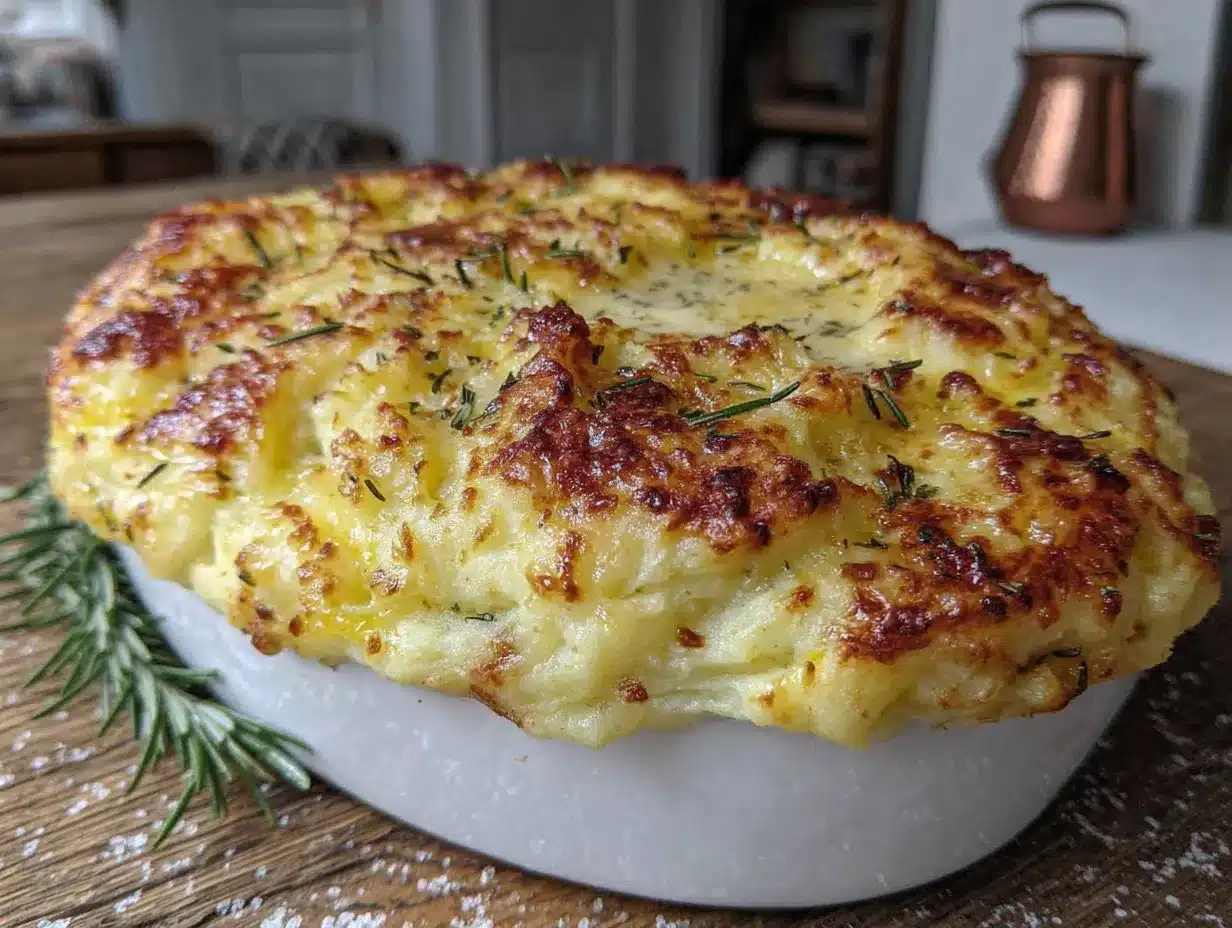
- Bake (45-55 minutes): When you’re ready to serve, preheat your oven to 350°F (175°C). Remove the casserole from the fridge while the oven heats up. Bake covered with foil for 30 minutes, then remove the foil and bake for another 15-25 minutes, until the top is golden brown and the edges are bubbly. If you’re skipping the cheese, the top will still get a lovely golden crust from the butter.
- Rest and serve (5 minutes): Let the casserole sit for 5 minutes before serving. This allows it to set up a bit so it doesn’t turn into a soupy mess on the plate. Garnish with fresh chives or parsley if you’re feeling fancy.
A note from my own experience: The first time I made this, I skipped the step of letting the potatoes steam dry. Big mistake. The casserole was soupy and sad. Don’t skip it. Also, if you’re making this for a big holiday dinner, you can assemble it up to three days ahead. Just keep it tightly covered in the fridge. The texture actually gets better after a day or two—the flavors have time to really get to know each other.
Cooking Tips & Techniques
I’ve made this casserole enough times to have a few tricks up my sleeve. Here’s what I’ve learned the hard way so you don’t have to.
Don’t overwork the potatoes. This is the number one mistake people make with mashed potatoes. When you overmix them, the starch develops too much and they turn into glue. Use a hand mixer on low speed, or better yet, a potato masher for a slightly chunkier texture. I actually prefer the hand mixer because it gives me that silky smooth consistency, but I stop the second everything comes together.
Warm your dairy. Cold cream cheese and sour cream straight from the fridge can make your potatoes seize up. Let them sit at room temperature for about 30 minutes before you start. If you forget (which I do, constantly), you can microwave the cream cheese for about 15 seconds to soften it. Just don’t melt it—you want it soft, not liquid.
Season the water. This is a game-changer. Salting the water you boil the potatoes in seasons them from the inside out. You can’t fix bland potatoes by adding salt after the fact—it just sits on the surface. I use about a tablespoon of salt per gallon of water.
Use the right potato. Russets are the gold standard here. They’re high in starch and low in moisture, which gives you that fluffy, creamy texture. Waxy potatoes like red or new potatoes will give you a denser, almost gluey result. I learned this the hard way when I ran out of russets and used Yukon Golds once—they worked okay, but the texture wasn’t quite the same.
Make it ahead, but don’t rush the cooling. Let the casserole cool completely before you put it in the fridge. If you cover it while it’s still warm, condensation will form and make the top soggy. I usually let it sit on the counter for about 30-40 minutes before covering and refrigerating.
Variations & Adaptations
This recipe is incredibly flexible. Here are some ways to make it your own:
Cheesy Garlic Mashed Potato Casserole: Add 1 cup of shredded sharp cheddar and 2 minced garlic cloves (not powder) to the potato mixture. Top with an extra 1/2 cup of cheese and some breadcrumbs for a crunchy crust. I made this version for a friend’s potluck and it disappeared in about 10 minutes.
Loaded Baked Potato Style: Fold in 1/2 cup of cooked, crumbled bacon, 1/2 cup of shredded cheddar, and 1/4 cup of sliced green onions before baking. Top with more cheese, bacon, and a dollop of sour cream after baking. This is my husband’s favorite—he calls it “dinner in a dish.”
Herb & Roasted Garlic Version: Roast a head of garlic by cutting off the top, drizzling with olive oil, wrapping in foil, and baking at 400°F for 40 minutes. Squeeze the soft garlic cloves into the potato mixture along with 2 tablespoons of fresh chopped rosemary and thyme. The roasted garlic adds a sweet, mellow flavor that’s completely different from raw garlic.
Dairy-Free Adaptation: Use plant-based cream cheese (I like Kite Hill), dairy-free sour cream, and vegan butter. The texture will be slightly less rich, but still delicious. Add an extra tablespoon of nutritional yeast to the mixture for a cheesy flavor without the dairy.
Spicy Southwestern Twist: Add 1 can of drained diced green chiles, 1/2 cup of corn kernels, and 1 teaspoon of cumin to the potato mixture. Top with pepper jack cheese instead of cheddar. This is fantastic with grilled meats or tacos.
Serving & Storage Suggestions
This casserole is incredibly versatile when it comes to serving and storing. Here’s everything you need to know.
Serving Temperature: Serve this casserole hot, straight from the oven. The ideal temperature is around 165°F, which is when the butter and cheese are perfectly melted and the potatoes are steamy. Let it rest for 5 minutes after baking so it holds its shape when you scoop it.
What to Serve With It: This casserole is a natural side for roasted meats like turkey, ham, roast chicken, or beef brisket. It also pairs beautifully with roasted vegetables like asparagus, green beans, or Brussels sprouts. For a complete holiday meal, serve it alongside cranberry sauce and a fresh green salad. Honestly, I’ve also eaten it as a main dish with a side of steamed broccoli—no judgment here.
Storage Instructions: Leftovers can be stored in an airtight container in the refrigerator for up to 5 days. The texture actually holds up really well because of the cream cheese and sour cream. To reheat, microwave individual portions for 1-2 minutes, or reheat the entire casserole in a 350°F oven for about 15-20 minutes, covered with foil. Add a splash of milk if it seems dry.
Freezer Instructions: This casserole freezes beautifully. Assemble it completely, but don’t bake it. Cover tightly with plastic wrap, then a layer of aluminum foil, and freeze for up to 3 months. To serve, thaw in the refrigerator overnight, then bake as directed. You may need to add 10-15 minutes to the baking time since it’s starting from cold. I always make two—one for now, one for later.
Flavor Development: Here’s a little secret—this casserole actually tastes better the next day. The flavors have time to meld and deepen, and the texture becomes even creamier. If you’re making this for a holiday dinner, I highly recommend making it a day ahead. Your future self will thank you.
Nutritional Information & Benefits
Let’s be real—this is comfort food, not health food. But it does have some redeeming qualities. Here’s a rough breakdown per serving (based on 12 servings):
| Nutrient | Amount Per Serving |
|---|---|
| Calories | 320 |
| Total Fat | 18g |
| Saturated Fat | 11g |
| Cholesterol | 50mg |
| Sodium | 450mg |
| Total Carbohydrates | 35g |
| Dietary Fiber | 3g |
| Sugars | 3g |
| Protein | 6g |
| Vitamin C | 15% DV |
| Potassium | 600mg |
Potatoes often get a bad rap, but they’re actually a good source of vitamin C, potassium, and fiber (especially if you leave the skins on—though this recipe peels them for texture). The cream cheese and sour cream add calcium and protein, along with that irresistible richness. If you’re watching your sodium, you can reduce the salt in the recipe or use unsalted butter. For a lighter version, you can substitute Greek yogurt for the sour cream and use reduced-fat cream cheese, but honestly, I think the full-fat version is worth the indulgence for special occasions.
Conclusion
This make-ahead mashed potato casserole is the kind of recipe that saves you on your busiest days and makes you look like a kitchen hero. It’s creamy, rich, and packed with flavor—everything you want from mashed potatoes, but without the last-minute stress. Whether you’re feeding a crowd at Thanksgiving, bringing a dish to a potluck, or just want a comforting side dish that you can prep ahead, this recipe delivers every single time.
I love this recipe because it reminds me that you don’t need to spend hours in the kitchen to make something truly special. Sometimes the best dishes come from a moment of panic, a cracked casserole dish, and a little bit of faith. I’d love to hear how yours turns out—leave a comment below and let me know if you tried any variations or if this became your new holiday staple. And don’t forget to share this recipe with a friend who needs a little less stress in their kitchen this season. Happy cooking!
Frequently Asked Questions
Can I use Yukon Gold potatoes instead of russets?
Yes, you can use Yukon Golds, but the texture will be slightly different. Yukon Golds have a buttery flavor and a creamier, denser texture. They work well in this recipe, but russets give you that light, fluffy texture that soaks up all the cream cheese and sour cream. If you use Yukon Golds, you might want to add an extra tablespoon of butter for richness.
Can I make this casserole vegan?
Absolutely! Use plant-based cream cheese, dairy-free sour cream, and vegan butter. I recommend Kite Hill or Miyoko’s brands for the best texture. Add a tablespoon of nutritional yeast to the mixture for a cheesy flavor. The texture will be slightly less rich, but still delicious and creamy.
How far in advance can I assemble this casserole?
You can assemble this casserole up to 3 days in advance. Just keep it tightly covered in the refrigerator. The flavors actually get better after a day or two as they meld together. If you’re making it for a holiday dinner, I recommend assembling it the day before for the best results.
Can I freeze this mashed potato casserole?
Yes, this casserole freezes beautifully. Assemble it completely but don’t bake it. Cover tightly with plastic wrap and then aluminum foil. Freeze for up to 3 months. To serve, thaw overnight in the refrigerator, then bake as directed. You may need to add 10-15 minutes to the baking time since it’s starting from cold.
Why did my casserole turn out watery?
This usually happens for one of two reasons: either you didn’t let the potatoes steam dry after draining them, or you used low-fat cream cheese or sour cream. Full-fat dairy products have less water content and create a richer, thicker texture. Make sure to let your drained potatoes sit in the colander for at least 5 minutes to release excess steam and water.
Pin This Recipe!
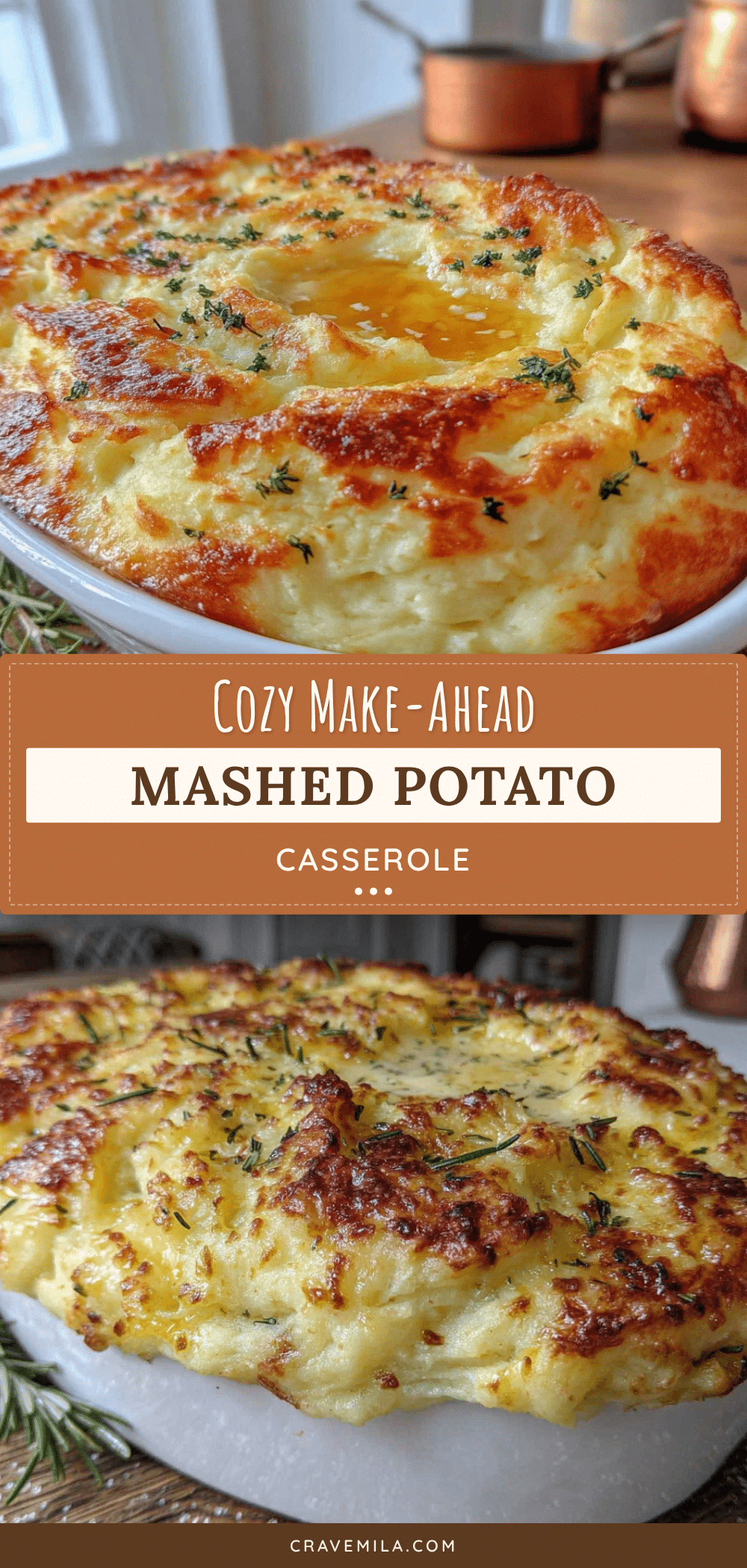
Cozy Make-Ahead Mashed Potato Casserole: Best Easy Recipe

This make-ahead mashed potato casserole is creamy, rich, and packed with flavor—perfect for holidays, potlucks, or busy weeknights. With simple ingredients and a make-ahead option, it’s the ultimate stress-free side dish.
- Prep Time: 30 minutes
- Cook Time: 45 minutes
- Total Time: 1 hour 15 minutes
- Yield: 12 servings 1x
- Category: Side Dish
- Cuisine: American
Ingredients
- 5 pounds russet potatoes, peeled and quartered
- 8 ounces cream cheese, softened to room temperature
- 1 cup sour cream, full-fat preferred
- 1/2 cup unsalted butter, melted (plus extra for greasing the dish)
- 1 teaspoon garlic powder
- 1 teaspoon onion powder
- 1 1/2 teaspoons salt, plus more for the boiling water
- 1/2 teaspoon black pepper, freshly ground
- 1/4 cup milk or heavy cream, warmed
- 2 tablespoons unsalted butter, melted (for topping)
- 1/2 cup shredded cheddar cheese (optional)
- Fresh chives or parsley, chopped for garnish (optional)
Instructions
- Prep the potatoes (10 minutes): Peel 5 pounds of russet potatoes and cut them into uniform quarters. Rinse in cold water to remove excess starch.
- Boil the potatoes (20-25 minutes): Place potato pieces in a large stockpot and cover with cold water by about an inch. Add a generous tablespoon of salt. Bring to a boil, then reduce to a simmer. Cook until fork-tender.
- Drain and steam dry (5 minutes): Drain potatoes in a colander and let them sit for a few minutes to release excess moisture.
- Mash the potatoes (5 minutes): Return drained potatoes to the warm pot. Using an electric hand mixer on low speed, mash. Add softened cream cheese, sour cream, melted butter, garlic powder, onion powder, salt, and pepper. Mix until smooth and creamy. If too thick, add warmed milk or cream a little at a time.
- Assemble the casserole (5 minutes): Grease a 9×13-inch baking dish with butter. Spread the mashed potato mixture evenly into the dish. If using, sprinkle cheddar cheese on top. Drizzle remaining 2 tablespoons melted butter over everything.
- Cool and refrigerate (at least 2 hours, up to 3 days): Let casserole cool to room temperature, then cover tightly with aluminum foil and refrigerate.
- Bake (45-55 minutes): Preheat oven to 350°F (175°C). Remove casserole from fridge while oven heats. Bake covered with foil for 30 minutes, then remove foil and bake for another 15-25 minutes until top is golden brown and edges are bubbly.
- Rest and serve (5 minutes): Let casserole sit for 5 minutes before serving. Garnish with fresh chives or parsley if desired.
Notes
Don’t overwork the potatoes to avoid gluey texture. Warm dairy ingredients to room temperature before adding. Season the boiling water generously. Let potatoes steam dry after draining to prevent watery casserole. For best flavor, assemble a day ahead. Freezes well for up to 3 months.
Nutrition
- Serving Size: 1 serving (1/12 of r
- Calories: 320
- Sugar: 3
- Sodium: 450
- Fat: 18
- Saturated Fat: 11
- Carbohydrates: 35
- Fiber: 3
- Protein: 6
Keywords: mashed potato casserole, make-ahead mashed potatoes, holiday side dish, creamy mashed potatoes, easy potato casserole