My brother asked why I couldn’t just toss the squash in with the pasta water instead of roasting it separately. I started to explain why that wouldn’t work—something about texture, water content, the whole science of it. Then I stopped. Honestly, I had no good reason except that I’d never seen anyone do it that way. So I shrugged and said, “Fine, we’ll try it your way.”
Let me tell you, watching that squash soften right there in the bubbling pasta water felt wrong at first. I kept thinking about all the recipes I’d read that insisted on roasting for that caramelized flavor. But my brother was stirring the pot with this look of pure confidence, and I figured, what’s the worst that could happen? A mushy mess? We’ve all been there.
The moment I drained the pasta and saw how perfectly tender the squash had become, I knew we were onto something. No roasting pan to scrub. No extra thirty minutes of oven time. Just one pot, one strainer, and dinner that came together faster than I ever thought possible. The squash blended into the cheese sauce so smoothly you’d think it was always meant to be there. And the crispy sage on top? That was my contribution—I had to save some face, you know?
This quick butternut squash mac and cheese with crispy sage has become my go-to for those nights when I want something that feels fancy but takes almost no effort. Maybe you’ve been there—staring at a butternut squash at the grocery store, wanting to make something special, but dreading the peeling and the roasting and the whole production. This recipe skips all that nonsense. It’s creamy, it’s comforting, and it’s on your table in about thirty minutes. I keep making it because it proved me wrong in the best possible way.
Why You’ll Love This Recipe
This isn’t just another mac and cheese recipe. After testing this method about seven times (my neighbors have become very willing taste-testers), I can tell you this version stands apart for real reasons, not just internet hype.
- Quick & Easy: From start to table in under 30 minutes. The squash cooks right in the pasta water, so you skip the roasting step entirely. Perfect for a Tuesday night when you’re running on empty.
- Simple Ingredients: You probably have most of this in your kitchen already. No fancy cheese blends or hard-to-find spices. The butternut squash does the heavy lifting for creaminess and flavor.
- One-Pot Wonder: Minimal cleanup. One pot for the pasta and squash, one small pan for the sage. That’s it. Your sink will thank you.
- Hidden Veggie Win: Kids and picky eaters won’t even notice the squash. It blends into the cheese sauce so completely that it just tastes like extra-creamy mac and cheese. My nephew ate three servings before I told him.
- Crowd-Pleaser: I brought this to a potluck last month, and three people asked for the recipe before I’d even sat down. It’s that kind of dish—familiar enough to be comforting, different enough to be memorable.
- Unbelievably Delicious: The combination of creamy, cheesy pasta with those crispy, earthy sage leaves on top? It’s next-level comfort food. The first time I made it, I stood at the counter eating straight from the pot. No regrets.
What makes this recipe different is the technique. Most butternut squash mac and cheese recipes have you roast the squash separately, which adds time and another dirty dish. By cooking the squash with the pasta, you get the same creamy result with way less effort. The squash breaks down naturally in the water, and when you blend it with the cheese, it creates this silky sauce that coats every piece of pasta perfectly. It’s comfort food reimagined—healthier, faster, but with the same soul-soothing satisfaction.
What Ingredients You Will Need
This recipe uses simple, wholesome ingredients to deliver bold flavor and satisfying texture without the fuss. Most of these are pantry staples or easy to find at any grocery store.
For the Mac and Cheese
- Butternut squash – 2 cups, peeled and cubed into ½-inch pieces (about 1 medium squash). Look for one that feels heavy for its size with firm, unblemished skin. Pre-cut squash from the refrigerated section works great for saving time.
- Elbow macaroni – 8 ounces (about 2 cups). Any short pasta works here—shells, cavatappi, or rotini are all good options.
- Sharp cheddar cheese – 1½ cups, freshly grated. Pre-shredded cheese has anti-caking agents that prevent smooth melting. I recommend grating your own from a block—it makes a real difference in texture.
- Gruyère cheese – ½ cup, freshly grated. This adds nuttiness and extra creaminess. If you can’t find it, Swiss or extra cheddar work fine.
- Milk – 1 cup, whole milk preferred. The fat content helps create a creamy sauce. For a lighter version, 2% works but won’t be quite as rich.
- Butter – 2 tablespoons, unsalted. You’ll use this for the sauce and for crisping the sage.
- All-purpose flour – 2 tablespoons. This helps thicken the cheese sauce. Gluten-free flour blends work as a substitute.
- Garlic powder – ½ teaspoon. Adds depth without overwhelming the other flavors.
- Salt – 1 teaspoon, plus more for pasta water.
- Black pepper – ¼ teaspoon, freshly ground.
- Nutmeg – ⅛ teaspoon, freshly grated if possible. This tiny amount makes the cheese taste cheesier—trust me on this one.
For the Crispy Sage
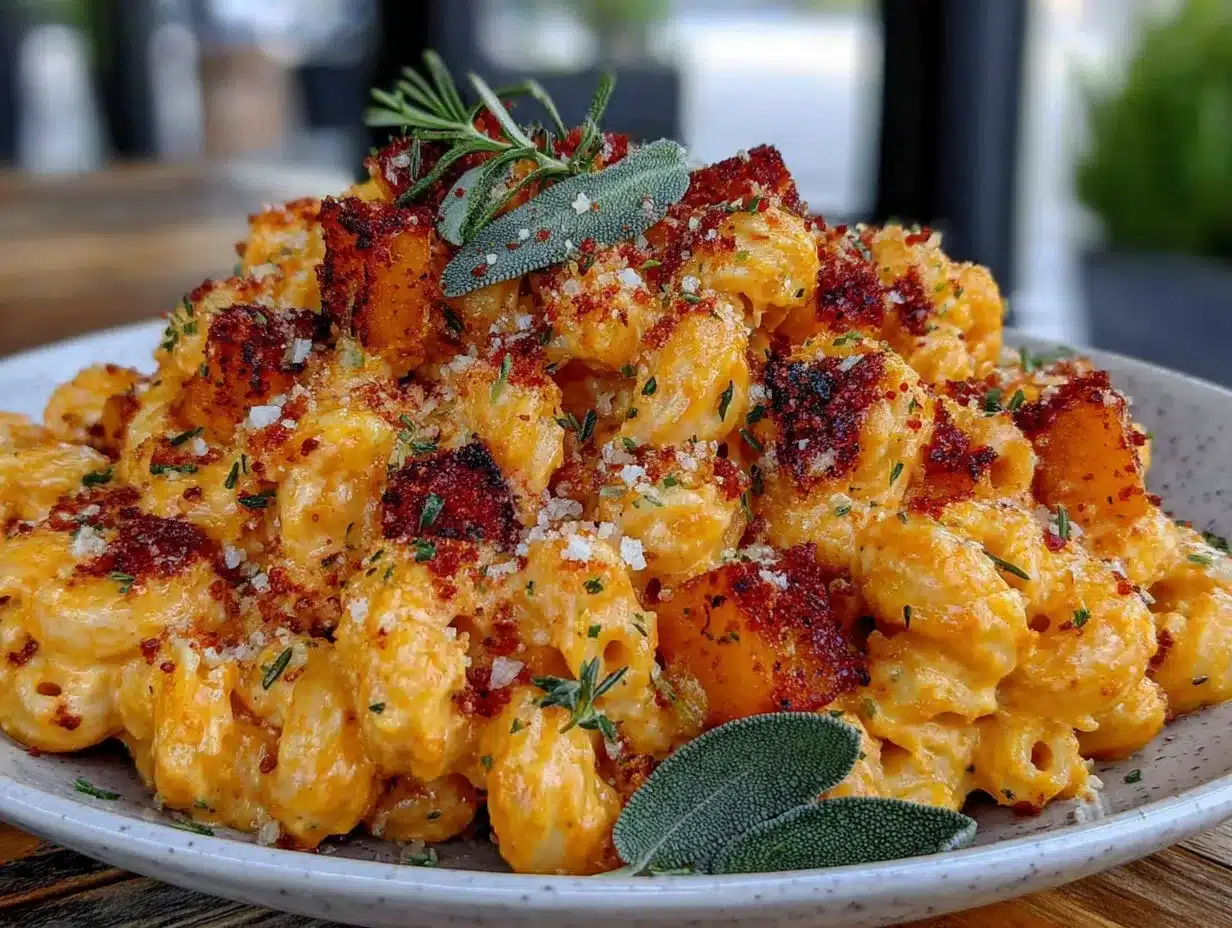
- Fresh sage leaves – 10-12 leaves. Look for leaves that are bright green and fragrant, not wilted or brown.
- Butter or olive oil – 1 tablespoon. Butter gives a richer flavor, but olive oil works well for a dairy-free option.
- Flaky sea salt – A pinch for finishing. I recommend Maldon or another flaky variety for that satisfying crunch.
For the butternut squash, I’ve found that the pre-cut cubes from the produce section are a huge time-saver on busy nights. They’re usually consistent in size, which means even cooking. If you’re cutting your own, a sharp vegetable peeler makes quick work of the skin, and a sturdy chef’s knife handles the dense flesh without slipping.
The cheese choice matters here. Sharp cheddar gives you that classic mac and cheese flavor, while the Gruyère adds a subtle nuttiness that pairs beautifully with the squash. I’ve used all cheddar in a pinch, and it’s still delicious—just slightly less complex. For a dairy-free version, there are some excellent plant-based cheddar shreds that melt surprisingly well, though the texture won’t be quite as silky.
Equipment Needed
You don’t need a fancy kitchen to make this recipe work. Here’s what you’ll actually use:
- Large pot – 4 to 5 quarts for cooking the pasta and squash together. A Dutch oven works great here.
- Small skillet – For crisping the sage leaves. Non-stick makes cleanup easier, but any small pan works.
- Colander – For draining the pasta and squash. Make sure it’s large enough to hold everything.
- Cheese grater – A box grater or microplane for grating your cheese. I prefer a box grater for cheddar—it gives you nice, even shreds that melt smoothly.
- Wooden spoon or silicone spatula – For stirring the sauce and pasta.
- Measuring cups and spoons – Standard set for accurate measurements.
- Sharp knife and cutting board – For prepping the squash and sage. A chef’s knife makes quick work of the squash.
If you don’t have a small skillet, you can crisp the sage in the same pot after you’ve drained the pasta—just wipe it out quickly first. I’ve done this more times than I can count, and it works perfectly. The only tool I’d really recommend investing in is a good box grater. The pre-shredded cheese situation is real, and grating your own makes a noticeable difference in how smoothly your sauce comes together.
Preparation Method
This comes together fast, so I like to have everything prepped before I start cooking. Read through the steps once, and you’ll see how the timing works.
- Bring a large pot of salted water to a boil. Fill your pot about two-thirds full with water and add a generous tablespoon of salt. The water should taste like the sea—this is your only chance to season the pasta and squash from the inside out.
- While the water heats, prep your ingredients. Peel and cube the butternut squash into ½-inch pieces. Grate both cheeses and set them aside. Pick the sage leaves from the stems and pat them dry with a paper towel—wet sage will sputter in the hot butter.
- Cook the pasta and squash together. Once the water is boiling, add the macaroni and the cubed squash. Stir to prevent sticking. Cook according to the pasta package directions, usually 8-10 minutes, until the pasta is al dente and the squash is fork-tender. The squash should break apart easily when pressed against the side of the pot.
- Reserve pasta water, then drain. Before draining, scoop out about 1 cup of the starchy pasta water and set it aside. Drain the pasta and squash in your colander, but don’t rinse them—you want that starch to help the sauce cling.
- Make the cheese sauce in the same pot. Return the pot to the stove over medium heat. Add the 2 tablespoons of butter and let it melt. Whisk in the flour and cook for 1 minute, stirring constantly. This cooks out the raw flour taste. Slowly pour in the milk while whisking, and keep stirring until the mixture thickens slightly, about 2-3 minutes.
- Add the cheese and seasonings. Reduce the heat to low. Add the shredded cheddar and Gruyère a handful at a time, stirring until each addition melts before adding more. Stir in the garlic powder, salt, pepper, and nutmeg. The sauce should be smooth and glossy.
- Combine the pasta, squash, and sauce. Return the drained pasta and squash to the pot with the cheese sauce. Stir gently to coat everything evenly. If the sauce seems too thick, add a splash of the reserved pasta water to loosen it. The starch in the water helps the sauce stay creamy without getting greasy.
- Crisp the sage leaves. While the mac and cheese rests, heat the small skillet over medium heat. Add the 1 tablespoon of butter. Once it’s melted and sizzling, add the sage leaves in a single layer. Cook for 30-45 seconds per side, until they turn darker green and become crisp. They’ll crackle when you press them with a spatula. Transfer to a paper towel-lined plate and sprinkle with flaky sea salt.
- Serve immediately. Spoon the mac and cheese into bowls and top with the crispy sage leaves. The contrast between the creamy pasta and the crunchy, fragrant sage is what makes this dish special.
Prep note: If you’re using pre-cut squash from the store, check that the pieces are roughly the same size. Uneven pieces will cook at different rates, and you’ll end up with some mushy bits and some crunchy ones. I learned this the hard way when I got lazy and didn’t check the bag.
Timing tip: Start crisping the sage about halfway through making the sauce. That way, everything finishes at the same time, and the sage stays crunchy on top of the hot pasta.
Cooking Tips & Techniques
After making this recipe more times than I care to count, here are the things I wish someone had told me from the start.
Don’t overcook the pasta. The pasta will continue to soften slightly in the warm sauce, so cook it to al dente—firm to the bite. Mushy pasta ruins the texture of mac and cheese, and there’s no fixing it once it’s gone too far. Set a timer and taste a piece a minute before the package says it’s done.
Grate your own cheese. I know, I know, it’s an extra step. But pre-shredded cheese is coated with cellulose and starches to prevent clumping, and those same additives prevent smooth melting. Your sauce will be grainy instead of silky. I’ve tested this side by side, and the difference is dramatic. A box grater takes two minutes, I promise.
Low heat for the sauce. Cheese sauce is forgiving until it isn’t. High heat can cause the proteins to seize up, leaving you with a greasy, separated mess. Keep the heat on low when you’re adding the cheese, and stir constantly. If the sauce starts to look grainy, remove it from the heat immediately and whisk in a splash of cold milk.
The pasta water trick. That reserved cup of starchy water is liquid gold. If your sauce seems too thick after adding the pasta, stir in a tablespoon at a time until it reaches the right consistency. The starch helps emulsify the sauce, making it extra creamy. I once forgot to reserve the water and had to use regular milk instead—the sauce was thinner and didn’t cling to the pasta as well.
Sage needs dry heat. Wet sage leaves will steam instead of crisp, leaving you with sad, soggy herbs. Pat them thoroughly dry with a paper towel before they hit the pan. Also, don’t crowd the pan—cook them in a single layer so each leaf gets direct contact with the hot butter.
Multitask smartly. While the pasta and squash are boiling, grate your cheese and pick the sage leaves. While the sauce is coming together, crisp the sage. This recipe moves fast, so having everything ready before you start makes the process feel effortless instead of chaotic.
Variations & Adaptations
This recipe is flexible, and I’ve tried several variations depending on what I have on hand or who I’m cooking for.
Dairy-Free Version: Use plant-based butter and unsweetened oat milk for the sauce. For the cheese, there are some excellent vegan cheddar shreds that melt reasonably well. I’ve had good luck with the Follow Your Heart brand. The sauce won’t be quite as creamy, but it’s still satisfying. Skip the Gruyère substitute—most vegan versions don’t melt as smoothly as cheddar alternatives.
Gluten-Free Adaptation: Swap the all-purpose flour for a 1:1 gluten-free flour blend, and use gluten-free pasta. Brown rice pasta holds up well to the boiling process without getting mushy. For the flour in the sauce, I’ve used both Bob’s Red Mill and King Arthur Measure for Measure blends with good results. The sauce might be slightly thinner, so let it cook an extra minute to thicken.
Add Protein: Stir in 1 cup of shredded rotisserie chicken or crispy bacon bits when you combine the pasta and sauce. The smoky flavor from bacon pairs beautifully with the sage. I made this with leftover Thanksgiving turkey once, and it was maybe the best version yet.
Change the Herbs: If you can’t find fresh sage, crispy rosemary or thyme work well too. The technique is the same—fry the leaves in butter until crisp. Rosemary has a stronger flavor, so use fewer sprigs. Thyme is more delicate and crisps up in about 20 seconds.
Roasted Garlic Addition: For extra depth, roast a head of garlic while you’re prepping and squeeze the soft cloves into the cheese sauce. It adds this sweet, mellow flavor that makes the dish feel even more luxurious. I did this for a dinner party once, and everyone thought I’d spent hours on the sauce.
Spice It Up: Add a pinch of cayenne pepper or red pepper flakes to the cheese sauce for a subtle kick. The heat cuts through the richness and complements the sage beautifully. Start with ⅛ teaspoon and adjust from there.
Serving & Storage Suggestions
This mac and cheese is best served immediately, while the sauce is still warm and creamy and the sage leaves are crisp. Spoon it into shallow bowls and top each serving with a few sage leaves. The contrast between the smooth pasta and the crunchy herb is the whole point, so don’t skimp on the garnish.
What to serve with it: A simple green salad with a lemon vinaigrette cuts through the richness perfectly. I also love serving this alongside roasted broccoli or sautéed green beans—the bright green vegetables look beautiful next to the golden pasta. For a heartier meal, pair it with grilled chicken or pork chops. The creamy, cheesy pasta complements just about any protein.
Storage: Leftovers keep well in an airtight container in the refrigerator for up to 4 days. The sage leaves will lose their crunch, so I recommend making fresh sage for leftovers if you want that texture. The mac and cheese itself actually gets better as the flavors meld overnight.
Reheating: The microwave works in a pinch, but the stovetop gives better results. Add a splash of milk or reserved pasta water to the pot and warm over medium-low heat, stirring gently. The sauce will loosen up and become creamy again. If you’re in a hurry, microwave individual portions in 30-second bursts, stirring between each, until heated through.
Freezing: This recipe freezes well for up to 3 months. Let it cool completely, then transfer to a freezer-safe container. To serve, thaw overnight in the refrigerator and reheat on the stovetop with a splash of milk. The texture won’t be quite as smooth as fresh, but it’s still delicious. I’ve frozen individual portions for emergency dinners, and they’ve saved me more than once.
One thing I’ve noticed: the flavors deepen after a day in the fridge. The squash and cheese meld together even more, and the nutmeg becomes more pronounced. If you can plan ahead, making this a day early actually improves the taste.
Nutritional Information & Benefits
This recipe makes about 4 servings. Here are the approximate nutritional values per serving:
| Nutrient | Amount per Serving |
|---|---|
| Calories | 485 |
| Total Fat | 22g |
| Saturated Fat | 13g |
| Cholesterol | 65mg |
| Sodium | 720mg |
| Total Carbohydrates | 52g |
| Dietary Fiber | 5g |
| Sugars | 6g |
| Protein | 19g |
| Vitamin A | 180% DV |
| Vitamin C | 25% DV |
| Calcium | 35% DV |
| Iron | 10% DV |
The butternut squash is the star here nutritionally. It’s packed with vitamin A (from beta-carotene), which supports eye health and immune function. It also provides a good amount of fiber, which helps keep you full and supports digestive health. The cheese adds calcium and protein, making this a more balanced meal than traditional mac and cheese.
This recipe is vegetarian and can be made gluten-free or dairy-free with the substitutions mentioned above. It’s not suitable for vegan diets in its current form, but with plant-based cheese and butter alternatives, it can be adapted. The main allergens are dairy and gluten (from the pasta and flour).
I like that this version has a vegetable built right into the sauce. It’s not a health food by any means, but it’s a more nutrient-dense take on a classic comfort dish. The squash adds vitamins and fiber without making the dish feel like a compromise. That’s the kind of cooking I can get behind.
Conclusion
This quick butternut squash mac and cheese with crispy sage is the kind of recipe that proves simple ideas can be the best ones. It came from a moment of being wrong—of letting someone else’s instinct lead the way—and it turned into a dish I genuinely look forward to making. The creamy, cheesy sauce with those earthy, crunchy sage leaves on top is comfort food that feels special without requiring a lot of effort.
I hope you’ll try it and make it your own. Maybe you’ll add bacon, or swap in a different herb, or use whatever cheese you have in the fridge. That’s the beauty of a recipe like this—it’s forgiving and flexible, and it rewards a little creativity. If you make it, I’d love to hear how it turns out. Drop a comment below and let me know what variations you tried, or tag me in your photos on social media. There’s something about seeing other people enjoy a recipe you love that just makes your day.
Here’s to quick dinners that taste like you spent hours on them, and to being wrong in the best possible way. Happy cooking!
Frequently Asked Questions
Can I use frozen butternut squash instead of fresh?
Absolutely. Frozen cubed squash works perfectly in this recipe. Add it to the boiling water straight from the freezer—no need to thaw first. It might take an extra minute or two to become tender, so test a piece before draining. Frozen squash is actually a great time-saver since it’s already peeled and cut.
Why did my cheese sauce turn out grainy?
Grainy sauce usually happens from high heat or pre-shredded cheese. Keep the heat on low when adding the cheese, and always grate your own from a block. If your sauce starts to look grainy, remove it from the heat immediately and whisk in a splash of cold milk or reserved pasta water. Sometimes that’s enough to smooth it out.
Can I make this ahead of time for a party?
Yes, with a small adjustment. Make the mac and cheese up to 2 days ahead and refrigerate it in a baking dish. When you’re ready to serve, add a splash of milk, cover with foil, and bake at 350°F for 20-25 minutes until heated through. Make the crispy sage fresh just before serving—it won’t stay crunchy if made ahead.
What’s the best pasta shape for this recipe?
Short pasta with nooks and crannies works best because the sauce clings to the surfaces. Elbow macaroni is classic, but cavatappi, shells, rotini, or fusilli are all excellent choices. I’ve even used orechiette (little ears) with great results. Avoid long pasta like spaghetti—the sauce doesn’t coat it as evenly.
Can I skip the crispy sage topping?
You can, but you’ll miss out on the best part! The crispy sage adds texture and a subtle earthy flavor that balances the richness of the cheese sauce. If you don’t have sage, try crispy fried rosemary or thyme instead, or simply top with toasted breadcrumbs for crunch. But honestly, the sage is what makes this recipe feel special.
Pin This Recipe!
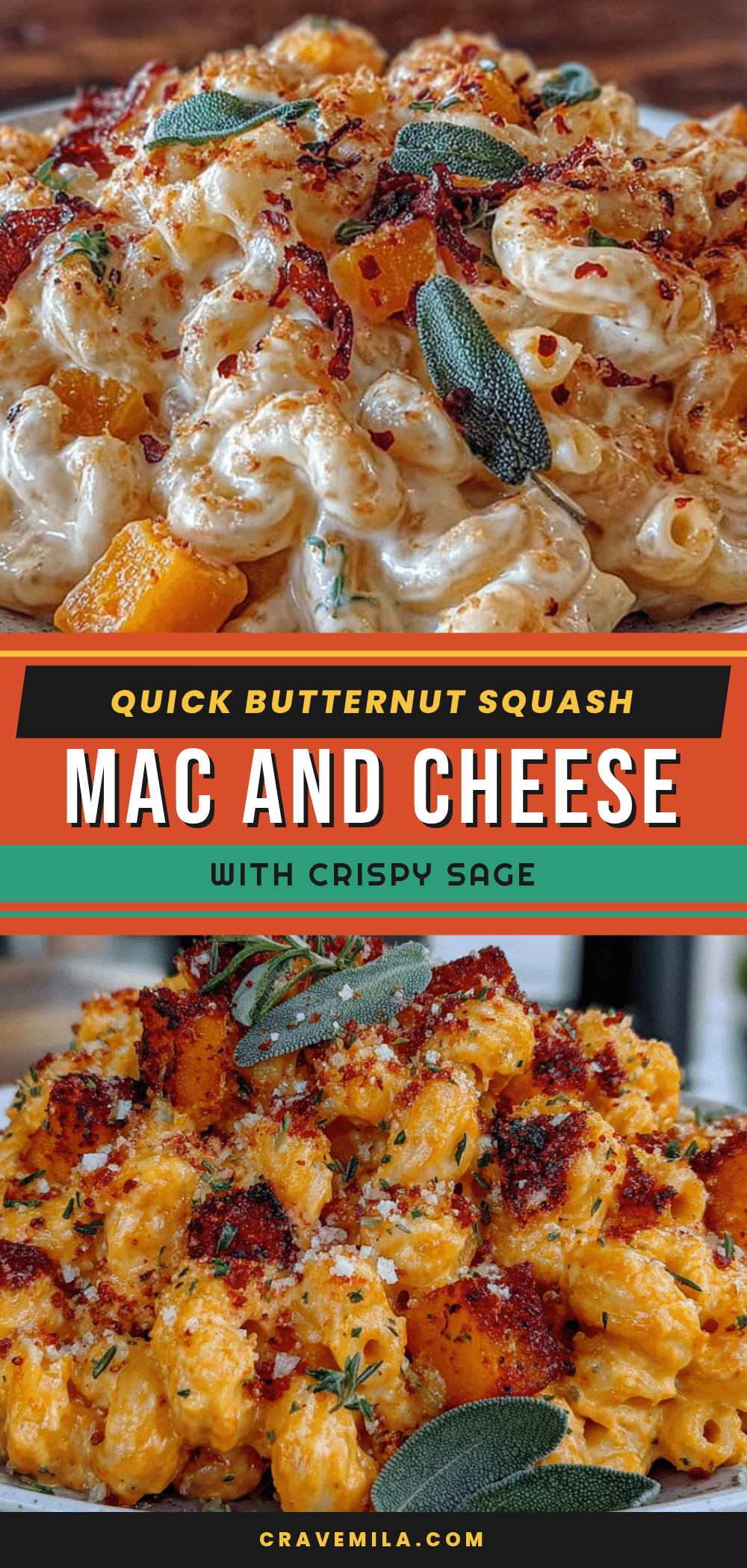
Quick Butternut Squash Mac and Cheese with Crispy Sage

This quick butternut squash mac and cheese with crispy sage is creamy, comforting, and on your table in about thirty minutes. The squash cooks right in the pasta water, skipping the roasting step entirely for a one-pot wonder that’s perfect for busy weeknights.
- Prep Time: 10 minutes
- Cook Time: 20 minutes
- Total Time: 30 minutes
- Yield: 4 servings 1x
- Category: Main Course
- Cuisine: American
Ingredients
- 2 cups butternut squash, peeled and cubed into ½-inch pieces (about 1 medium squash)
- 8 ounces elbow macaroni (about 2 cups)
- 1½ cups sharp cheddar cheese, freshly grated
- ½ cup Gruyère cheese, freshly grated
- 1 cup whole milk
- 2 tablespoons unsalted butter
- 2 tablespoons all-purpose flour
- ½ teaspoon garlic powder
- 1 teaspoon salt, plus more for pasta water
- ¼ teaspoon black pepper, freshly ground
- ⅛ teaspoon nutmeg, freshly grated if possible
- 10–12 fresh sage leaves
- 1 tablespoon butter or olive oil
- Pinch of flaky sea salt
Instructions
- Bring a large pot of salted water to a boil. Fill your pot about two-thirds full with water and add a generous tablespoon of salt.
- While the water heats, prep your ingredients. Peel and cube the butternut squash into ½-inch pieces. Grate both cheeses and set them aside. Pick the sage leaves from the stems and pat them dry with a paper towel.
- Cook the pasta and squash together. Once the water is boiling, add the macaroni and the cubed squash. Stir to prevent sticking. Cook according to the pasta package directions, usually 8-10 minutes, until the pasta is al dente and the squash is fork-tender.
- Reserve pasta water, then drain. Before draining, scoop out about 1 cup of the starchy pasta water and set it aside. Drain the pasta and squash in your colander, but don’t rinse them.
- Make the cheese sauce in the same pot. Return the pot to the stove over medium heat. Add the 2 tablespoons of butter and let it melt. Whisk in the flour and cook for 1 minute, stirring constantly. Slowly pour in the milk while whisking, and keep stirring until the mixture thickens slightly, about 2-3 minutes.
- Add the cheese and seasonings. Reduce the heat to low. Add the shredded cheddar and Gruyère a handful at a time, stirring until each addition melts before adding more. Stir in the garlic powder, salt, pepper, and nutmeg.
- Combine the pasta, squash, and sauce. Return the drained pasta and squash to the pot with the cheese sauce. Stir gently to coat everything evenly. If the sauce seems too thick, add a splash of the reserved pasta water to loosen it.
- Crisp the sage leaves. While the mac and cheese rests, heat the small skillet over medium heat. Add the 1 tablespoon of butter. Once it’s melted and sizzling, add the sage leaves in a single layer. Cook for 30-45 seconds per side, until they turn darker green and become crisp. Transfer to a paper towel-lined plate and sprinkle with flaky sea salt.
- Serve immediately. Spoon the mac and cheese into bowls and top with the crispy sage leaves.
Notes
Don’t overcook the pasta; cook to al dente. Grate your own cheese for a smooth sauce. Keep heat low when making the cheese sauce to prevent graininess. Reserve pasta water to adjust sauce consistency. Pat sage leaves dry before crisping. Multitask smartly: prep ingredients while water boils, crisp sage while sauce comes together.
Nutrition
- Serving Size: 1 serving
- Calories: 485
- Sugar: 6
- Sodium: 720
- Fat: 22
- Saturated Fat: 13
- Carbohydrates: 52
- Fiber: 5
- Protein: 19
Keywords: butternut squash mac and cheese, quick mac and cheese, one-pot mac and cheese, crispy sage, vegetarian mac and cheese, hidden veggie mac and cheese