I wasn’t supposed to be there that long. I’d stopped by my neighbor Lucia’s house on a Tuesday afternoon to return her garden shears, and the smell hit me before I even got through the side gate. It was earthy and sweet, with this warm, slightly peppery note that made me stop mid-stride. She was making soup—not for a dinner party, not for guests, just for herself on a gray November afternoon. She barely looked up when I knocked on the kitchen door, just waved me in with a flour-dusted hand and said, “You’re timing is good. Sit.” I sat for three hours. We barely talked. But I watched her make this creamy roasted butternut squash soup with sage, and honestly, I’ve never been the same since.
Lucia isn’t a chef or a food blogger. She’s a retired librarian who gardens like she’s feeding an army and cooks like she’s got nothing to prove. She didn’t measure a single thing—just handfuls of this, pinches of that. I sat there with a spoon she handed me, tasting as she went, trying to memorize every move. The soup was velvety, rich without being heavy, and that sage—crispy, browned, and scattered on top like little flavor bombs. I asked her for the recipe and she laughed. “There is no recipe,” she said. “You just roast the squash until it looks right and then you trust yourself.”
So I went home and spent the next week trying to recreate it. I burned the sage twice. I under-roasted the squash once. But by Thursday, I had it. This creamy roasted butternut squash soup with sage is now my go-to for chilly evenings, lazy Sundays, and anytime I need to feel like someone’s taking care of me. Maybe you’ve been there—standing in a friend’s kitchen, watching them make something extraordinary look effortless. That’s this soup. It tastes like somebody else made it for you, even when you’re the one stirring the pot.
Why You’ll Love This Recipe
This isn’t just another squash soup recipe. I’ve tested this one at least a dozen times, tweaking the roasting time, adjusting the sage ratio, and even trying it with different squash varieties. What I landed on is the version that makes people close their eyes after the first bite. Seriously—I’ve watched it happen at three different dinner parties now.
- Quick & Easy: From start to finish, this soup comes together in about 45 minutes. Most of that is hands-off roasting time, so you can chop some sage or just sit down with a cup of tea while the oven does the work.
- Simple Ingredients: You don’t need any fancy grocery store trips for this one. Butternut squash, onion, garlic, vegetable broth, cream, and fresh sage—that’s it. I bet you’ve got most of these in your kitchen right now.
- Perfect for Fall Evenings: This soup was made for those nights when the air gets crisp and you want something that feels like a warm blanket in a bowl. It’s great for Thanksgiving appetizers, cozy weeknight dinners, or meal prep for the week ahead.
- Crowd-Pleaser: I’ve served this to kids, picky eaters, and even a friend who swore she didn’t like squash. Everyone asks for seconds. It’s that good.
- Unbelievably Delicious: The secret is roasting the squash until it caramelizes—that’s where the deep, nutty sweetness comes from. And the crispy sage butter on top? Let me tell you, it takes this soup from good to absolutely unforgettable.
What makes this version different is the technique. Most recipes just boil the squash, but roasting concentrates the flavor and gives you that rich, almost caramelized taste that store-bought soups just can’t match. Plus, blending in a touch of cream at the end makes it velvety smooth without being heavy. It’s comfort food reimagined—healthier, faster, and with the same soul-soothing satisfaction that makes you want to curl up on the couch and take your time eating it.
What Ingredients You Will Need
This creamy roasted butternut squash soup with sage uses simple, wholesome ingredients that work together to create something truly special. Most of these are pantry staples, especially during fall, and I’ve included some substitution notes so you can adapt based on what you have on hand.
- Butternut Squash (1 large, about 3 pounds): Look for one that feels heavy for its size with a firm, unblemished skin. I prefer using whole squash and roasting it myself—the flavor is way better than pre-cut cubes, which can be dry. You’ll need about 4-5 cups of cubed squash after roasting.
- Yellow Onion (1 medium, roughly chopped): Adds a savory base note that balances the sweetness of the squash. I’ve tried this with white onions too, but yellow gives a milder, sweeter result.
- Garlic (4 cloves, smashed): Roasted garlic turns sweet and buttery, blending seamlessly into the soup. Don’t skip this—it adds a subtle depth that you’ll miss if you leave it out.
- Fresh Sage (10-12 leaves, plus more for garnish): This is the star herb here. Fresh sage has a peppery, slightly lemony flavor that dried sage just can’t replicate. I recommend buying a bunch and using the extra for the crispy sage garnish.
- Vegetable Broth (3 cups): Use a good-quality broth here since it’s the liquid base. I like Pacific Foods or Imagine brand for their clean flavor. You can also use chicken broth if you’re not keeping it vegetarian.
- Heavy Cream (1/2 cup): This gives the soup its signature velvety texture. For a lighter version, you can use half-and-half or full-fat coconut milk (the coconut version will add a slight tropical note, which is actually pretty delicious).
- Olive Oil (3 tablespoons, divided): You’ll use some for roasting the squash and some for sautéing the onions and sage. A good extra-virgin olive oil makes a difference here.
- Butter (2 tablespoons): For crisping the sage leaves and adding a rich finish. I use unsalted so I can control the salt level.
- Salt and Black Pepper (to taste): Don’t be shy with the salt—it brings out all the other flavors. I recommend kosher salt for better control.
- Optional Garnishes: Toasted pumpkin seeds, a drizzle of cream, or a sprinkle of nutmeg all work beautifully. I’m partial to the crispy sage and a few pumpkin seeds for crunch.
Equipment Needed
You don’t need a fancy kitchen to make this soup, but a few key tools will make the process smoother. Here’s what I use every time I make this creamy roasted butternut squash soup with sage.
- Baking Sheet (rimmed): A half-sheet pan works perfectly for roasting the squash in a single layer. If your pan is too small, the squash will steam instead of caramelizing.
- Large Soup Pot or Dutch Oven: I use my 5.5-quart Le Creuset, but any heavy-bottomed pot will do. The key is even heat distribution for sautéing the onions.
- Immersion Blender: This is my favorite tool for smooth soups. It’s easier to clean than a countertop blender, and you can blend right in the pot. If you don’t have one, a regular blender works fine—just work in batches and don’t fill it more than halfway with hot liquid.
- Sharp Chef’s Knife: Butternut squash is tough to cut, so a sharp knife is non-negotiable. I learned this the hard way after nearly losing a finger to a dull blade.
- Vegetable Peeler: For peeling the squash. A Y-shaped peeler gives you more control than a straight one.
- Small Skillet: For crisping the sage leaves in butter. A non-stick pan works best here.
If you’re on a budget, skip the immersion blender and use a regular blender—just let the soup cool slightly first and hold the lid down with a kitchen towel to avoid splatters. I’ve done it both ways, and the results are equally good.
Preparation Method

This method breaks down into three main stages: roasting the squash, building the soup base, and blending to perfection. Take your time with each step—the roasting is where all the magic happens.
- Preheat your oven to 400°F (200°C). Line a rimmed baking sheet with parchment paper for easy cleanup.
- Prepare the squash: Carefully cut the butternut squash in half lengthwise using a sharp chef’s knife. Scoop out the seeds and stringy bits with a spoon (save the seeds for roasting later if you want!). Peel the squash with a vegetable peeler, then cut it into 1-inch cubes. Aim for uniform pieces so they roast evenly—about 4-5 cups total.
- Roast the squash: Toss the cubed squash with 2 tablespoons of olive oil, a generous pinch of salt, and a few cracks of black pepper. Spread them in a single layer on the prepared baking sheet. Don’t overcrowd—if they’re too close together, they’ll steam instead of caramelizing. Roast for 25-30 minutes, flipping halfway through, until the squash is tender and the edges are golden brown. You’ll know it’s done when a fork slides in easily and the pieces have a slightly caramelized look.
- While the squash roasts, start the base: In a large soup pot or Dutch oven, heat the remaining 1 tablespoon of olive oil over medium heat. Add the chopped onion and a pinch of salt, stirring occasionally. Cook for 6-8 minutes until the onion is soft and translucent—don’t let it brown. Add the smashed garlic cloves and cook for another minute until fragrant.
- Add the roasted squash: Once the squash is done, transfer it directly to the pot with the onions and garlic. Stir everything together and let it cook for 2 minutes, allowing the flavors to meld. The smell at this point is incredible—sweet, savory, and slightly nutty.
- Pour in the broth: Add 3 cups of vegetable broth to the pot, scraping up any browned bits from the bottom. Bring the mixture to a gentle simmer over medium heat, then reduce the heat to low. Let it simmer for 10 minutes, stirring occasionally. This gives the flavors time to marry together.
- Blend until smooth: Remove the pot from heat. Using an immersion blender, blend the soup until completely smooth and velvety. If using a countertop blender, work in batches and fill the blender no more than halfway. Hold the lid down with a kitchen towel to prevent hot liquid from escaping. Blend each batch until silky smooth.
- Stir in the cream: Return the blended soup to low heat and stir in 1/2 cup of heavy cream. Taste and adjust seasoning with salt and pepper. If the soup is too thick, add a splash more broth or water until it reaches your desired consistency.
- Make the crispy sage: While the soup finishes, melt 2 tablespoons of butter in a small skillet over medium heat. Add 10-12 fresh sage leaves in a single layer. Cook for 30-60 seconds per side until they turn bright green and the edges start to crisp. Be careful—sage burns quickly. Transfer the crispy leaves to a paper towel-lined plate and sprinkle with a tiny pinch of salt.
- Serve and garnish: Ladle the soup into bowls, top with crispy sage leaves, a drizzle of cream, and a few toasted pumpkin seeds if you’re feeling fancy. Serve immediately while hot.
Cooking Tips & Techniques
I’ve made this creamy roasted butternut squash soup with sage more times than I can count, and I’ve learned a few things the hard way. Here are my best tips to help you nail it on the first try.
Don’t skip the roasting step. I know it’s tempting to just boil the squash to save time, but roasting is what gives this soup its deep, caramelized flavor. The high heat concentrates the natural sugars in the squash, creating a sweetness that no amount of added sugar can replicate. Trust me on this one—I tried the shortcut version once, and the soup was watery and flat.
Watch your sage like a hawk. I burned my first batch of crispy sage because I looked away for 30 seconds. The leaves go from perfectly crisp to acrid and bitter in an instant. Keep them moving in the pan and remove them the second they turn bright green and the edges start to curl. They’ll continue to crisp up as they cool on the paper towel.
Season in layers. Add a pinch of salt at every stage—when roasting the squash, when sautéing the onions, and again after blending. This builds flavor gradually rather than dumping it all in at the end. I learned this from watching Lucia, who salted everything as she went without even thinking about it.
Blend hot, but carefully. Hot soup blends more smoothly than cooled soup, but it also splatters more. If you’re using a countertop blender, let the soup cool for 5 minutes first, and always hold the lid down with a kitchen towel. I’ve cleaned soup off my ceiling before, and it’s not fun.
Adjust consistency to your liking. Some people like their soup thick enough to coat a spoon, while others prefer it more brothy. Start with 3 cups of broth, then add more after blending until it looks right to you. I usually end up adding about an extra 1/2 cup for my perfect consistency.
Variations & Adaptations
One of the things I love about this creamy roasted butternut squash soup with sage is how adaptable it is. Here are a few variations I’ve tried and loved.
Vegan Version: Swap the heavy cream for full-fat coconut milk or cashew cream. The coconut version adds a subtle tropical note that pairs surprisingly well with the sage. Use olive oil instead of butter for the crispy sage garnish. I’ve made this for vegan friends multiple times, and they always rave about it.
Spicy Twist: Add 1/2 teaspoon of red pepper flakes when sautéing the onions, or stir in a minced fresh chili like a serrano or jalapeño. The heat cuts through the richness beautifully and gives the soup a warming kick that’s perfect for cold winter nights.
Apple-Butternut Squash Soup: Add one peeled and chopped apple (I like Honeycrisp or Fuji) to the roasting pan with the squash. The apple adds a bright, fruity sweetness that complements the earthy sage. This version is especially good for Thanksgiving.
Make it a Meal: Stir in a can of drained and rinsed white beans (like cannellini or great northern) after blending for added protein and fiber. Or top each bowl with crispy chickpeas for crunch. I’ve done this for lunch many times, and it keeps me full for hours.
Different Squash Options: No butternut squash? No problem. This recipe works beautifully with kabocha, acorn, or even sugar pumpkin. Just adjust the roasting time based on the size and density of the squash. Kabocha is my second favorite—it’s even sweeter than butternut.
Serving & Storage Suggestions
This soup is best served hot, straight from the pot, with all the garnishes piled on top. The contrast between the velvety soup and the crispy sage is pure magic. I like to serve it with crusty bread or a simple green salad for a complete meal. It also pairs wonderfully with a roasted apple and cranberry salad for a fall-themed dinner that feels special without being fussy.
For a cozy weeknight dinner, I’ll sometimes make a batch of easy herb focaccia bread to dip into the soup. The olive oil and herbs in the bread complement the sage beautifully.
Storage: Let the soup cool completely before transferring it to an airtight container. It will keep in the refrigerator for up to 5 days. The flavors actually deepen and meld together overnight, so I often think it tastes even better the next day.
Freezing: This soup freezes beautifully. Pour cooled soup into freezer-safe containers or zip-top bags, leaving an inch of headspace for expansion. It will keep for up to 3 months. Thaw overnight in the refrigerator before reheating.
Reheating: Warm the soup gently over medium-low heat on the stovetop, stirring occasionally. If it’s too thick after freezing, add a splash of broth or water to loosen it up. Avoid boiling, as the cream can separate. You can also reheat individual portions in the microwave—just do it in 30-second bursts, stirring between each.
I’ve also been known to serve this soup as an appetizer for holiday gatherings alongside a savory mushroom and thyme tartlets for a starter course that feels elegant and seasonal.
Nutritional Information & Benefits
This creamy roasted butternut squash soup with sage isn’t just delicious—it’s packed with nutrients that make it a smart choice for fall and winter eating.
Estimated Nutritional Values (per serving, based on 4 servings):
- Calories: 285
- Fat: 18g
- Carbohydrates: 28g
- Fiber: 5g
- Protein: 4g
- Sugar: 8g (natural from squash)
- Sodium: 480mg
Health Benefits: Butternut squash is rich in vitamin A (one serving provides over 200% of your daily needs), which supports eye health and immune function. It’s also a good source of vitamin C, potassium, and fiber. Sage has anti-inflammatory properties and adds antioxidants to the mix. The olive oil provides healthy monounsaturated fats, while the cream adds calcium and vitamin D.
Dietary Considerations: This soup is naturally gluten-free and vegetarian. For a vegan version, use coconut milk instead of cream and olive oil instead of butter. It’s also relatively low in calories for such a satisfying dish, making it a great option for those watching their intake.
Potential Allergens: This recipe contains dairy (cream and butter). For a dairy-free version, see the vegan variation above.
Conclusion
This creamy roasted butternut squash soup with sage has become my fall tradition, the thing I look forward to making as soon as the leaves start turning. It reminds me of that Tuesday afternoon in Lucia’s kitchen, of watching someone make something extraordinary without any fuss or fanfare. That’s the energy I try to bring to this recipe every time I make it—no pressure, no perfectionism, just good ingredients and a little patience.
I hope you’ll try it and make it your own. Maybe you’ll add a pinch more sage or skip the cream for a lighter version. Maybe you’ll serve it for Thanksgiving or eat it straight from the pot on a rainy Tuesday. However you make it, I promise it’ll be good. And if you come up with a variation I haven’t tried, I’d love to hear about it in the comments. Drop a note below and tell me how yours turned out—or tag me in your photos if you share them online. Happy cooking, friends.
Frequently Asked Questions
Can I use frozen butternut squash for this soup?
You can, but I don’t recommend it for the best flavor. Frozen squash releases a lot of water as it thaws, which prevents it from caramelizing properly during roasting. If you’re short on time, thaw the frozen squash completely, pat it dry with paper towels, and roast it at a higher temperature (425°F) to encourage browning.
How can I make this soup thicker?
If you prefer a thicker soup, reduce the broth to 2 1/2 cups instead of 3. You can also add a peeled and cubed potato to the roasting pan with the squash—the starch from the potato will naturally thicken the soup as it blends. Alternatively, let the finished soup simmer uncovered for 5-10 minutes to reduce and concentrate.
Can I make this soup ahead of time?
Absolutely! In fact, I often think this soup tastes better the next day after the flavors have had time to meld. Make it up to 3 days in advance, store it in the refrigerator, and reheat gently on the stovetop. Just hold off on adding the crispy sage garnish until right before serving.
What can I use instead of sage?
If you don’t have fresh sage, you can use dried sage (use about 1 teaspoon, crumbled) or substitute with fresh thyme or rosemary. Thyme gives a more subtle, earthy flavor, while rosemary adds a piney, aromatic note. For the crispy garnish, try frying fresh thyme sprigs or even small basil leaves in butter.
Is this soup freezer-friendly?
Yes, this soup freezes beautifully for up to 3 months. Let it cool completely, then transfer to freezer-safe containers or zip-top bags. Leave an inch of headspace for expansion. Thaw overnight in the refrigerator and reheat gently on the stovetop. Note that the texture may be slightly thinner after freezing due to the cream, so you can stir in an extra splash of cream when reheating if desired.
Pin This Recipe!
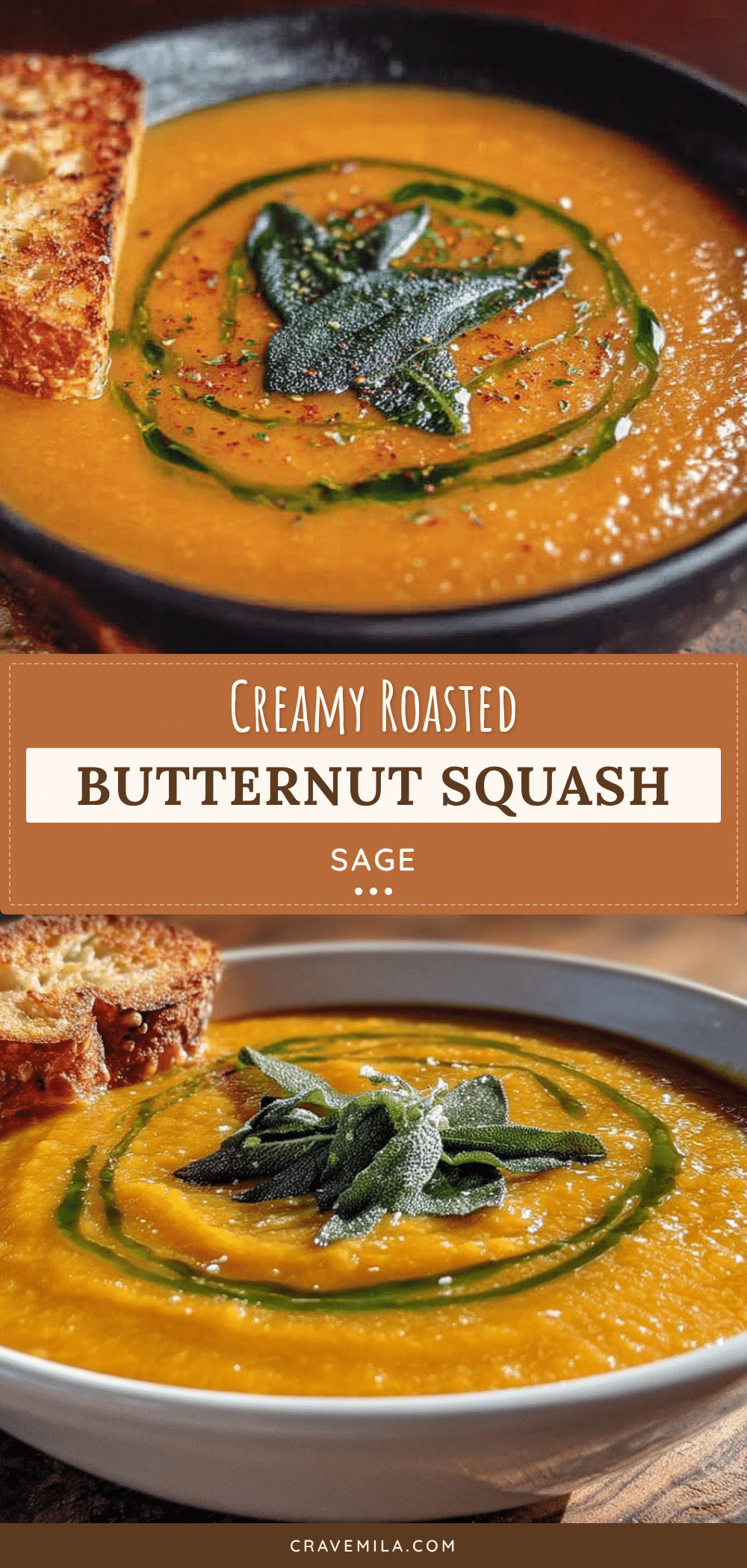
Creamy Roasted Butternut Squash Soup with Sage: Easy Fall Recipe

This creamy roasted butternut squash soup with sage is velvety, rich without being heavy, and topped with crispy sage leaves. It’s the perfect comfort food for chilly fall evenings, made with simple ingredients and a roasting technique that brings out deep, caramelized flavor.
- Prep Time: 15 minutes
- Cook Time: 30 minutes
- Total Time: 45 minutes
- Yield: 4 servings 1x
- Category: Soup
- Cuisine: American
Ingredients
- 1 large butternut squash (about 3 pounds), peeled, seeded, and cut into 1-inch cubes (about 4–5 cups)
- 1 medium yellow onion, roughly chopped
- 4 cloves garlic, smashed
- 10–12 fresh sage leaves, plus more for garnish
- 3 cups vegetable broth
- 1/2 cup heavy cream
- 3 tablespoons olive oil, divided
- 2 tablespoons unsalted butter
- Salt and black pepper to taste
- Optional garnishes: toasted pumpkin seeds, extra cream, nutmeg
Instructions
- Preheat your oven to 400°F (200°C). Line a rimmed baking sheet with parchment paper.
- Carefully cut the butternut squash in half lengthwise, scoop out seeds, peel, and cut into 1-inch cubes. Toss with 2 tablespoons olive oil, salt, and pepper. Spread in a single layer on the baking sheet. Roast for 25-30 minutes, flipping halfway, until tender and golden brown.
- While squash roasts, heat remaining 1 tablespoon olive oil in a large soup pot or Dutch oven over medium heat. Add chopped onion and a pinch of salt; cook 6-8 minutes until soft and translucent. Add smashed garlic and cook 1 minute until fragrant.
- Add roasted squash to the pot with onions and garlic. Stir and cook for 2 minutes.
- Pour in 3 cups vegetable broth, scraping up browned bits. Bring to a gentle simmer, then reduce heat to low. Simmer for 10 minutes, stirring occasionally.
- Remove from heat. Using an immersion blender, blend until smooth. (If using a countertop blender, work in batches, filling no more than halfway; hold lid with a towel.)
- Return blended soup to low heat. Stir in 1/2 cup heavy cream. Season with salt and pepper to taste. Add more broth or water if too thick.
- In a small skillet, melt 2 tablespoons butter over medium heat. Add 10-12 fresh sage leaves in a single layer. Cook 30-60 seconds per side until bright green and edges crisp. Transfer to paper towel-lined plate; sprinkle with salt.
- Ladle soup into bowls. Top with crispy sage leaves, a drizzle of cream, and optional pumpkin seeds. Serve hot.
Notes
Don’t skip roasting the squash—it’s key for deep flavor. Watch sage carefully as it burns quickly. Season in layers for best results. For a vegan version, use full-fat coconut milk instead of cream and olive oil instead of butter. Soup can be stored in the refrigerator for up to 5 days or frozen for up to 3 months.
Nutrition
- Serving Size: 1 serving (about 1.5
- Calories: 285
- Sugar: 8
- Sodium: 480
- Fat: 18
- Saturated Fat: 8
- Carbohydrates: 28
- Fiber: 5
- Protein: 4
Keywords: butternut squash soup, creamy soup, fall recipe, sage, roasted squash, easy soup, vegetarian soup, gluten-free soup