I used to think a proper pasta dinner meant simmering sauce for hours and dirtying every pot I owned. Then a Tuesday happened that changed my mind completely. I had just gotten home from a truly exhausting day—the kind where you drop your keys twice and stare blankly into the fridge for five minutes. My neighbor Maria, who runs a tiny Italian deli two blocks over, had stopped by earlier to drop off a bag of fresh shrimp she’d gotten from her supplier. She didn’t say much, just handed it over and said, “You look like you need this more than me.” I laughed, thanked her, and then stood in my kitchen wondering what on earth I was going to do with a pound of shrimp and absolutely no energy. That’s when this quick garlic butter shrimp pasta was born—out of necessity, a little desperation, and the sheer stubborn refusal to order takeout again. Honestly, it was one of those happy accidents where the simplest thing turns out to be the best thing. The whole meal came together in the time it takes to boil water and chop a few cloves of garlic. I remember standing over the stove, the butter sizzling with the garlic, and thinking, “Why have I never done this before?” The shrimp cooked so fast I almost missed it, and by the time the pasta was al dente, dinner was literally ready. No fuss, no mess, and I didn’t even have to change out of my sweatpants. Maybe you’ve been there—too tired to cook but too hungry to settle for cereal. This recipe is for those nights. It’s become my go-to whenever I need something fast, comforting, and genuinely delicious without the drama. I keep making it because it proves that a great meal doesn’t need a long story or a complicated technique. Sometimes it just needs good butter, fresh garlic, and a little bit of trust.
Why You’ll Love This Recipe
Let me tell you, this isn’t just another pasta recipe you’ll scroll past and forget. I’ve tested this quick garlic butter shrimp pasta more times than I can count—tweaking the butter-to-garlic ratio, testing different pasta shapes, and even accidentally burning a batch or two (we’ve all been there). What I landed on is the version that works every single time, no matter how tired or distracted you are. Here’s why it stands out:
- Quick & Easy: From start to finish, this meal takes exactly 15 minutes. That’s less time than waiting for delivery, and way more satisfying.
- Simple Ingredients: You likely have garlic, butter, pasta, and lemon in your kitchen right now. The shrimp is the only special item, and it cooks in under 3 minutes.
- Perfect for Busy Weeknights: Whether it’s a Tuesday after work or a lazy Sunday when you just don’t feel like cooking, this recipe fits the bill.
- Crowd-Pleaser: I’ve served this to picky eaters, seafood skeptics, and pasta purists—everyone goes back for seconds. The garlic butter sauce is just that good.
- Unbelievably Delicious: The combination of tender shrimp, al dente pasta, and that glossy, buttery sauce is pure comfort food magic. It’s simple, but it tastes like you tried way harder than you did.
What makes this recipe different from the dozens of shrimp pasta recipes out there? It’s the technique—cooking the shrimp in the butter and garlic first, then tossing everything together so the pasta absorbs all that flavor. No separate sauce pan, no complicated steps. It’s comfort food reimagined: faster, easier, but with the same soul-soothing satisfaction. Perfect for impressing guests without stress, or turning a simple meal into something memorable.
What Ingredients You Will Need
This recipe uses simple, wholesome ingredients to deliver bold flavor and satisfying texture without the fuss. Most of these are pantry staples, and the fresh ones are easy to find at any grocery store.
- 8 ounces (225g) spaghetti or linguine – I prefer De Cecco or Barilla for their texture. You can use any long pasta you have on hand.
- 1 pound (450g) large shrimp, peeled and deveined – Look for raw shrimp, 21-25 count per pound. Frozen works great too—just thaw them under cold running water before starting.
- 4 tablespoons (60g) unsalted butter – Kerrygold is my go-to for its rich flavor. Salted butter works too, but reduce the added salt later.
- 4 cloves garlic, minced – Fresh garlic is non-negotiable here. Pre-minced jarred stuff won’t give you the same punch.
- 1/4 teaspoon red pepper flakes (optional) – Adds a gentle warmth without making it spicy. Omit if you’re sensitive to heat.
- 1/2 teaspoon salt, plus more for pasta water – Use kosher salt for the pasta water; it makes a difference.
- 1/4 teaspoon black pepper – Freshly ground is best.
- 1/4 cup (60ml) reserved pasta water – This is the secret to a silky sauce. Don’t skip it!
- 2 tablespoons fresh lemon juice (about 1 lemon) – Brightens the whole dish and cuts through the butter.
- 2 tablespoons fresh parsley, chopped – For garnish and a fresh finish. Dried parsley won’t do it justice.
- 1/4 cup (25g) grated Parmesan cheese, for serving – Use real Parmigiano-Reggiano if you can. It melts beautifully into the sauce.
Equipment Needed
You don’t need a fancy kitchen to pull this off. Here’s what I use every time:
- Large pot – For boiling pasta. A 5-quart pot is ideal. If you only have a smaller one, that’s fine—just stir more often.
- Large skillet or sauté pan – A 12-inch skillet works best for cooking the shrimp and tossing the pasta. Non-stick makes cleanup easier, but stainless steel gives better browning.
- Colander – For draining pasta. A mesh strainer works too.
- Measuring cups and spoons – For accuracy, though after a few tries you’ll eyeball it.
- Chef’s knife and cutting board – For mincing garlic and chopping parsley. A sharp knife makes the job faster and safer.
- Tongs – For tossing the pasta with the sauce. A spatula works in a pinch, but tongs are easier.
I’ve made this recipe with a worn-out non-stick pan and a dented colander, and it still turned out great. Don’t stress about having the perfect tools—just use what you’ve got.
Preparation Method
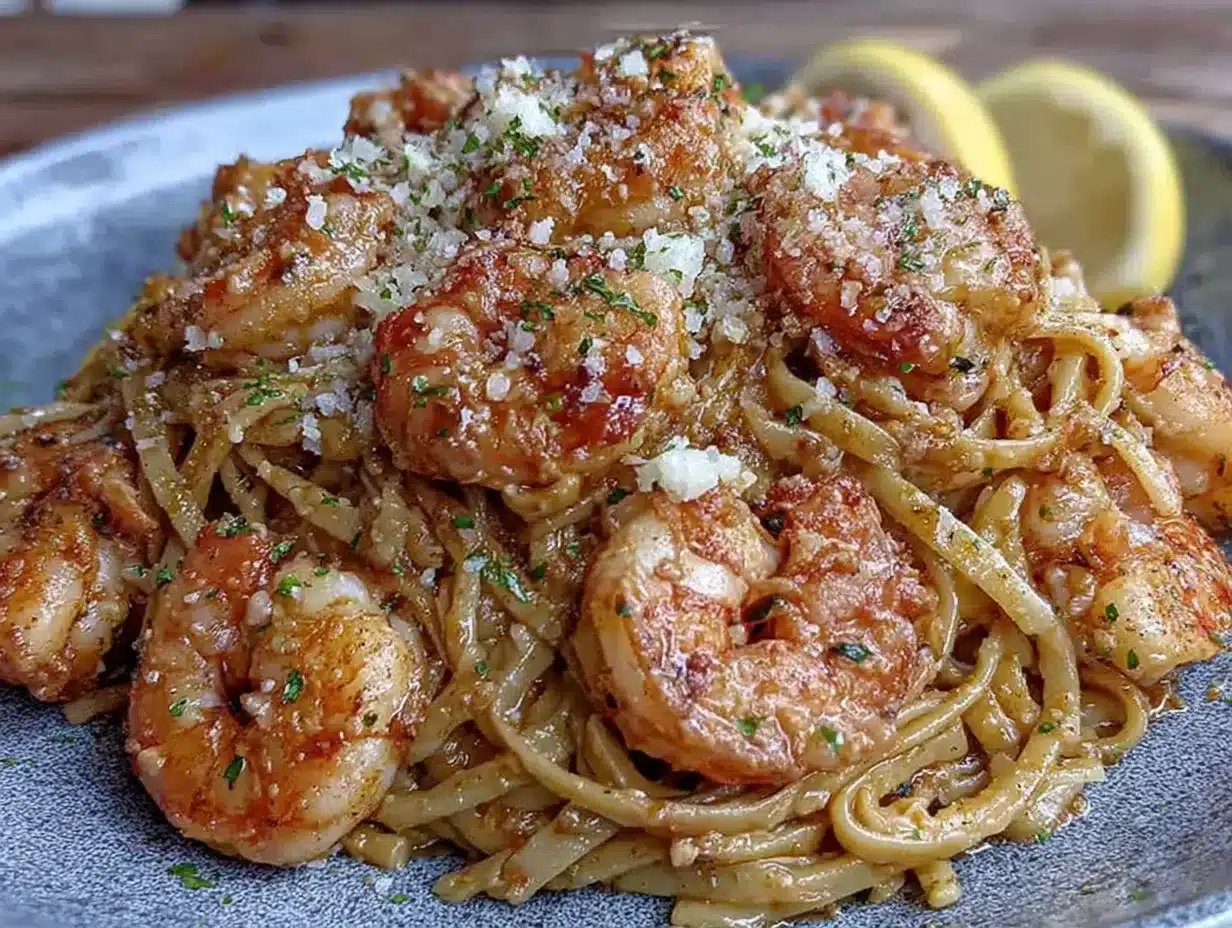
- Bring a large pot of salted water to a boil. Use about 1 tablespoon of salt per 4 quarts of water. It should taste like the sea. While the water heats up, get your other ingredients ready—this dish moves fast.
- Cook the pasta according to package directions until al dente. For spaghetti, that’s usually 8-10 minutes. Stir occasionally to prevent sticking. About 2 minutes before the pasta is done, scoop out 1 cup of the pasta water and set it aside. Then drain the pasta in a colander—do not rinse it. The starch on the pasta helps the sauce cling.
- While the pasta cooks, pat the shrimp dry with paper towels. This is important—wet shrimp won’t brown properly. Season them lightly with a pinch of salt and pepper.
- In a large skillet, melt 2 tablespoons of the butter over medium-high heat. Once it’s foaming (but not browning), add the minced garlic and red pepper flakes. Cook for about 30 seconds, stirring constantly, until fragrant. Be careful—garlic burns fast and turns bitter.
- Add the shrimp to the skillet in a single layer. Cook for 1-2 minutes per side, until they turn pink and opaque. They should curl slightly and feel firm to the touch. Don’t overcook them—rubbery shrimp is a tragedy. Transfer the cooked shrimp to a plate and set aside.
- Reduce the heat to low and add the remaining 2 tablespoons of butter to the skillet. Let it melt slowly. Then pour in about 1/4 cup of the reserved pasta water and the lemon juice. Stir everything together, scraping up any browned bits from the bottom of the pan. This is where the flavor lives.
- Add the drained pasta to the skillet. Use tongs to toss it in the butter sauce for about 1 minute, until every strand is coated. If the sauce seems too thick, add more pasta water a tablespoon at a time until it reaches a silky consistency.
- Return the shrimp to the skillet and toss gently to combine. Let everything warm through for about 30 seconds. Taste and adjust seasoning with salt and pepper if needed.
- Remove from heat and stir in the fresh parsley. Serve immediately, topped with grated Parmesan cheese and an extra squeeze of lemon if you like.
Cooking Tips & Techniques
I’ve made this quick garlic butter shrimp pasta more times than I can count, and I’ve definitely learned a few things the hard way. Here are my best tips to make sure yours turns out perfect every time:
- Don’t skip drying the shrimp. I once rushed this step and ended up with shrimp that steamed instead of seared. Pat them dry thoroughly for that beautiful golden crust.
- Watch the garlic like a hawk. Burnt garlic is one of the most bitter flavors in cooking. If you see it turning brown too fast, pull the pan off the heat for a few seconds. You can always put it back.
- Reserve more pasta water than you think you need. I usually save a full cup even though the recipe calls for 1/4 cup. The starchy water is liquid gold—it helps emulsify the butter into a creamy sauce without adding cream.
- Cook the pasta just shy of al dente. It will finish cooking in the skillet with the sauce, so undercook it by about 1 minute. This prevents mushy pasta.
- Work quickly once the pasta is drained. Hot pasta absorbs sauce best. If you let it sit too long, it gets sticky and clumpy. Have everything ready before you drain it.
- Taste as you go. I know it sounds basic, but I’ve had batches that needed more lemon or salt. Trust your palate—it knows what’s up.
Variations & Adaptations
This recipe is incredibly flexible, and I’ve tried several variations myself. Here are some of my favorites:
- Make it creamy: Stir in 1/4 cup of heavy cream or half-and-half after adding the pasta water. It turns into a luscious, restaurant-style sauce. I did this one rainy Sunday and it was pure comfort.
- Add vegetables: Toss in a handful of fresh spinach or cherry tomatoes halved when you add the garlic. They wilt and soften beautifully. Broccoli florets or asparagus pieces work too—just blanch them with the pasta in the last 2 minutes of cooking.
- Swap the protein: Use chicken breast cut into small pieces (cook a few minutes longer) or scallops for a fancy twist. For a vegetarian version, try cubed firm tofu or a can of chickpeas, drained and patted dry.
- Go gluten-free: Use your favorite gluten-free pasta. Brown rice pasta or lentil pasta works well—just check the cooking time, as they can vary.
- Make it dairy-free: Substitute the butter with a good quality vegan butter or olive oil. Omit the Parmesan or use a dairy-free alternative. The lemon and garlic still shine through.
- Spice it up: Double the red pepper flakes or add a pinch of cayenne for more heat. I once added a teaspoon of sriracha to the butter sauce, and it was surprisingly good.
Serving & Storage Suggestions
This dish is best enjoyed fresh, right out of the skillet. Serve it hot, with a generous sprinkle of Parmesan and a wedge of lemon on the side. I like to pair it with a simple green salad dressed with lemon vinaigrette and some crusty bread to soak up any leftover sauce. A glass of crisp white wine, like Pinot Grigio or Sauvignon Blanc, complements the garlic and lemon beautifully.
If you have leftovers (which is rare in my house), store them in an airtight container in the refrigerator for up to 2 days. The shrimp can get a bit tough when reheated, so be gentle. To reheat, place the pasta in a skillet over low heat with a splash of water or chicken broth. Toss gently until warmed through—about 3-4 minutes. Avoid the microwave if you can; it tends to make the shrimp rubbery.
I don’t recommend freezing this dish, as the texture of the shrimp and pasta will suffer. But if you absolutely must, freeze it in a sealed container for up to 1 month. Thaw in the refrigerator overnight and reheat gently. The flavors will still be good, but the shrimp won’t be as tender.
One thing I’ve noticed: the flavors meld together even more the next day. The garlic butter sauce soaks into the pasta, and the lemon brightens everything up. It’s almost like a different (but still delicious) dish.
Nutritional Information & Benefits
Here’s an approximate nutritional breakdown per serving (based on 4 servings):
- Calories: 420
- Protein: 28g
- Fat: 18g
- Carbohydrates: 38g
- Fiber: 2g
- Sugar: 2g
- Sodium: 680mg
Shrimp is an excellent source of lean protein, selenium, and vitamin B12. It’s also low in calories compared to other proteins, making this a satisfying but not heavy meal. Garlic is known for its immune-boosting properties, and the lemon juice adds a dose of vitamin C. If you’re watching your carb intake, you can swap the pasta for zucchini noodles or spaghetti squash—the garlic butter sauce works beautifully with both.
This recipe is naturally gluten-free if you use gluten-free pasta, and it can be made dairy-free with simple substitutions. It’s also relatively low in added sugars, relying on the natural sweetness of the shrimp and the brightness of lemon for flavor.
From a wellness perspective, this is the kind of meal that fuels you without weighing you down. It’s light enough for a weeknight but satisfying enough to feel like a treat. I love that I can feel good about eating it—and that it’s ready in the time it takes to set the table.
Conclusion
This quick garlic butter shrimp pasta has become a staple in my kitchen for good reason. It’s fast, it’s forgiving, and it delivers every single time. Whether you’re a seasoned cook or someone who’s just starting out, this recipe is practically foolproof. The combination of tender shrimp, al dente pasta, and that luscious garlic butter sauce is simple comfort at its finest.
I encourage you to make it your own—tweak the seasonings, add your favorite veggies, or swap in whatever protein you have on hand. That’s the beauty of a recipe like this: it’s a starting point, not a rulebook. I’d love to hear how it turns out for you. Did you add a pinch of something unexpected? Did your kids gobble it up? Drop a comment below and share your version. And if you loved it, don’t forget to share this post with someone who needs an easy dinner win.
Happy cooking, friend. You’ve got this.
Frequently Asked Questions
Can I use frozen shrimp for this recipe?
Absolutely! Frozen shrimp works great. Just thaw them under cold running water in a colander for about 5 minutes, then pat them dry before cooking. Make sure they’re peeled and deveined to save time.
What if I don’t have fresh parsley?
No worries. You can skip the parsley altogether, or use a pinch of dried parsley for color. Fresh basil or chives also make nice substitutes if you have them on hand.
Can I make this recipe ahead of time?
It’s best fresh, but you can prep ahead by peeling the shrimp, mincing the garlic, and measuring your ingredients. Then cook everything right before serving for the best texture and flavor.
How do I keep the shrimp from getting rubbery?
The key is not to overcook them. Shrimp cook in 1-2 minutes per side. As soon as they turn pink and curl slightly, take them out of the pan. They’ll finish heating through when you toss them with the pasta at the end.
Can I use a different type of pasta?
Yes, any pasta shape works! Fettuccine, angel hair, penne, or even farfalle are all great options. Just adjust the cooking time based on the package instructions for al dente.
Pin This Recipe!
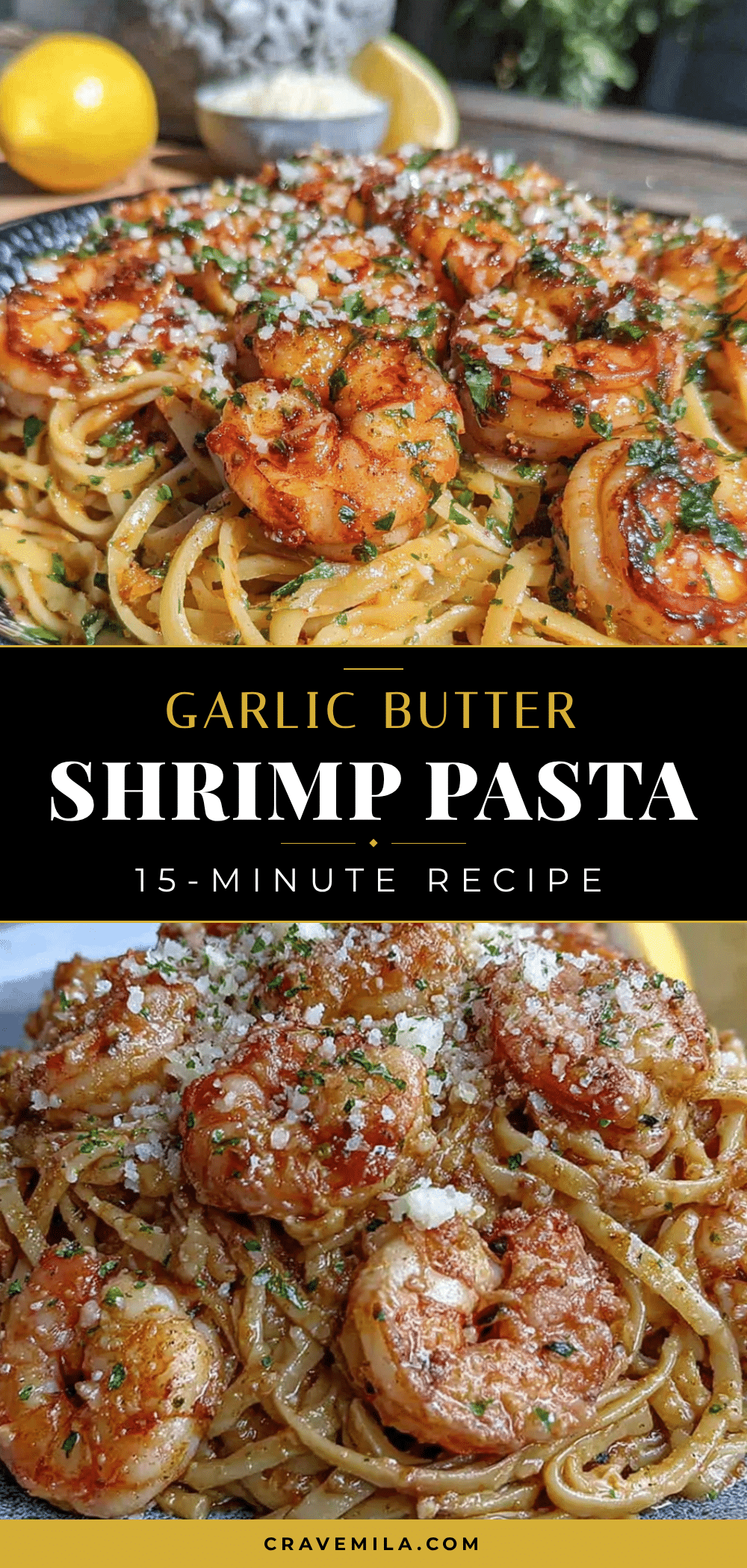
Quick Garlic Butter Shrimp Pasta: Easy 15-Minute Dinner
This quick garlic butter shrimp pasta comes together in just 15 minutes, making it the perfect weeknight dinner. Tender shrimp, al dente pasta, and a luscious garlic butter sauce create a comforting meal that tastes like you tried way harder than you did.
- Prep Time: 5 minutes
- Cook Time: 10 minutes
- Total Time: 15 minutes
- Yield: 4 servings 1x
- Category: Main Course
- Cuisine: Italian
Ingredients
- 8 ounces (225g) spaghetti or linguine
- 1 pound (450g) large shrimp, peeled and deveined
- 4 tablespoons (60g) unsalted butter
- 4 cloves garlic, minced
- 1/4 teaspoon red pepper flakes (optional)
- 1/2 teaspoon salt, plus more for pasta water
- 1/4 teaspoon black pepper
- 1/4 cup (60ml) reserved pasta water
- 2 tablespoons fresh lemon juice (about 1 lemon)
- 2 tablespoons fresh parsley, chopped
- 1/4 cup (25g) grated Parmesan cheese, for serving
Instructions
- Bring a large pot of salted water to a boil. Use about 1 tablespoon of salt per 4 quarts of water.
- Cook the pasta according to package directions until al dente. About 2 minutes before the pasta is done, scoop out 1 cup of the pasta water and set it aside. Drain the pasta in a colander—do not rinse.
- While the pasta cooks, pat the shrimp dry with paper towels. Season them lightly with a pinch of salt and pepper.
- In a large skillet, melt 2 tablespoons of the butter over medium-high heat. Once foaming, add the minced garlic and red pepper flakes. Cook for about 30 seconds, stirring constantly, until fragrant.
- Add the shrimp to the skillet in a single layer. Cook for 1-2 minutes per side, until they turn pink and opaque. Transfer the cooked shrimp to a plate and set aside.
- Reduce the heat to low and add the remaining 2 tablespoons of butter to the skillet. Let it melt slowly. Then pour in about 1/4 cup of the reserved pasta water and the lemon juice. Stir together, scraping up any browned bits from the bottom of the pan.
- Add the drained pasta to the skillet. Use tongs to toss it in the butter sauce for about 1 minute, until every strand is coated. If the sauce seems too thick, add more pasta water a tablespoon at a time until it reaches a silky consistency.
- Return the shrimp to the skillet and toss gently to combine. Let everything warm through for about 30 seconds. Taste and adjust seasoning with salt and pepper if needed.
- Remove from heat and stir in the fresh parsley. Serve immediately, topped with grated Parmesan cheese and an extra squeeze of lemon if you like.
Notes
Don’t skip drying the shrimp for a good sear. Watch the garlic carefully to avoid burning. Reserve more pasta water than you think you need—it helps emulsify the sauce. Cook the pasta just shy of al dente as it will finish cooking in the skillet. Work quickly once the pasta is drained. Taste as you go and adjust seasoning.
Nutrition
- Serving Size: 1 serving
- Calories: 420
- Sugar: 2
- Sodium: 680
- Fat: 18
- Saturated Fat: 10
- Carbohydrates: 38
- Fiber: 2
- Protein: 28
Keywords: garlic butter shrimp pasta, quick shrimp pasta, easy weeknight dinner, 15 minute pasta, shrimp pasta recipe